






Overhead doors present a unique forcible entry challenge for firefighters. Unlike a conventional inward- or outward-swinging door, an overhead door may consist of multiple hinged sections, interlocking steel slats, tracks, rollers, locking bars, an electric opener, or a manual chain-hoist system.
That means there is no single method that should automatically be used to force every overhead door.
The most effective approach depends on the type of overhead door, how it is constructed, how it is secured, the tools available, and fire conditions at the time entry is required.
For firefighters, the first step is therefore not cutting. It is size-up.
Understanding what type of door is in front of you—and what is likely holding it closed—can prevent crews from wasting valuable time and energy attacking the strongest part of the assembly.
What Types of Overhead Doors Do Firefighters Encounter?
Although there are numerous designs, most overhead doors firefighters encounter fall into two broad categories:
Sectional overhead doors are constructed from several horizontal panels connected by hinges. Rollers on either side of the panels travel through tracks, allowing the door to move upward and then horizontally along the ceiling.
These are extremely common on residential garages but can also be found at auto repair facilities, warehouses, firehouses, commercial garages, and industrial occupancies.
Rolling steel doors, sometimes referred to as roll-up doors, are constructed differently. Instead of large hinged panels, they typically consist of narrow interlocking metal slats that travel vertically along guides and coil around a drum above the opening.
These doors are common in commercial and industrial occupancies.
The distinction matters because the forcible entry technique that works well on a relatively lightweight sectional garage door may be ineffective—or unnecessarily time-consuming—on a heavy rolling steel door.
The First Choice May Be to Avoid Forcing the Overhead Door
One of the most important considerations in overhead door forcible entry is whether the door actually needs to be destroyed.
When conditions allow, firefighters may be better served by gaining access through another entrance and opening the overhead door from inside.
This can offer several advantages.
Opening the entire overhead door provides a much larger opening for firefighter access and egress than cutting a small opening into the door. It can also preserve the door and reduce the amount of time crews spend operating a saw.
Once an overhead door has been raised, however, firefighters must consider the possibility of the door unexpectedly closing. A raised door should be appropriately secured according to departmental procedures so it cannot fall and trap or injure firefighters operating beneath it.
When alternate access is not practical, crews must determine how the overhead door is secured.
Identify What Is Keeping the Door Closed
Before attacking the door itself, firefighters should look for the locking or operating mechanism.
A sectional door may be secured by:
-
An automatic garage door opener
-
Sliding latch bolts
-
Track-mounted locks
-
Padlocks
-
Interior locking mechanisms
-
Multiple locking devices
A commercial rolling door may use:
-
A manual chain hoist
-
Padlocked chains
-
Slide bolts
-
Bottom-bar locks
-
Electric motors
-
Other security devices
This distinction is critical.
The objective of forcible entry is not necessarily to destroy the barrier. The objective is to defeat the barrier efficiently enough to accomplish the fireground objective.
If firefighters can quickly defeat the mechanism holding the door closed, they may be able to raise the entire door rather than cutting a firefighter-sized opening through it.
Forcing a Sectional Overhead Door
Sectional overhead doors require firefighters to understand how the panels, tracks, rollers, hinges, and locking mechanisms work together.
On many sectional doors, one option is to create a relatively small access opening that allows firefighters to reach the locking or operating mechanism.
For example, an opening may provide access to a sliding latch or allow firefighters to disconnect the linkage associated with an automatic opener.
If the locking mechanism can be defeated, the door may then be raised normally.
This can be preferable to immediately making a large opening because firefighters retain the possibility of opening the entire doorway.
However, this will not work in every situation.
Commercial sectional doors can be substantially stronger than typical residential garage doors. Reinforcing members, heavy-gauge steel, horizontal bracing, wind-resistant construction, and other structural features can make cutting considerably more difficult.
Firefighters therefore need to evaluate the construction before committing to a particular cut.
The “Door Within a Door” Method
When a sectional overhead door cannot be raised, one option is creating what is commonly called a door within a door.
Instead of attempting to remove the entire overhead door, firefighters use a saw to create a large opening through the existing door.
The goal is to produce an opening large enough to provide practical access and egress rather than creating only a small crawl-through opening.
This is an important distinction on the fireground.
A small opening might technically allow a firefighter to enter, but firefighters must also think about how quickly crews could exit if interior conditions deteriorate.
Fireground forcible entry should account for egress as well as entry.
A properly planned door-within-a-door cut can provide a considerably larger opening.
Crews must still account for the construction behind the exterior skin of the door. Hinges, vertical stiles, horizontal reinforcing members, rollers, and heavy wind bracing can complicate saw operations.
Why Door Construction Matters When Cutting
A firefighter looking at the exterior of an overhead door may see relatively thin sheet metal.
What cannot immediately be seen is often more important.
Behind that exterior material may be a framework of:
-
Steel reinforcement
-
Hinges
-
Vertical stiles
-
Horizontal braces
-
Insulation
-
Rollers
-
Tracks
-
Other structural components
Modern wind-resistant overhead doors can be particularly challenging because their reinforcing framework may be significantly heavier than that found in older doors.
This is one reason firefighters should avoid treating every overhead door as an identical cutting problem.
Knowing the buildings in the response area through preincident planning can make a significant difference.
Forcing Rolling Steel and Roll-Up Doors
Rolling steel doors present a different problem.
Because the curtain consists of interlocking slats running within tracks, firefighters may focus on gaining access to the operating or locking mechanism rather than attempting to defeat the entire door immediately.
On a manually operated commercial rolling door, crews may encounter a chain-hoist mechanism.
One established approach is to make an access cut near the side of the door where the hoist chain is believed to be located. If firefighters can access the chain and defeat the lock securing it, the chain may potentially be used to raise the door.
This can preserve the full doorway and avoid unnecessary cutting.
However, firefighters should not assume the chain will always be on a particular side.
Knowledge gained through preincident planning can help crews recognize common door configurations in their response district.
If the operating mechanism cannot be accessed or used, more extensive cutting may become necessary.
The Triangle Cut: Access Versus Entry
Firefighters may also hear the term triangle cut associated with overhead door operations.
The purpose of the cut matters.
A small triangular opening may be useful for gaining access to a latch or operating mechanism. Under certain fire conditions, an opening may also be created to allow a hose stream to begin controlling fire behind the door while crews work toward obtaining better access.
But firefighters should distinguish between an access opening and a suitable firefighter entry and egress opening.
A small hole that allows a firefighter to reach a lock—or allows a nozzle to apply water—is performing a very different function from an opening intended for crews to travel through.
That distinction should be part of the size-up.
Fire Conditions Can Change the Decision
The best forcible entry method is not determined by door construction alone.
Fire conditions matter.
Imagine two identical commercial garage doors.
Behind the first is a relatively controlled environment where firefighters have time to identify the lock, determine how the door operates, and attempt to raise it.
Behind the second is a rapidly developing fire requiring immediate water application.
The appropriate tactics may be completely different.
In the second scenario, obtaining an opening for water application may take priority over preserving the door or immediately creating a full entry point.
Firefighters must constantly balance:
speed, access, egress, fire control, ventilation, structural conditions, and crew safety.
Forcible entry is therefore part of the overall fireground strategy rather than an isolated mechanical task.
Tool Selection for Overhead Door Forcible Entry
Overhead door operations may involve several different tools depending on the situation.
A rotary rescue saw is particularly useful when the door itself must be cut. Blade selection should reflect the materials firefighters expect to encounter.
Halligan bars, hooks, bolt cutters, striking tools, and other forcible entry equipment may also have roles depending on the door and locking mechanism.
The important principle is matching the tool to the objective.
If the problem is a padlock securing a chain, attacking an entire steel curtain may be unnecessary.
If the locking mechanism cannot be reached and the door must be breached, saw operations may become the appropriate choice.
Good forcible entry is not simply about applying more force. It is about applying the right force, with the right tool, at the right location.
Don't Forget Door Control After Entry
Successfully opening the door does not end the operation.
An overhead door that has been raised can become a significant hazard if it closes unexpectedly.
Firefighters operating beneath or beyond the door need confidence that their exit route will remain available.
Departments should train crews not only on how to defeat overhead doors but also on how to secure them once they have been opened.
The same principle applies to conventional doors: forcible entry and door control should be treated as connected fireground skills.
Why Firefighters Need Hands-On Forcible Entry Training
Reading about forcible entry can help firefighters understand the principles involved, but proficiency comes from repetition.
Crews need opportunities to recognize resistance, position tools correctly, communicate with a partner, identify failure points, and adjust when the first technique does not work.
That is particularly important because firefighters rarely encounter only one type of door.
A department may need to prepare members for residential doors, commercial steel doors, security doors, multiple locks, hinges, drop bars, and other obstacles.
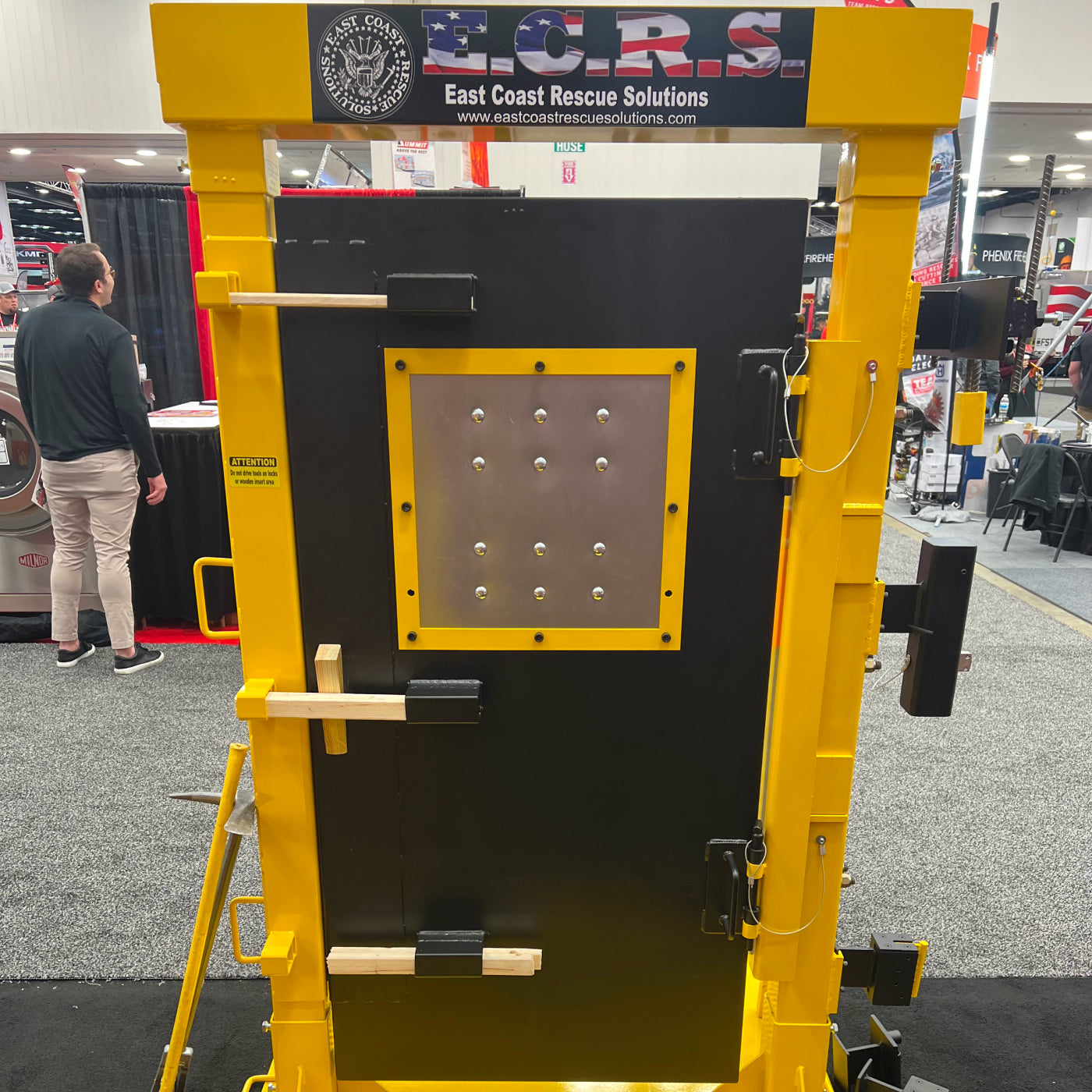
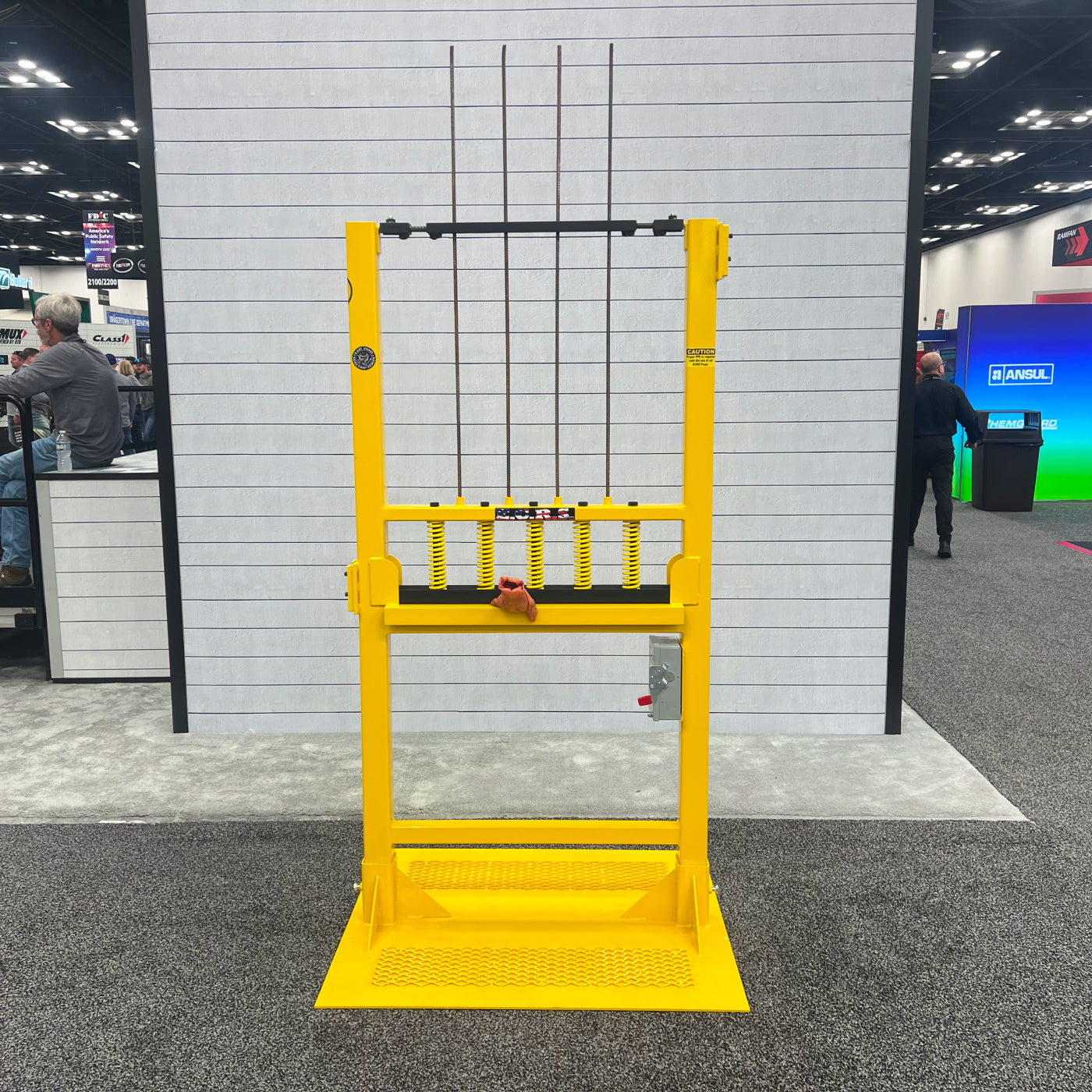
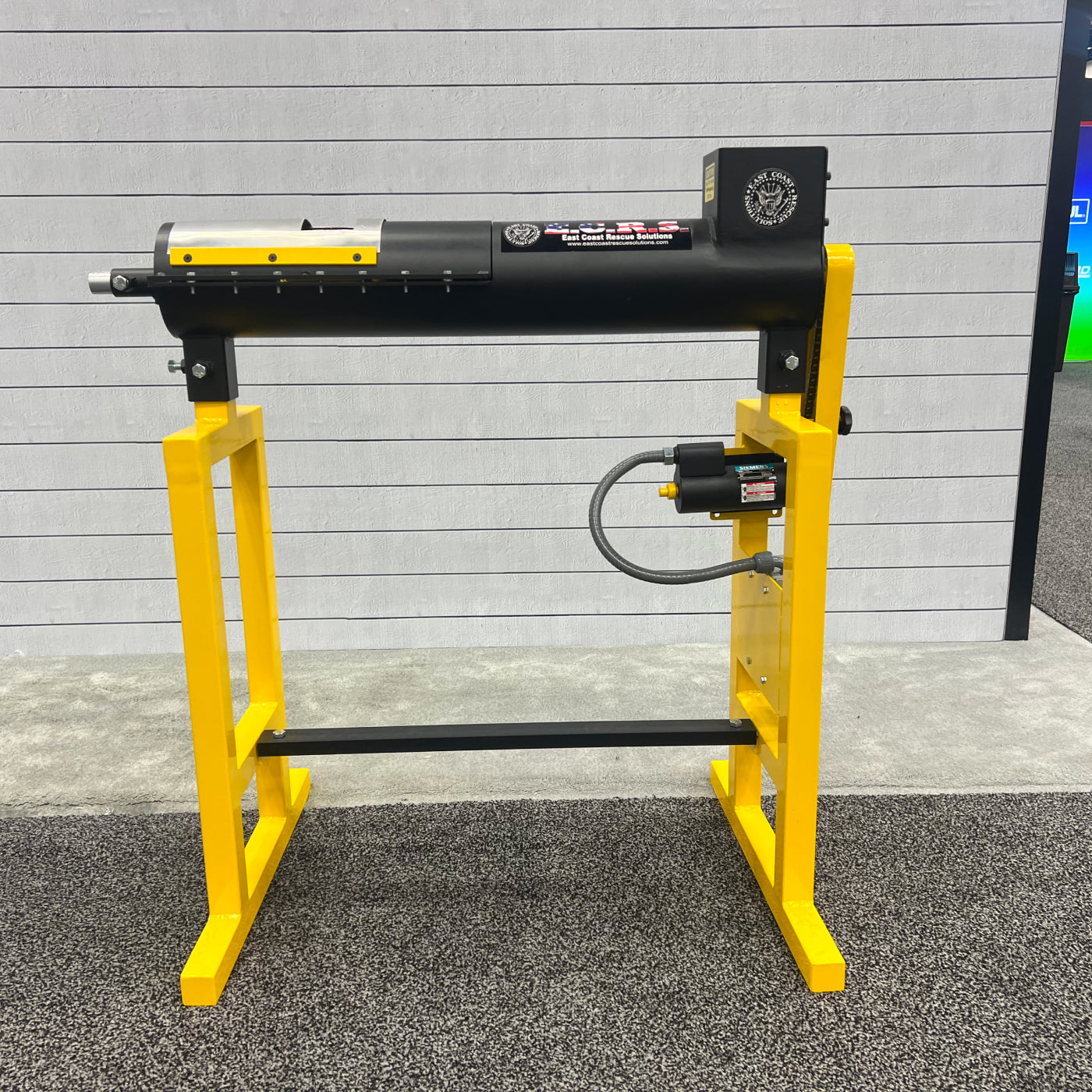
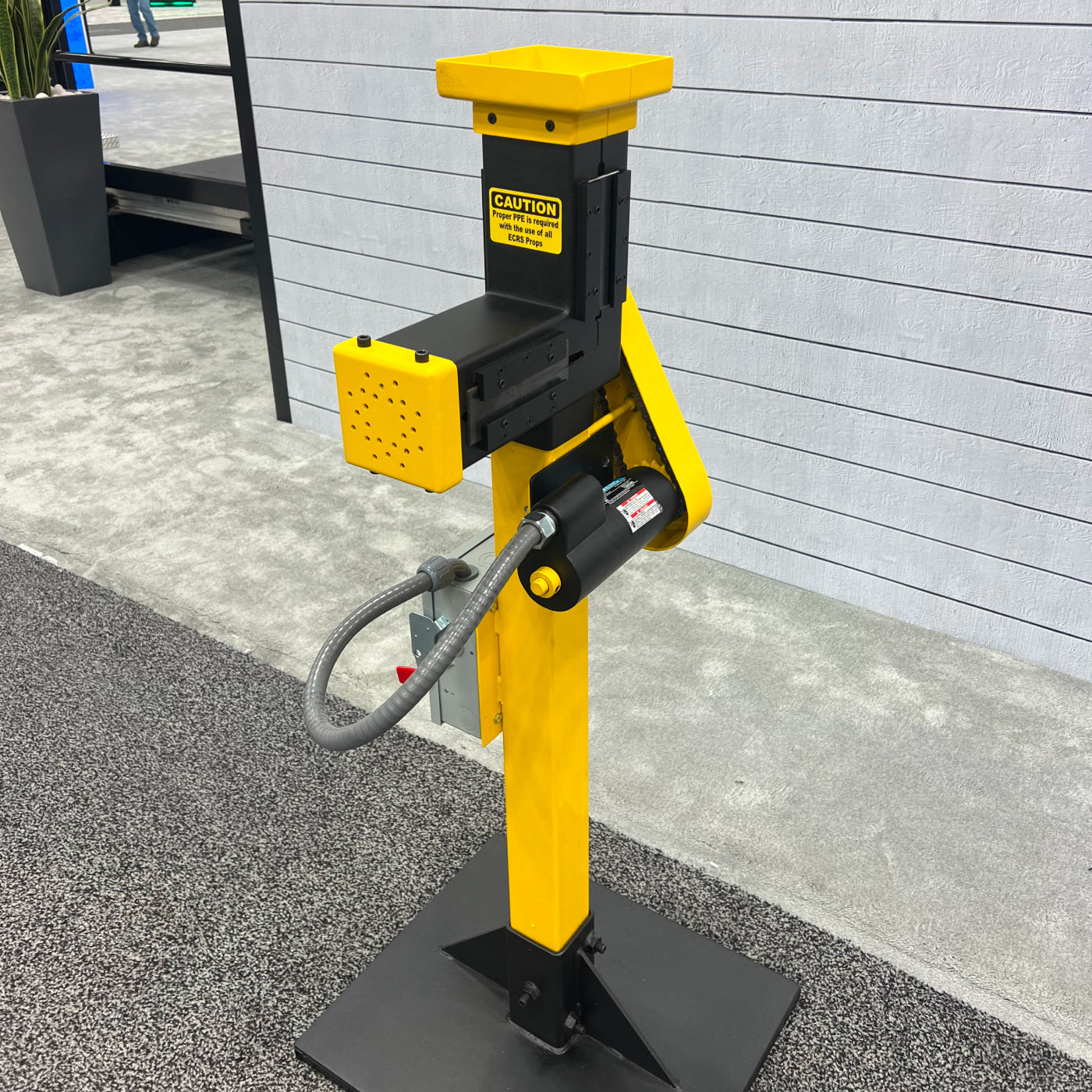
Realistic forcible entry door props allow firefighters to repeatedly practice fundamental forcible entry skills in a controlled training environment before those skills are needed under emergency conditions.
East Coast Rescue Solutions' GEN3 and GEN4 forcible entry door simulators are designed for realistic training on inward- and outward-swinging doors and multiple locking configurations, helping departments build the repetition needed to improve forcible entry proficiency.
While an overhead door presents its own specific construction and tactical considerations, developing strong fundamentals in tool placement, leverage, conventional forcible entry, cutting, lock recognition, and coordinated team operations gives firefighters a stronger foundation for solving unfamiliar entry problems.
Preincident Planning Is Especially Important for Overhead Doors
One of the best times to figure out how to force an overhead door is before there is a fire behind it.
Commercial occupancies in a department's response district can contain dramatically different door systems.
During preincident planning, firefighters can look at:
-
Whether doors are sectional or rolling
-
Door construction and reinforcement
-
Manual versus electric operation
-
Locations of chain hoists
-
Visible locking systems
-
Secondary entrances
-
Building occupancy
-
Security features
-
Potential access and egress points
That knowledge can shorten the decision-making process when crews arrive under emergency conditions.
Instead of seeing an unfamiliar steel barrier, firefighters may already have a reasonable understanding of how the door operates and which method is most likely to work.
So, Which Method Should Be Used to Force an Overhead Door?
There is no universal answer.
The correct method starts with identifying the door and determining what is actually preventing it from opening.
When conditions permit, opening the overhead door normally after defeating its locking or operating mechanism can provide the largest and most useful opening.
For sectional doors, firefighters may create an access opening to reach a latch or opener mechanism. If the door cannot be raised, a larger door-within-a-door opening may be appropriate.
For rolling steel doors, crews may attempt to access and defeat the locking mechanism associated with the chain hoist or other operating system before committing to more extensive cutting.
Under active fire conditions, priorities may change again. A smaller opening that allows rapid water application could become the immediate objective while firefighters work toward creating safer and more complete access.
Ultimately, successful overhead door forcible entry comes down to size-up, construction knowledge, tool selection, training, and adaptability.
The firefighter who understands how the door works is in a much better position than the firefighter who simply knows how to cut it.