



Firefighters train for situations where conditions can change in seconds. A locked commercial door, a difficult vehicle extrication, an unusual building configuration, or rapidly deteriorating fire conditions can force crews to make decisions under significant pressure.
That creates a challenge for fire departments: How do you realistically prepare firefighters for complex emergencies without exposing them to unnecessary risk during training?
Modern fire training props are increasingly designed to solve that problem. Instead of practicing individual skills in isolation, many innovative training systems recreate the resistance, physical obstacles, tool interactions, and decision-making firefighters may encounter on an actual emergency scene.
Some of the most useful innovations are not necessarily the most technologically complicated. A well-designed forcible entry door, roof prop, wall-breaching system, or confined-space simulator can dramatically improve training simply because firefighters can perform the actual task repeatedly rather than only discussing how it should be done.
Here are some of the fire training props departments can use to create more realistic and effective simulations.
What Makes a Fire Training Prop Effective?
Realism is important, but a training prop does not need to reproduce every detail of a burning building to be valuable.
A good training prop should reproduce the specific problem firefighters need to solve.
For forcible entry training, that might mean creating realistic resistance when firefighters gap, set, and force a door.
For ventilation training, firefighters need an opportunity to operate tools while working from realistic positions and encountering materials that respond similarly to actual building components.
For confined-space training, the physical restriction itself becomes part of the exercise.
The best training props generally allow firefighters to practice three things simultaneously: technique, tool proficiency, and decision-making.
That combination is what turns a basic drill into a more realistic simulation.
1. Reusable Forcible Entry Door Simulators
Forcible entry is one of the clearest examples of why realistic training props matter.
Firefighters can learn the basic mechanics of a Halligan bar in a classroom, but understanding leverage is very different from actually forcing a resistant door while wearing turnout gear and working with another firefighter.
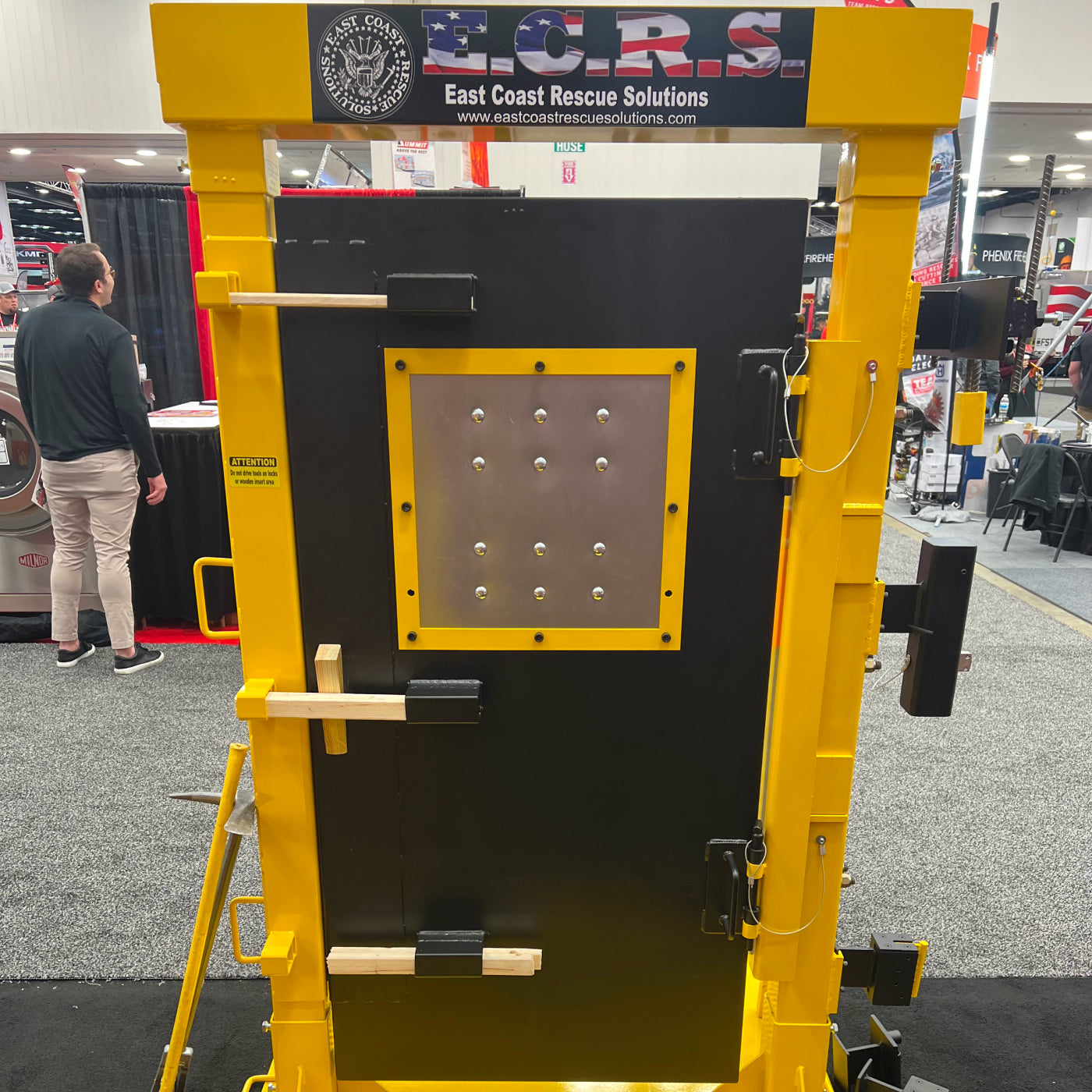
Modern forcible entry door props can recreate many of the challenges crews encounter with real doors while allowing departments to reset the prop and repeat the evolution.
Depending on the simulator, firefighters can train on scenarios involving inward- and outward-swinging doors, different lock positions, multiple locking points, and various levels of resistance.
This allows instructors to make an evolution progressively more difficult as firefighters improve.
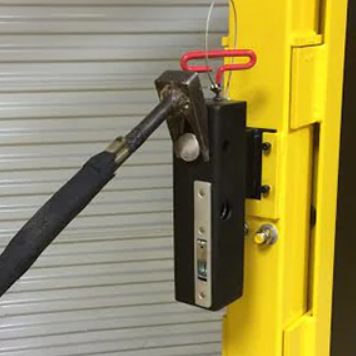
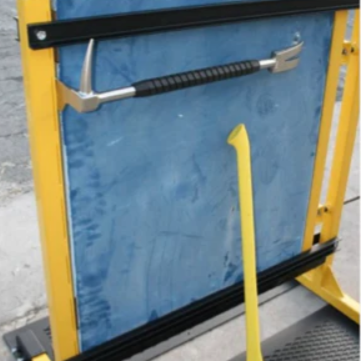
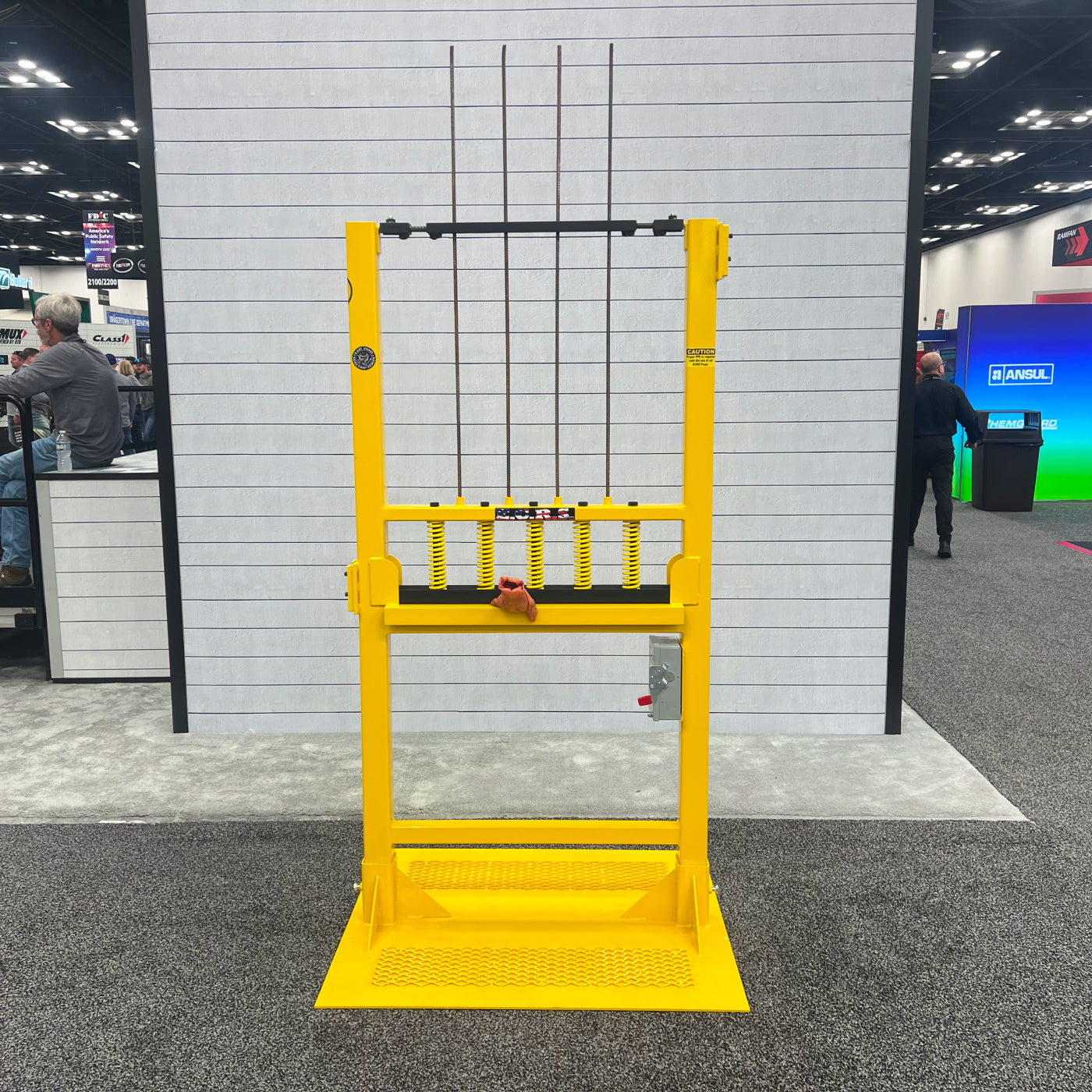
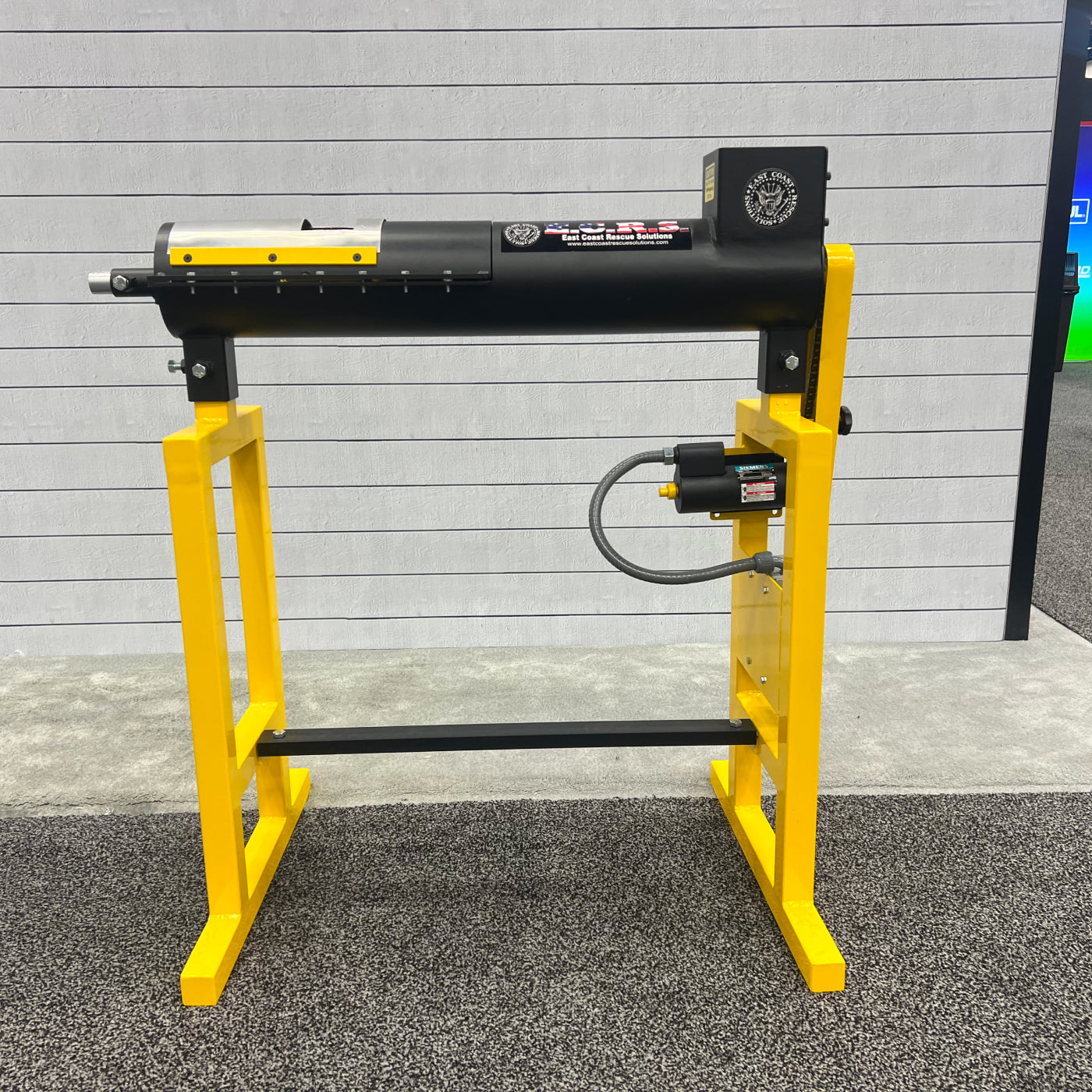
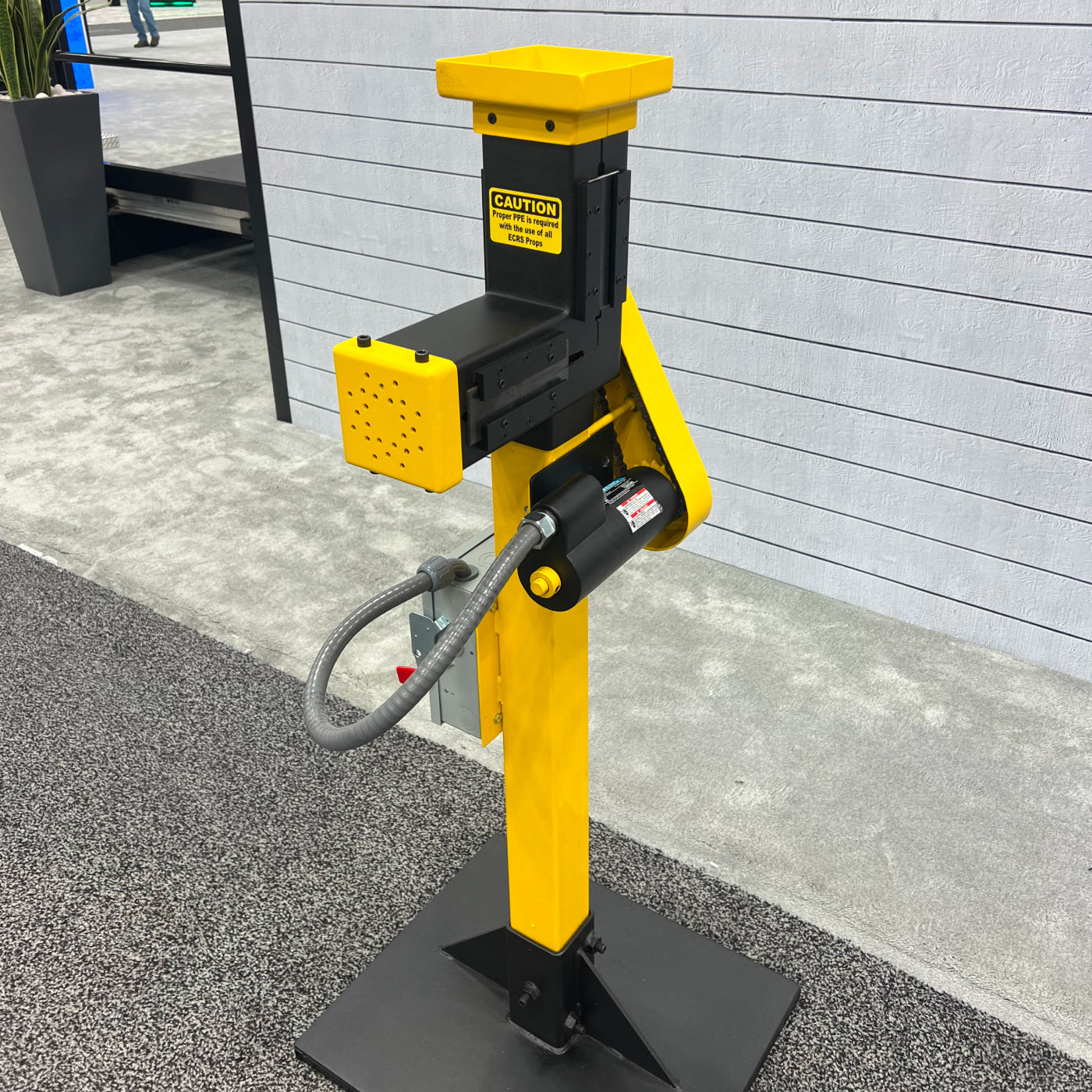
East Coast Rescue Solutions offers forcible entry door props designed specifically for this type of repeatable hands-on training. Rather than sacrificing an actual door every time crews train, a purpose-built simulator allows departments to run repeated evolutions while teaching firefighters how tool placement, leverage, communication, and technique affect the outcome.
The ability to repeat the evolution is especially important.
A firefighter who forces a door once has experienced the technique. A firefighter who performs the evolution repeatedly under different configurations begins developing proficiency.
2. Roof Ventilation Training Props
Vertical ventilation presents another training challenge.
Learning where and how to make a ventilation opening is only part of the skill. Firefighters must also become comfortable operating saws, hooks, and other tools while positioned on a roof.
A roof ventilation prop can recreate this environment at a controlled training location.
More advanced systems can incorporate replaceable cutting surfaces so firefighters actually perform cuts rather than simply practicing saw positioning.
Departments can also configure exercises around different objectives.
A beginner drill might concentrate on starting and controlling the saw. More advanced evolutions can incorporate ladder placement, sounding the roof, tool management, coordinated cutting, opening the ceiling below, and communicating with interior crews.
The prop therefore becomes more than a cutting station. It becomes a platform for teaching the complete ventilation operation.
3. Wall-Breaching and Reduced-Profile Props
Firefighters occasionally encounter situations where the normal exit route is no longer available.
Being able to breach a wall and move through a restricted opening can become an important survival skill.
Wall-breaching props allow firefighters to practice identifying wall components, creating an opening, clearing obstructions, and moving through the opening while wearing full protective equipment.
The exercise becomes considerably more difficult when an SCBA is added.
A firefighter who can comfortably walk through an opening without equipment may discover that the cylinder dramatically changes the amount of clearance required.
Training props can therefore incorporate reduced-profile sections that force firefighters to practice body positioning and SCBA management.
This type of training helps firefighters understand their physical dimensions while wearing equipment before they encounter a similar restriction during an emergency.
4. Entanglement and Firefighter Survival Props
Wires, cables, ductwork, and other building components can create serious entanglement hazards.
A firefighter crawling through limited visibility may encounter these obstacles without immediately understanding what is preventing forward or backward movement.
Entanglement props provide a controlled environment for practicing these situations.
Rather than creating an obstacle that is simply difficult for the sake of difficulty, a properly designed evolution teaches specific survival techniques.
Firefighters can practice remaining calm, identifying the obstruction, protecting their facepiece and regulator, manipulating their SCBA, using wire cutters when appropriate, and communicating the problem to other crew members.
Instructors can gradually increase complexity as proficiency develops.
The goal is not to make firefighters fail. It is to create familiarity with a problem that can otherwise become extremely disorienting when encountered unexpectedly.
5. Window and Window-Bar Forcible Entry Props
Doors are not the only barriers firefighters may need to defeat.
Commercial and residential buildings may have security bars, reinforced windows, gates, shutters, and other anti-intrusion features.
Window props can give firefighters experience removing glazing and managing the hazards created during the process.
More specialized props can incorporate simulated security bars or other obstacles.
This provides an opportunity to discuss not only how to create an opening but also whether that opening is actually usable.
A window that has been cleared of glass may still be obstructed by bars. Similarly, cutting part of a security assembly may leave sharp metal or unstable components in the opening.
Realistic props encourage firefighters to think beyond the initial breach and consider the entire access and egress problem.
6. Denver Drill and Restricted-Access Simulators
Some firefighter rescue situations involve extremely limited working space.
The Denver Drill is one well-known example used to train firefighters for removing a downed firefighter through a narrow window in a confined area.
Purpose-built training props can reproduce these dimensions and allow crews to practice different removal techniques.
These exercises demonstrate an important characteristic of good simulation training: space itself can be a training variable.
In an open apparatus bay, firefighters can reposition themselves whenever necessary. Inside a narrow training prop, those options disappear.
Crews have to think about body positioning, sequence, communication, leverage, and where each firefighter needs to be before beginning the movement.
Those lessons can be difficult to reproduce without a physical prop.
7. Search and Maze Training Systems
Search training becomes much more realistic when firefighters cannot rely on sight.
Maze systems can simulate narrow hallways, changes in elevation, restricted passages, obstacles, and unusual building configurations.
Some systems are modular, allowing instructors to change the layout between exercises.
That is particularly useful because firefighters should not become overly familiar with a single training course.
If members memorize every turn and obstacle, the exercise stops testing navigation and problem-solving.
Changing the configuration restores uncertainty.
Instructors can then introduce additional objectives involving search patterns, orientation, air management, communication, victim removal, and firefighter emergencies.
The result is a relatively compact prop capable of supporting numerous training scenarios.
8. Hose Advancement and Door-Control Props
Some of the most valuable training equipment focuses on tasks firefighters perform constantly.
Advancing a charged hose line through a doorway sounds straightforward until resistance, limited visibility, tight turns, stairs, door swing, and other firefighters are introduced.
Props designed around hose advancement can help crews practice moving lines around realistic obstacles.
Combining hose advancement with a door simulator can make the exercise even more useful.
Instead of treating forcible entry and fire attack as unrelated skills, firefighters can practice the transition from one operation to another.
One firefighter forces the door. The crew controls it. The line is positioned. Fire conditions are evaluated. The door is opened deliberately, and the hose team advances.
That begins to resemble an actual fireground operation rather than a collection of independent drills.
9. Vehicle Extrication Training Props
Vehicle construction continues to evolve, which makes extrication training particularly important.
Departments may use donated vehicles for training, but reusable extrication props can supplement those exercises.
Specialized systems can help firefighters practice tool positioning, stabilization concepts, spreading, cutting, lifting, and other mechanical operations.
Training can also incorporate scenarios involving limited access to different sides of the vehicle.
That matters because real collisions rarely leave vehicles perfectly positioned in an open parking lot.
A vehicle may be against a wall, underneath another vehicle, on an embankment, or positioned where only one side is readily accessible.
Good simulation forces firefighters to adapt.
10. Confined-Space and Technical Rescue Props
Technical rescue teams can benefit significantly from modular training environments.
Confined-space props can incorporate tubes, tunnels, vertical shafts, restricted openings, changes in direction, and internal obstacles.
These systems allow teams to practice much more than entry.
A complete exercise might include atmospheric monitoring, ventilation, communications, rope systems, entrant management, patient packaging, and removal.
Because the environment is controlled, instructors can stop the evolution when necessary and discuss what is happening.
That ability to pause, correct, reset, and repeat is one of the major advantages of purpose-built training systems.
11. Multi-Function Training Towers
For departments with sufficient space and resources, multi-function training towers can combine numerous disciplines into one structure.
A well-designed tower might support:
-
Ladder operations
-
Hose advancement
-
Search
-
Forcible entry
-
Ventilation
-
Standpipe operations
-
Bailout training
-
Rappelling
-
Victim removal
-
Rapid intervention exercises
The advantage is not simply having more places to train.
It is the ability to combine skills into complete scenarios.
A company might begin with ladder placement, encounter a locked door, perform a search, locate a victim, and execute a removal—all during one evolution.
That integration is closer to the demands of an actual incident.
Innovation Doesn't Always Mean More Technology
When people hear "innovative fire training," it is easy to imagine virtual reality systems, computer-controlled burn rooms, electronic sensors, and sophisticated simulation technology.
Those tools can certainly have value.
But innovation in firefighter training can also be surprisingly mechanical.
A door that can be forced hundreds of times instead of being destroyed after one evolution is an innovation.
A roof prop with easily replaceable cutting panels is an innovation.
A modular maze that instructors can reconfigure is an innovation.
A confined-space prop that reproduces several different rescue environments in one system is an innovation.
The important question is not how much technology does the prop contain?
It is:
Does this prop allow firefighters to realistically practice a critical skill more safely, more frequently, or under a greater variety of conditions?
If the answer is yes, the prop is improving training.
Look for Training Props That Can Be Reset and Reconfigured
Repeatability should be one of the biggest considerations when evaluating fire training equipment.
Some training exercises consume materials every time they are performed. That can increase costs and discourage departments from practicing as frequently as they would like.
Reusable props change that equation.
For example, a forcible entry simulator designed to be reset allows numerous firefighters to perform the same evolution during a training session.
Reconfigurable props offer another advantage.
An instructor can change resistance, locking configurations, obstacles, or layouts so firefighters do not simply memorize one solution.
This makes training progressively more challenging and encourages firefighters to evaluate the problem rather than automatically repeat a predetermined sequence.
The Best Fire Training Props Create Problems to Solve
Ultimately, the purpose of simulation is not to perfectly reproduce a fire.
It is to reproduce the decisions and physical challenges firefighters face during one.
A firefighter needs to recognize why a door is resisting.
A hose team needs to determine how to advance around an obstacle.
A rescue team needs to figure out how to move a firefighter through an opening that barely accommodates an SCBA cylinder.
A ventilation team needs to coordinate tools and personnel while working from an elevated position.
Well-designed fire training props create those problems in an environment where instructors can observe performance, correct mistakes, and run the evolution again.
That repetition builds proficiency.
And when firefighters eventually encounter the same problem under real emergency conditions, it is no longer completely unfamiliar.
Better Simulation Builds Better Preparedness
The most innovative fire training props are not necessarily those with the most features. They are the ones that allow departments to turn important fireground concepts into repeatable hands-on experiences.
Forcible entry simulators, roof props, maze systems, wall-breaching stations, confined-space environments, extrication systems, and multi-purpose training structures can all help bridge the gap between knowing a technique and being able to perform it effectively.
Departments evaluating new training equipment should therefore consider realism, durability, repeatability, reconfigurability, and how easily the prop can be incorporated into larger scenarios.
Because ultimately, firefighters do not rise to the occasion based solely on what they have read or watched.
They rely heavily on what they have practiced.