
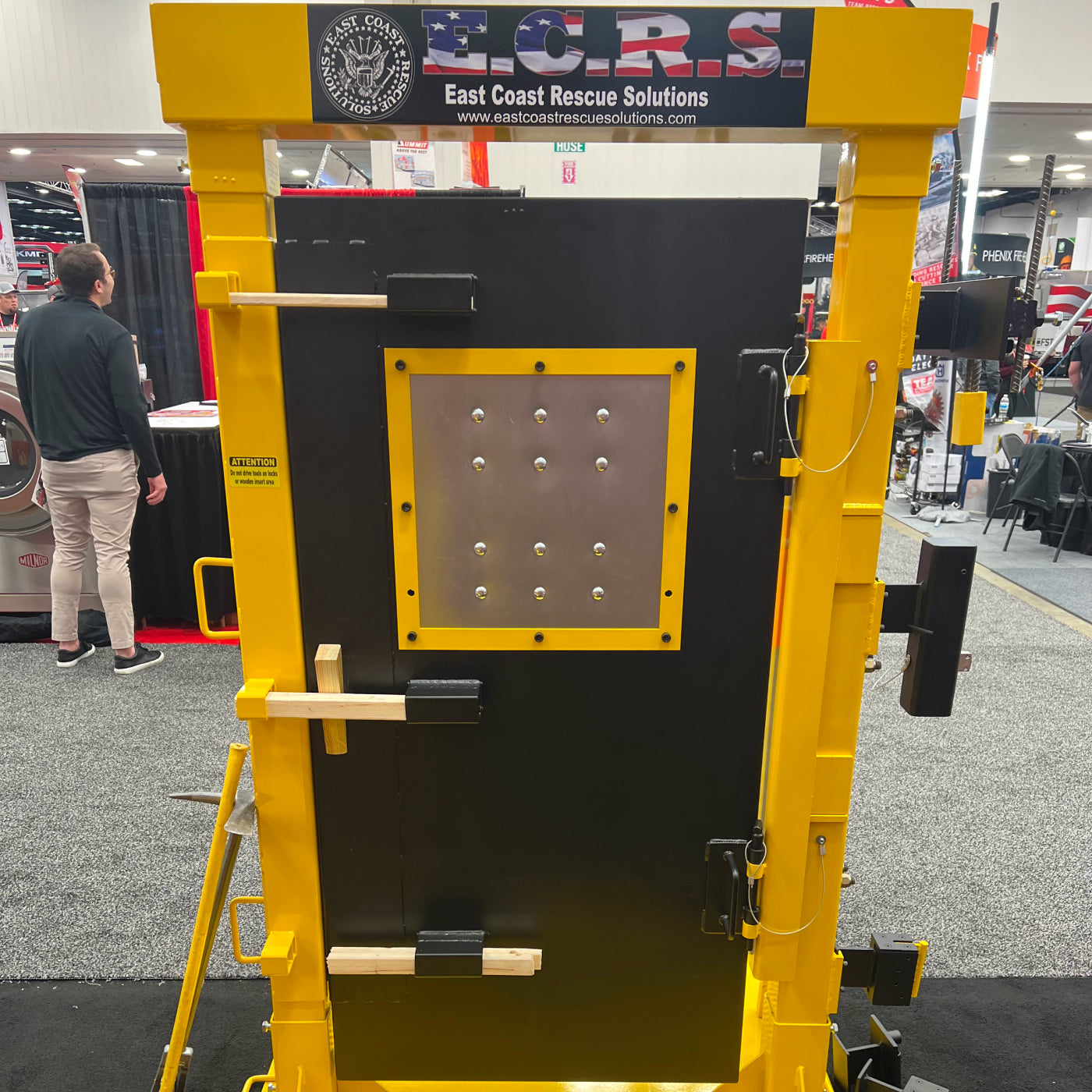
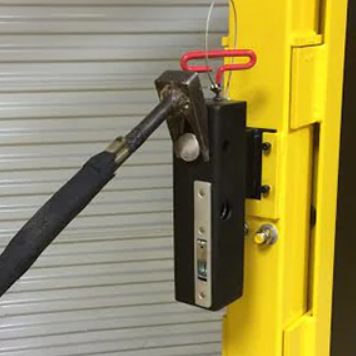
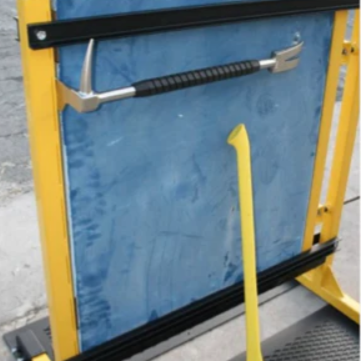
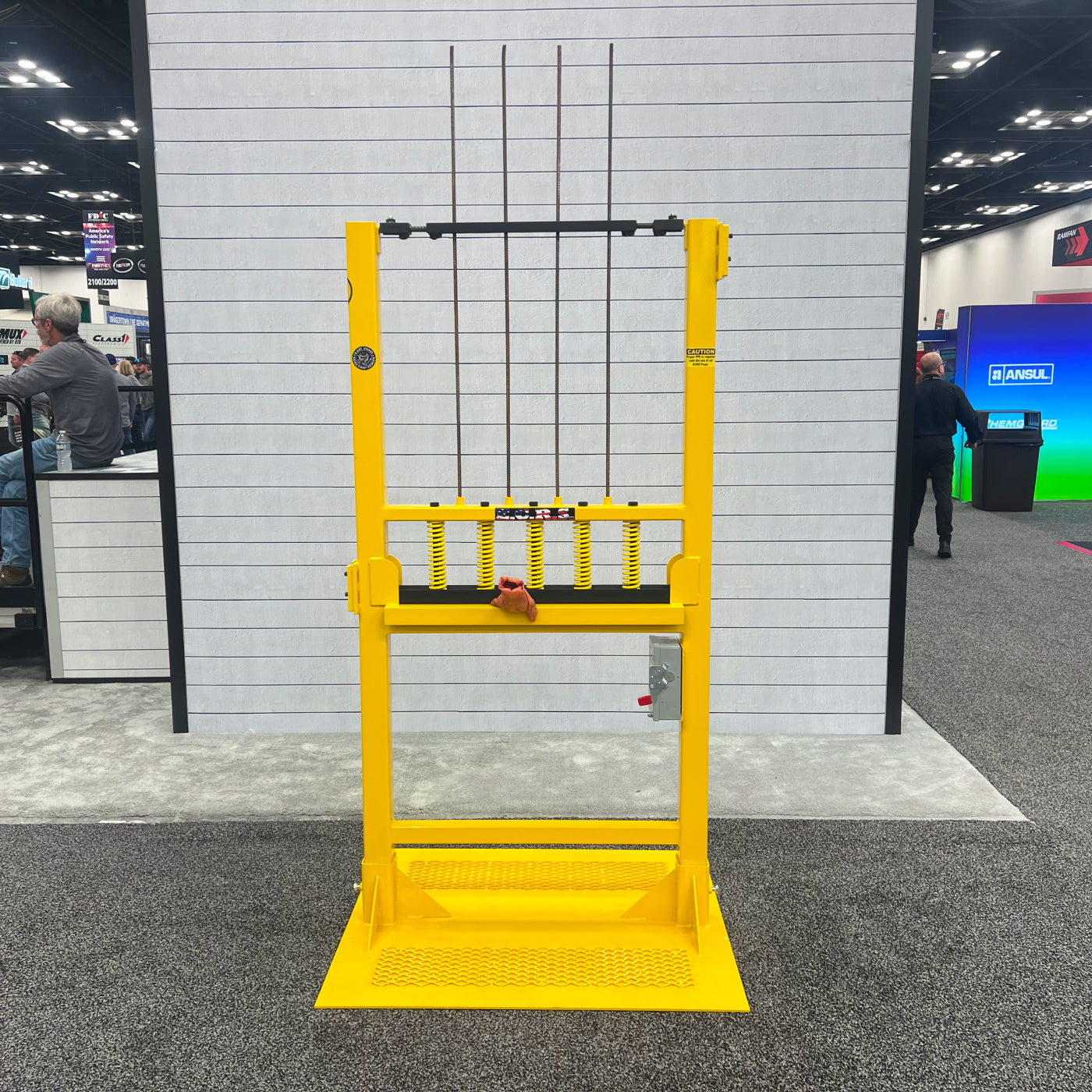
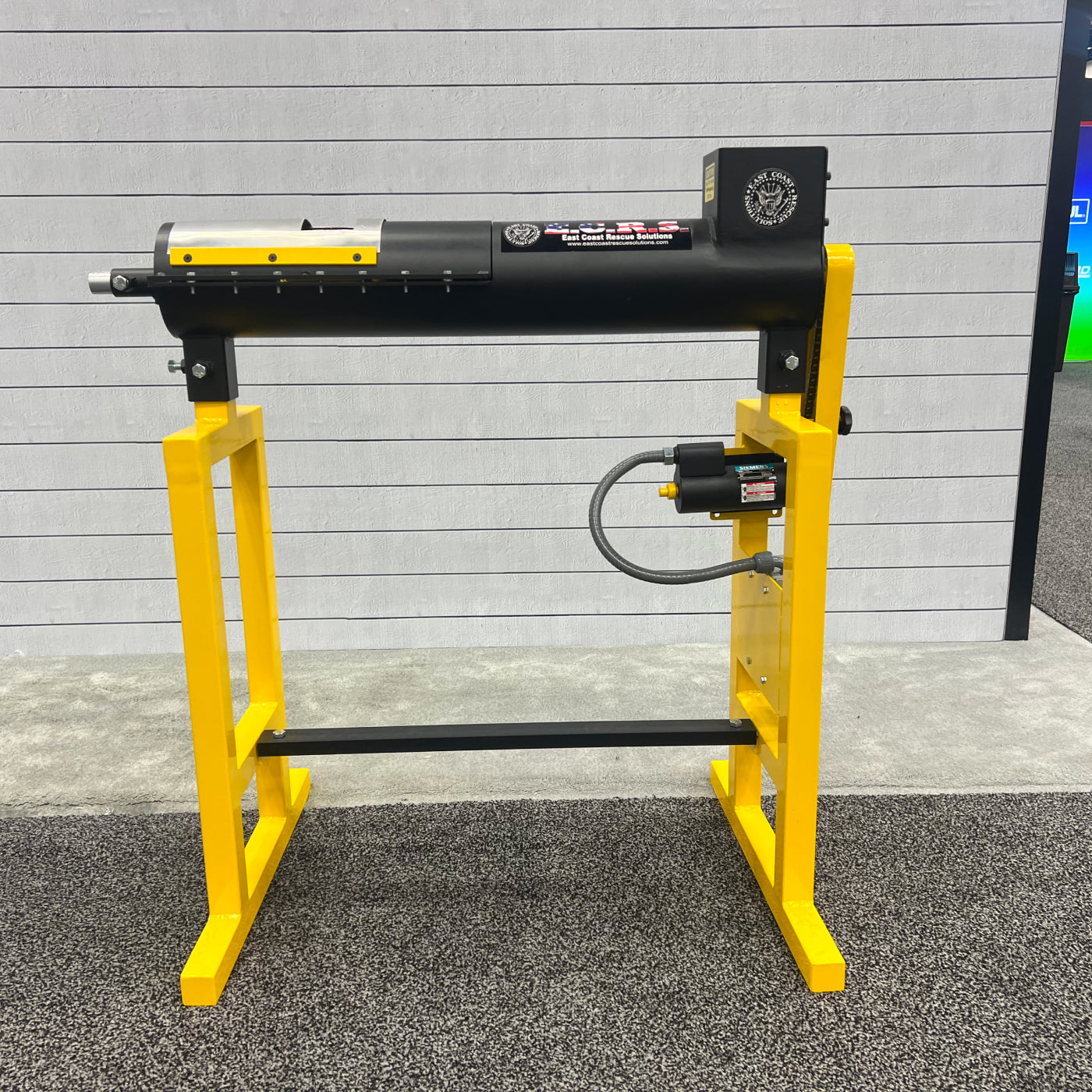
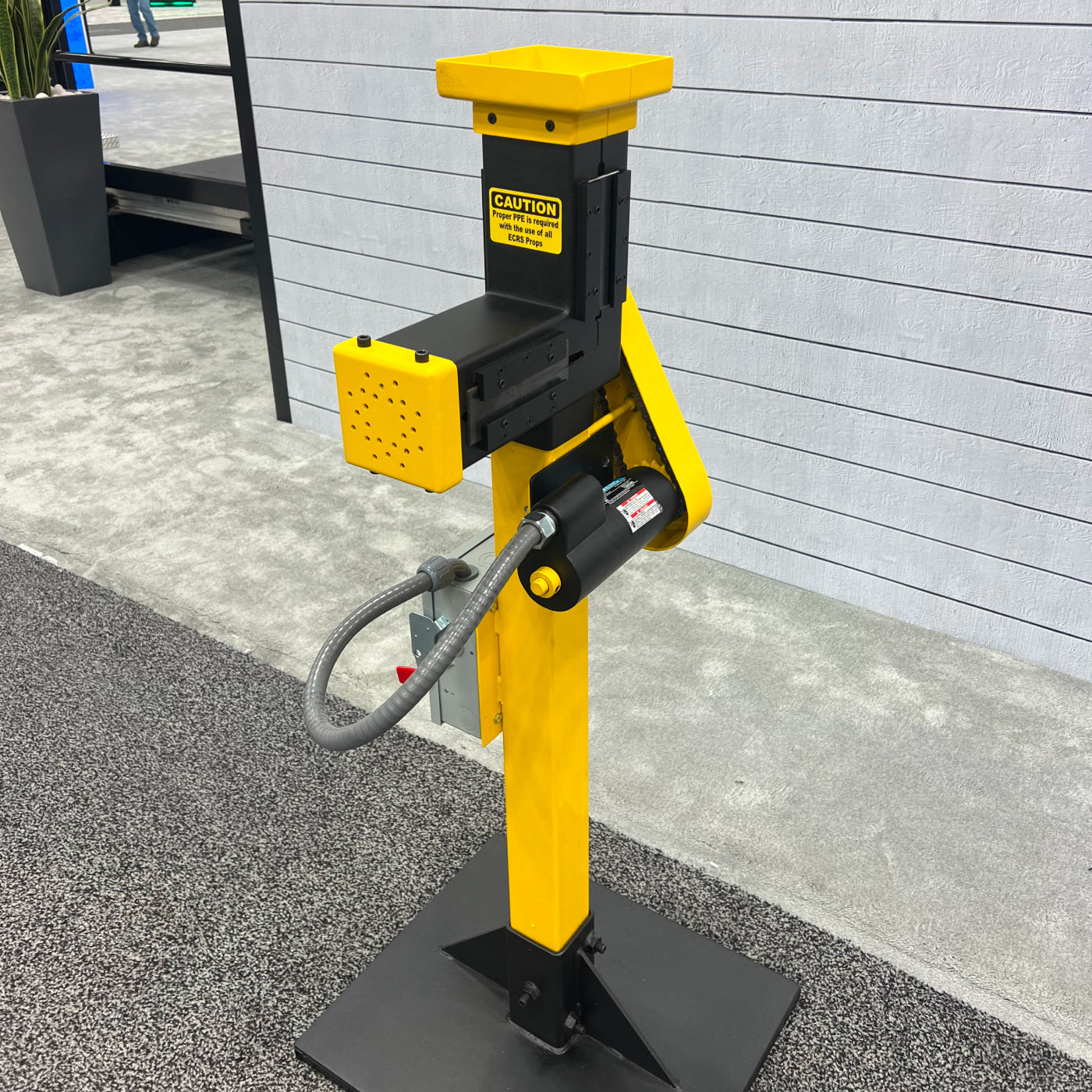







A forcible entry door prop is a reusable training system that allows firefighters to practice forcing doors without destroying an actual door every time they run an evolution.
That's the simple definition.
But a good forcible entry prop should be much more than a steel door firefighters beat on during drill night.
Used correctly, it becomes a platform for teaching size-up, tool placement, leverage, striking, communication, body position, door control and—perhaps most importantly—problem-solving.
The objective isn't to teach firefighters how to open the prop.
It's to give them enough realistic repetitions that when they encounter an unfamiliar locked door at 2 a.m., the fundamentals are already there.
Why Firefighters Need a Door Prop in the First Place
Forcible entry is difficult to become proficient at without actually forcing doors.
You can demonstrate a Halligan in the apparatus bay. You can explain the difference between an inward- and outward-swinging door. You can talk about leverage, lock position and tool orientation.
Eventually, somebody needs to put a tool on a door.
The problem is that real doors aren't practical training equipment.
Once you damage the jamb, break the stop, defeat the lock or destroy the door, you've changed the training problem. Run several firefighters through the same door and eventually there's very little left to force.
That limits repetition.
A purpose-built training door solves that problem by creating a repeatable obstacle that can be reset between evolutions.
A firefighter can perform the force, receive feedback from the instructor, reset the door and do it again.
Then the instructor can change the problem.
That's where the real value begins.
A Forcible Entry Prop Should Teach Size-Up Before It Teaches Force
One bad habit can develop quickly on a training ground:
Firefighters walk up to the prop already knowing what they're supposed to do.
They know it's locked.
They know where it's locked.
They know which way it swings.
They know they're expected to use the irons.
That isn't much of a size-up.
On the fireground, the door doesn't come with instructions.
Before touching the tools, firefighters should be looking at the entire door assembly.
Which direction does it swing?
Where are the hinges?
What does the frame tell you?
How many locking points might be present?
Is there evidence of additional security?
What type of occupancy are you entering?
Does the door even need to be forced?
A good instructor can use the same training prop to make firefighters answer these questions before every evolution.
Don't just say, "Force this inward-swinging door."
Give them the problem and make them identify the solution.
Start With the Fundamentals
Before introducing complicated scenarios, firefighters need clean repetitions of the fundamentals.
For conventional forcible entry, that means developing an understanding of the sequence and what each step is actually accomplishing.
A firefighter shouldn't simply memorize where the Halligan goes.
They need to understand what they're trying to accomplish with it.
During the initial evolution, an instructor can slow everything down.
Watch where the tool is placed.
Watch the firefighter's hands.
Watch body position.
Watch the angle of the Halligan.
Listen to the communication between the firefighter controlling the Halligan and the firefighter with the striking tool.
Are they working together?
Or is one firefighter blindly swinging while the other tries to keep the Halligan in place?
That distinction matters.
Speed can come later.
A firefighter who performs poor technique quickly isn't proficient.
They're just fast.
The Prop Should Provide Feedback
One of the most important aspects of forcible entry is learning to recognize what the door is telling you.
That sounds strange until you've spent time forcing doors.
There is feedback throughout the evolution.
You can feel resistance through the Halligan.
You can see the gap changing.
You can feel whether you've gained a good bite.
You can see the frame or door begin to move.
You can recognize when progress has stopped.
Experienced firefighters learn to process those signals and adjust.
New firefighters often don't.
They become fixated on completing the sequence exactly as they were shown:
Gap.
Set.
Force.
But real doors don't always cooperate with the lesson plan.
Sometimes the initial gap isn't what you wanted.
Sometimes your tool placement isn't right.
Sometimes you're working against more resistance than expected.
Sometimes the door starts behaving differently as force is applied.
That's why a training door needs to provide enough realistic movement and resistance to let firefighters develop feel, rather than simply memorizing movements.
Train Inward and Outward Forces
Firefighters should become comfortable identifying and operating on both inward- and outward-swinging doors.
They are different forcible entry problems.
An inward-opening door generally requires firefighters to work between the door and frame to create space, set the tool and use leverage against the locking mechanism.
An outward-opening door presents a different geometry. Depending on the construction and hardware, firefighters may have access to the hinges, exposed security features or other components that wouldn't be accessible on an inward-opening door.
The important lesson isn't merely knowing two techniques.
It's recognizing which problem you're looking at.
This is one reason the East Coast Rescue Solutions forcible entry prop is built to allow training on both inward- and outward-swinging configurations.
Instead of performing the same force repeatedly, instructors can change the configuration and require firefighters to reassess the door.
Move the Lock
Once firefighters become familiar with a training door, one of the easiest ways to make the drill more useful is to stop putting the resistance in exactly the same place.
Real doors aren't standardized training props.
Locks can be high.
They can be low.
There may be more than one.
Additional security may have been added after the door was installed.
A firefighter who automatically places the Halligan at the same height every time isn't really sizing up the door anymore.
They're remembering the prop.
The ECRS GEN3 and GEN4 training doors have three separate lock positions—top, middle and bottom—as well as more than 65 inches of vertical door stop that can be used during forcing evolutions.
An instructor can use that flexibility to break predictable training patterns.
Put the resistance somewhere different.
Use more than one locking point.
Don't tell the firefighter where it is.
Now the firefighter has to investigate the problem rather than simply repeating yesterday's drill.
Don't Let Firefighters Learn the Prop
This deserves its own section because it's one of the biggest problems with reusable training equipment.
Eventually, firefighters figure it out.
They know exactly where to put the Halligan.
They know how hard they need to hit.
They know how far the prop will move.
They know the trick that makes the door open.
Once that happens, training can look impressive while accomplishing very little.
An instructor has to actively prevent it.
Change variables.
Change resistance.
Change lock locations.
Change the direction of swing.
Change partners.
Start the evolution from a different position.
Add full PPE.
Reduce visibility.
Make the firefighter carry the tools to the door rather than conveniently placing everything beside the prop.
Ask them to explain their size-up.
Make the first approach fail.
Anything that forces firefighters to think again has value.
A forcible entry prop is supposed to help firefighters learn doors.
Firefighters aren't supposed to learn the prop.
Train the Two-Person Team
Conventional forcible entry is not just a Halligan skill.
It's a team skill.
The firefighter operating the Halligan and the firefighter providing the strike need to communicate.
The firefighter controlling the Halligan needs to be able to reposition the tool without worrying about an uncontrolled strike coming down.
The striking firefighter needs to understand the commands being given and deliver accurate strikes to the correct target.
That's why instructors should pay as much attention to communication as they do to the door opening.
If the evolution succeeds but communication is poor, fix it.
If the striking firefighter is swinging before the Halligan firefighter is ready, fix it.
If firefighters are standing in positions that make accurate striking difficult, fix it.
A training prop provides an opportunity to correct these problems when nothing is on fire and nobody is trapped.
Use it.
Add PPE Earlier Than You Think
There's value in initially teaching a new technique without every possible complication.
But firefighters shouldn't become accustomed to performing forcible entry in station clothes.
Gloves matter.
Turnout gear matters.
SCBA matters.
Limited mobility matters.
Tool handling feels different with structural firefighting gloves on. Body positioning changes when you're wearing an air pack. Communication becomes harder when firefighters are masked up and operating around noise.
Once the fundamentals are understood, put firefighters into the equipment they will actually be wearing when they're expected to perform the skill.
The goal isn't to make the drill miserable.
It's to eliminate surprises.
Progress From Technique to Decision-Making
A useful forcible entry program should progress.
An instructor might begin with a clean inward-swinging door and focus entirely on tool mechanics.
Then change the resistance.
Then change the lock location.
Then change the swing.
Then introduce an additional locking point.
Then introduce an obstacle or different piece of hardware.
Eventually, stop telling firefighters what technique they're expected to use.
Give them the door.
Let them solve it.
That's the progression from practicing forcible entry techniques to developing forcible entry firefighters.
Use the Prop for More Than Conventional Entry
Once firefighters have solid fundamentals, the training platform can become much broader.
Depending on the equipment available, crews can work on additional problems such as:
-
Hinge-side attacks
-
Through-the-lock techniques
-
Drop bars
-
Carriage bolts
-
Padlocks
-
Cutting operations
-
Battering ram operations
-
Steel security doors
-
Multiple locking points
-
Mayday forcible entry scenarios
For example, ECRS offers an All-In-One system that can be attached to its GEN3 and GEN4 doors for hinge pulling and cutting, rebar cutting or burning, through-the-lock work and padlock cutting.
The GEN4 can also accommodate a second steel door or steel security screen door.
These aren't simply additional ways to make a drill harder.
They give instructors an opportunity to teach firefighters that conventional forcible entry isn't always the answer.
Sometimes the most important decision is recognizing when to stop doing what isn't working and choose another approach.
Build Scenarios Around Your Response Area
The best forcible entry training program isn't necessarily the one with the most complicated scenarios.
It's the one that reflects the doors your firefighters are likely to encounter.
Take a ride through your first-due.
Look at residential entrances.
Walk through local commercial buildings.
Look at rear doors.
Look at apartment buildings.
Look at renovated occupancies.
Look at security doors and additional locking hardware.
Then bring those observations back to the training ground.
If your district has a large number of outward-swinging commercial steel doors, train on that problem.
If you regularly encounter multiple residential locks, incorporate multiple resistance points.
If security screens are becoming common, don't wait until firefighters encounter one under fire conditions to begin thinking about it.
Training should be driven by the buildings you're protecting.
Reset and Do It Again
Repetition is where a forcible entry prop earns its keep.
A firefighter shouldn't get one force every six months and be expected to maintain proficiency.
They need opportunities to handle the tools, make mistakes, receive correction and repeat the skill correctly.
But repetition shouldn't mean mindlessly opening the same door 20 times.
Think of it as repetition of principles rather than repetition of a script.
The firefighter should repeatedly practice size-up.
Repeatedly demonstrate proper tool placement.
Repeatedly communicate.
Repeatedly establish leverage.
Repeatedly recognize progress.
Repeatedly adjust when something doesn't work.
The exact problem can change while those principles remain constant.
The Door Opening Isn't the End of the Evolution
There's another detail worth training that is easy to overlook:
What happens after the door opens?
Firefighters still need to maintain control of the opening.
Tools need to be managed.
The entry team may need to communicate with the company officer.
The door may need to remain controlled rather than simply swinging open.
Conditions on the other side can change the next action immediately.
If every training evolution ends the second the lock gives way, firefighters are practicing only part of the operation.
Carry the evolution another few seconds.
Force.
Clear.
Control.
Then reset.
A Forcible Entry Prop Is Only as Good as the Training Built Around It
A well-designed training door can provide thousands of repetitions.
It can expose firefighters to inward and outward forces, multiple lock positions, varying resistance and different forcible entry techniques.
But steel doesn't create proficiency by itself.
The instructor does.
A good instructor watches technique instead of simply watching whether the door opens. The instructor changes scenarios before firefighters become too comfortable. The instructor recognizes bad habits and stops them before they become muscle memory.
Most importantly, the instructor keeps bringing the training back to the fireground.
The question isn't:
"Can you force this training door?"
The question is:
"Can you recognize what is keeping an unfamiliar door closed and make a good forcible entry decision under pressure?"
That's what a forcible entry door prop should be used to teach.