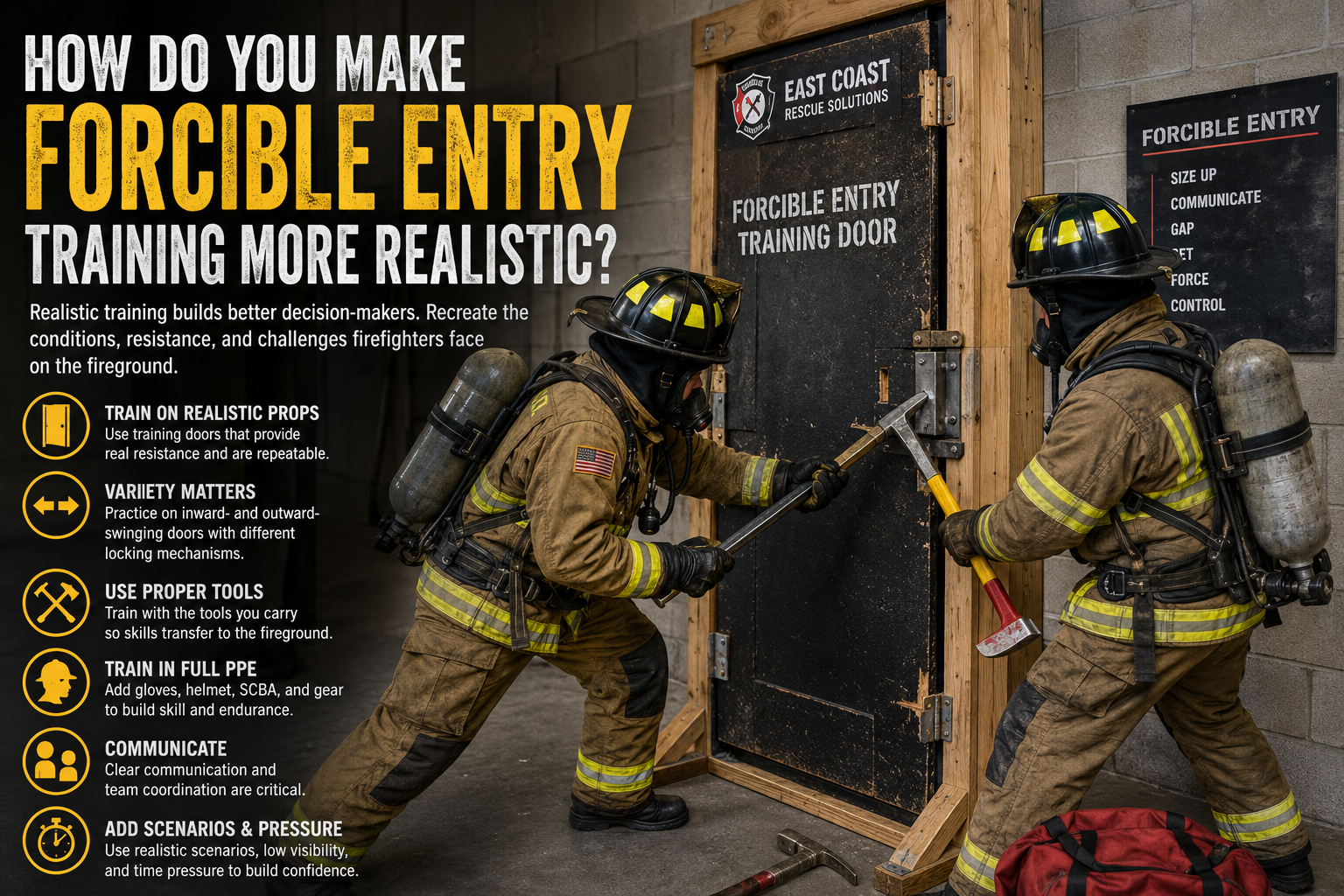







A forcible entry training door has a difficult job.
It needs to be durable enough to take thousands of hits, forces, resets, and repetitions without becoming a maintenance project. At the same time, it cannot be so rigid or predictable that firefighters learn how to beat the prop instead of learning how to force a door.
That distinction matters.
Anyone who has spent enough time around forcible entry training has seen firefighters become very good at a particular training prop. They know exactly where the Halligan needs to go. They know how much resistance to expect. They know that two or three good strikes will get the set. Eventually, they aren't reading a door anymore. They're repeating a sequence they've memorized.
A good forcible entry training door should do the opposite. It should give instructors enough flexibility to teach firefighters to recognize the problem, select the right approach, establish good tool placement, communicate with their partner, and adjust when the first attempt doesn't go exactly as expected.
So if a department is investing in a forcible entry door, what should it actually look for?
1. The Door Should Behave Like a Door, Not a Steel Wall
Durability is important, but more steel doesn't automatically mean better training.
Real doors move.
The door slab can flex. Frames can spread. Gaps change as force is applied. Tool placement and leverage affect how the assembly reacts.
That movement gives firefighters information.
When a firefighter drives an adze into the gap and begins applying leverage, he or she should be learning to feel what the door is doing. Is the gap increasing? Is the frame moving? Is the tool properly set? Is the resistance changing?
A training door that is excessively rigid can remove some of that feedback.
This is one reason the ECRS GEN3 and GEN4 doors are engineered to provide door flex instead of simply creating an immovable steel obstacle. The goal of a forcible entry prop should be to create repeatable resistance while still requiring firefighters to use the mechanics they would use against an actual door.
The firefighter shouldn't just have to hit harder. The firefighter should have to work correctly.
2. You Need to Be Able to Train Both Inward- and Outward-Swinging Doors
A firefighter who is comfortable forcing an inward-swinging residential door has not necessarily mastered an outward-swinging commercial door.
The geometry changes.
Tool placement changes.
The way the firefighter creates and maintains the gap changes.
The information available during size-up changes as well. Hinges, door stops, exposed hardware, bolt heads and other features can tell an experienced firefighter a great deal before the irons ever touch the door.
That makes inward/outward capability one of the first things we would look for in a training door.
A department shouldn't have to buy one simulator for inward forces and another just to introduce outward-swinging doors. Ideally, instructors should be able to move between the two and make firefighters identify what they're dealing with before beginning the evolution.
That last part is important.
Don't always tell the firefighter how the door is configured.
Make them read it.
Ask:
-
Which way is this door swinging?
-
Where do you believe it's locked?
-
What is your first move?
-
Where do you want your Halligan?
-
If that doesn't work, what changes?
Now you're training forcible entry instead of simply practicing a movement.
3. Look at Where the Door Can Be Forced
One detail that gets overlooked when departments compare training doors is the usable forcing area.
If every evolution happens at exactly the same point, firefighters begin developing an unrealistic reference point.
The real world doesn't give us that consistency.
Locks aren't always installed at the same height. Doors can have multiple locking points. Security hardware can change where the entry team needs to work. Sometimes what appears to be the obvious lock isn't the only thing holding the door.
A good training platform should give the instructor room to change the problem.
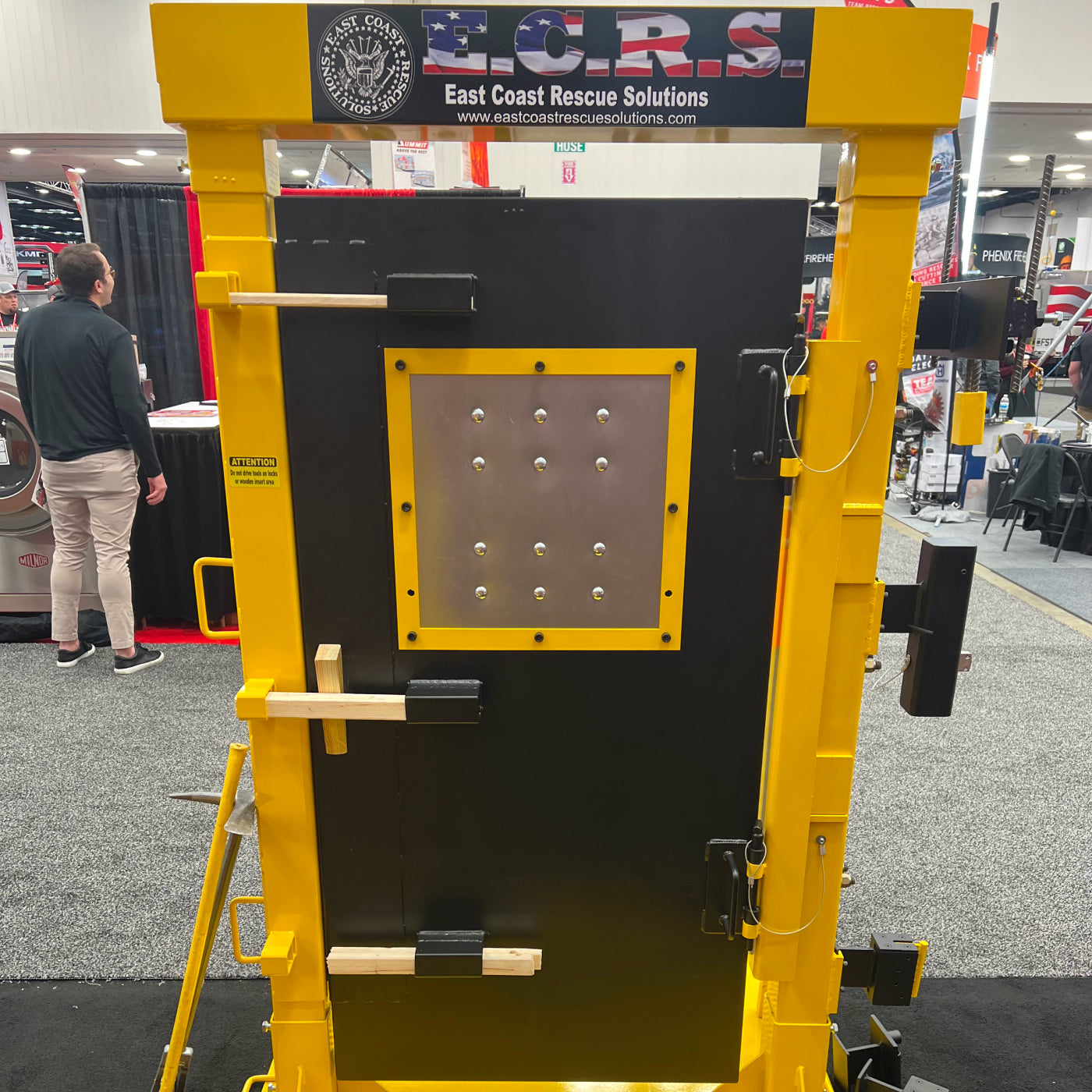
The ECRS GEN3 and GEN4 systems, for example, incorporate three separate lock positions—top, middle and bottom—and more than 65 inches of vertical door stop that can be used during forcing evolutions.
That gives an instructor much more to work with than a single fixed resistance point.
One evolution can be straightforward. The next can move the lock. Another can introduce multiple points of resistance.
The firefighter should have to find the problem rather than knowing where the problem will be before walking up to the door.
4. Repetition Matters, but Identical Repetition Doesn't
Forcible entry is a hands-on skill.
You can explain leverage, body positioning, striking, gapping, setting and forcing in a classroom, but eventually firefighters need irons in their hands.
And they need repetitions.
The mistake is assuming every repetition should be identical.
Early in training, consistency is useful. A new firefighter needs an opportunity to concentrate on the mechanics without having every variable changed at once.
Once those mechanics improve, however, the instructor should start changing the problem.
Change the door swing.
Change the resistance.
Change the lock position.
Change partners.
Have the firefighter work in gloves and full PPE.
Make the entry team operate from a less comfortable position.
Give them a failed first attempt and see how they adjust.
A quality training door should support that progression.
The objective isn't to produce firefighters who are exceptionally good at opening the training door. The objective is to use the training door to produce firefighters who are better at solving forcible entry problems.
5. The Prop Should Allow You to Teach More Than Gap, Set, Force
Conventional forcible entry is fundamental, but it isn't the only problem crews encounter.
Depending on your response area, firefighters may need to deal with:
-
Drop bars
-
Carriage bolts
-
Exposed or concealed locking hardware
-
Hinges
-
Padlocks
-
Security screens
-
Steel doors
-
Through-the-lock entry
-
Cutting operations
-
Battering ram operations
A department investing in a substantial training platform should think about what the prop will allow it to teach two or five years from now—not only what it plans to demonstrate next Tuesday.
This is where modularity becomes valuable.
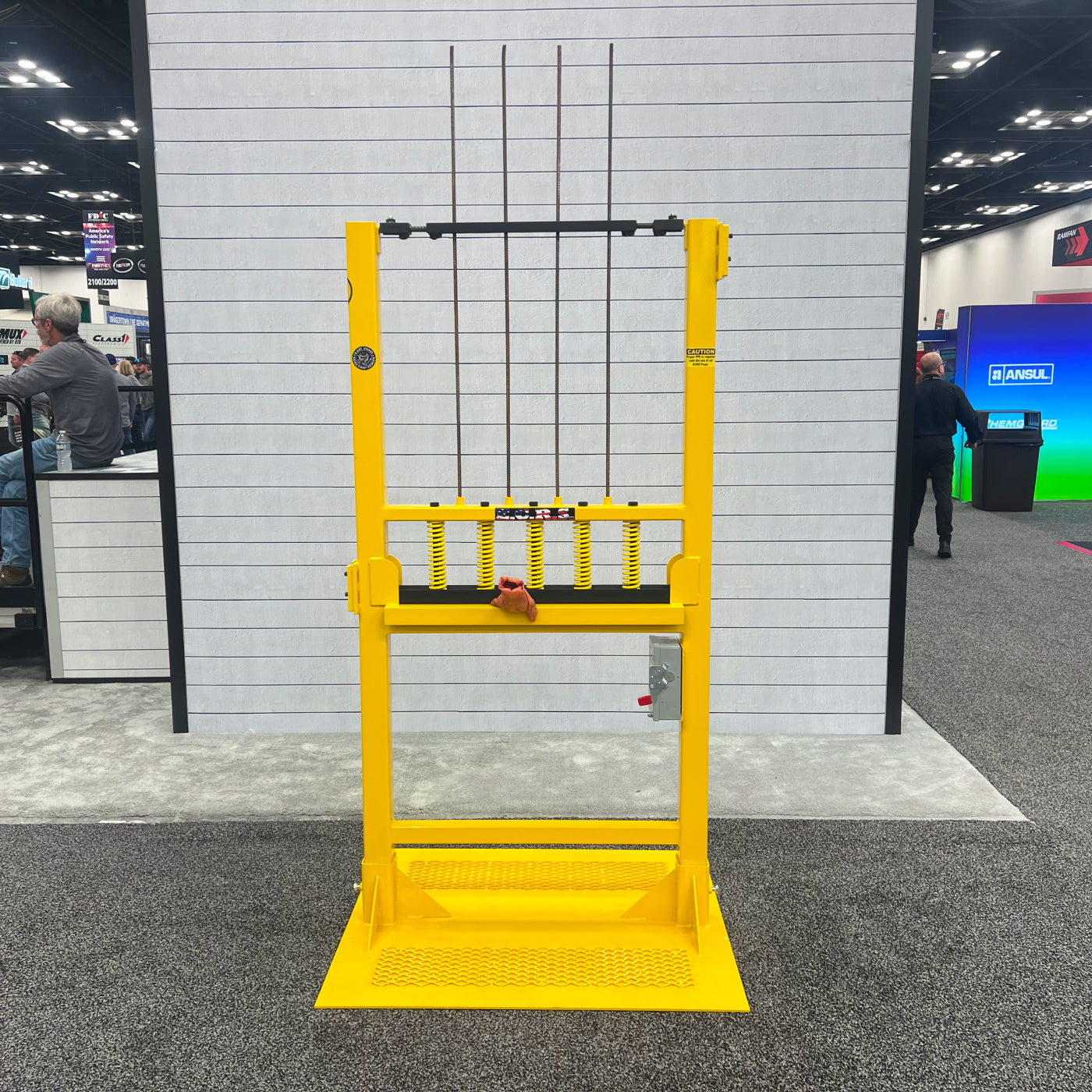
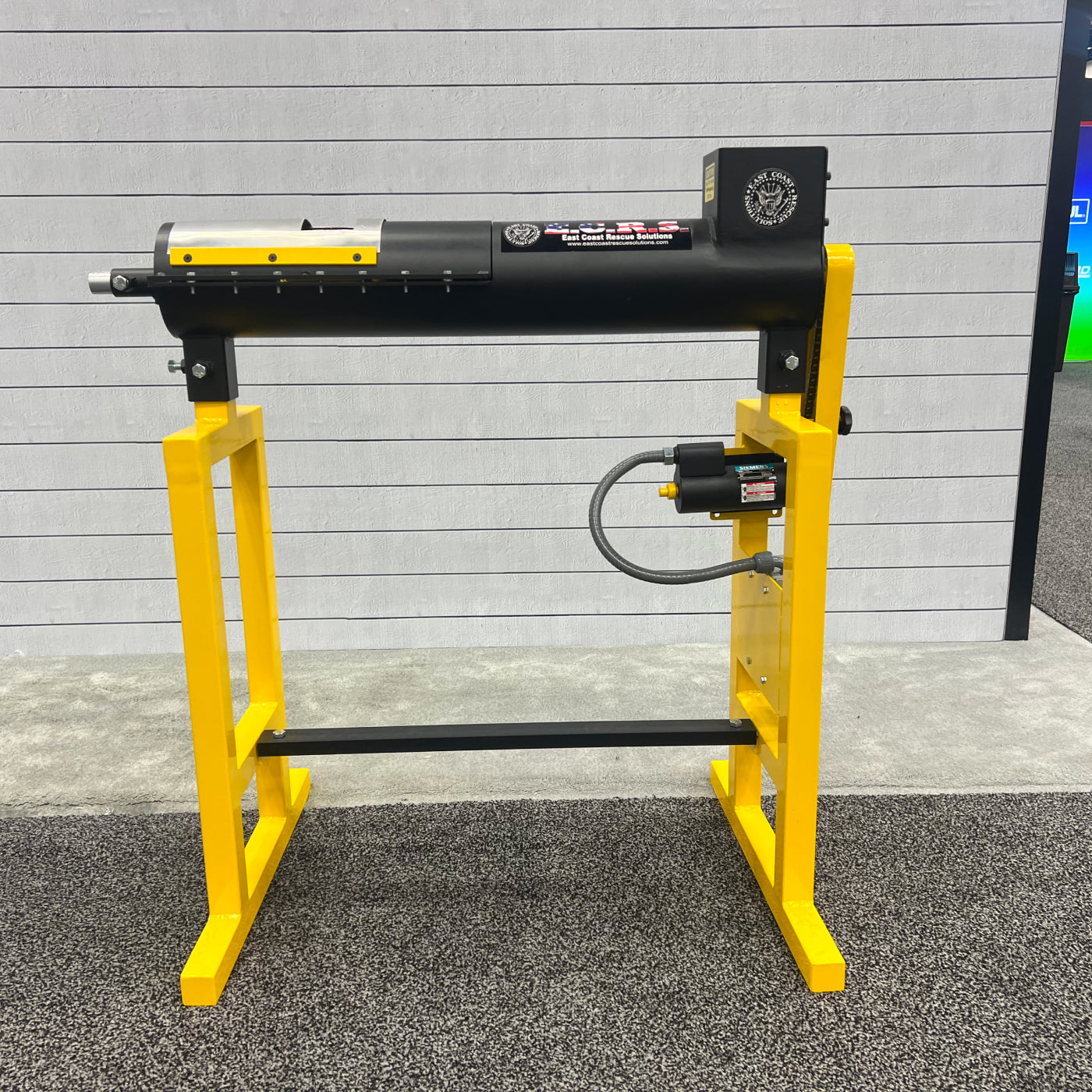
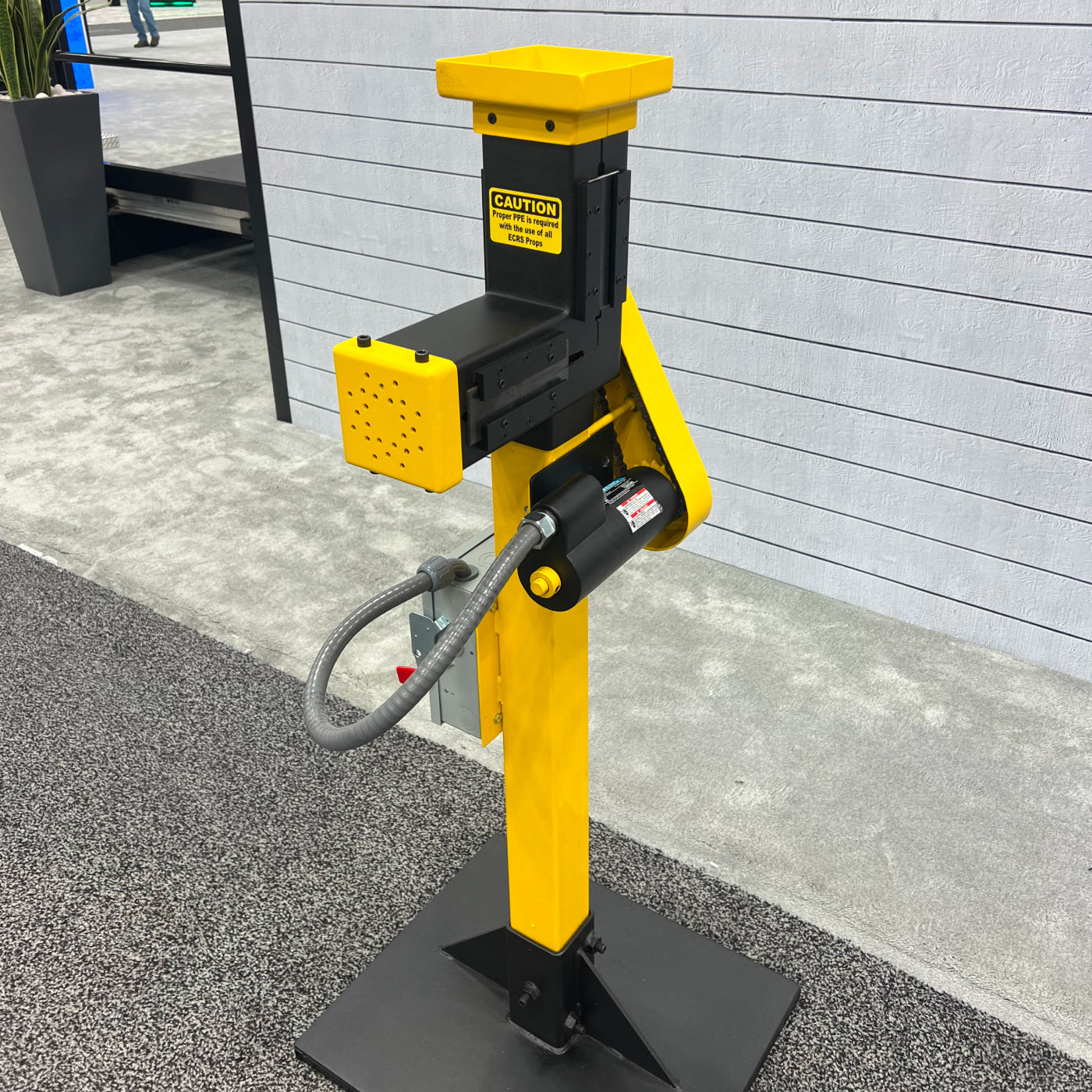
For example, ECRS offers receivers on its GEN3 and GEN4 doors for additional training modules. Its All-In-One system expands training into hinge pulling and cutting, rebar cutting or burning, through-the-lock work and padlock cutting. A removable battering ram plate can also be incorporated for single- and two-firefighter ram operations.
The GEN4 takes the concept further by allowing a second steel door or steel security screen door to be mounted to the system.
You may not need every capability immediately.
But being able to expand a prop is much better than discovering that your expensive training door has only one trick.
6. Pay Attention to the Frame, Not Just the Door
Firefighters force door assemblies, not isolated door slabs.
That sounds obvious, but it's worth considering when evaluating a training prop.
The frame takes tremendous abuse during repeated forcible entry training. Prying, striking and spreading forces are transferred throughout the assembly.
If a prop is going to see heavy recruit-school or in-service use, look closely at how the frame is constructed and reinforced.
This becomes even more important if the department plans to use battering rams.
Simply attaching a striking plate to a door doesn't mean the entire structure was designed to repeatedly absorb ram impacts.
ECRS reinforces the frame of its door for its optional battering ram system rather than relying solely on an attached plate. That is the kind of construction detail departments should be asking about when comparing props.
Ask manufacturers how the system handles repeated loading, what components are considered consumable and what typically wears first.
Those answers tell you much more than the shipping weight of the prop.
7. Consider Reset Time
This is one of the least glamorous specifications and one of the most important once the prop arrives at the firehouse.
How long does it take to reset?
If you have 20 firefighters scheduled for a training night, a prop that takes forever to reset destroys the rhythm of the drill.
Firefighter one gets a good evolution.
Firefighter eight has spent most of the evening standing around.
Good training equipment should allow instructors to get firefighters onto the prop, perform the evolution, evaluate the technique, reset and get the next crew working.
That doesn't mean every scenario needs to be instantaneously reset. Some advanced evolutions naturally require more preparation.
But departments should think in terms of repetitions per training session, not just how impressive the prop looks in a photograph.
8. Portability Is More Important Than It Sounds
Where is the door actually going to live?
That's worth answering before purchasing one.
Some departments have dedicated training facilities where a prop can remain permanently installed. Others need to pull equipment out onto the apparatus floor or apron for drill night. Regional training teams may need to move the system between stations.
A prop that's difficult to move eventually gets used less.
Look at:
-
Overall weight
-
Footprint
-
Whether it can be disassembled
-
How many people are needed to relocate it
-
Whether a mobility system is available
-
Where replacement and training materials will be stored
The ECRS doors can be disassembled, and an optional dolly system allows a single person to relocate the door around the station or training grounds. The dolly is removable during training.
That may seem like a minor feature until you're the person responsible for setting up every drill.
9. Think About Your First-Due Buildings
There isn't one configuration that's perfect for every fire department.
A department protecting predominantly single-family residential construction has different training priorities from an urban department regularly operating in mixed-use buildings, multifamily occupancies and commercial structures with substantial security hardware.
Walk your district.
Look at the doors.
What do your firefighters actually encounter?
Are you seeing mostly residential wood doors?
Steel commercial doors?
Security screen doors?
Multiple locks?
Drop bars?
Padlocks?
Carriage bolts?
Storefront security?
Your training equipment should reflect your response area.
This is also why versatility matters. Building construction and security hardware don't stay the same forever. A prop that can be reconfigured gives instructors a better chance of keeping training aligned with what crews are finding in the field.
10. Don't Forget the Training That Goes With the Prop
One of the worst outcomes is buying an excellent forcible entry door and using it poorly.
A prop doesn't teach forcible entry.
An instructor does.
The equipment simply gives that instructor a repeatable platform on which to teach.
Departments should have instructors who understand not just how to reset the prop, but why the evolution is being configured a particular way.
They should be watching tool placement, striking, communication, body mechanics, leverage and decision-making.
If a firefighter muscles through a poorly executed force and the door opens, that shouldn't automatically be considered a successful repetition.
The door opening is not the entire objective.
Good technique is.
East Coast Rescue Solutions recommends a Forcible Entry Train-the-Trainer class with the purchase of its doors, and that's an approach worth taking seriously regardless of which system a department purchases.
What Makes a Good Forcible Entry Training Door?
If we had to reduce everything to a checklist, we wouldn't start with thickness of steel or how difficult the prop is to defeat.
We'd ask:
Can this door make our firefighters better at forcible entry?
That means it should provide realistic resistance without teaching firefighters to simply overpower the prop. It should support inward and outward forces. It should let instructors change scenarios. It should survive repeated use. It should be practical to reset and maintain. And ideally, it should grow with the department's training program.
Most importantly, firefighters shouldn't walk up to it already knowing exactly what is going to happen.
The best forcible entry training doesn't teach firefighters how to beat a prop.
It teaches them to read the door, recognize the problem, choose a technique and adapt when the door doesn't cooperate.
That's the skill they'll actually need when the training evolution is over.