
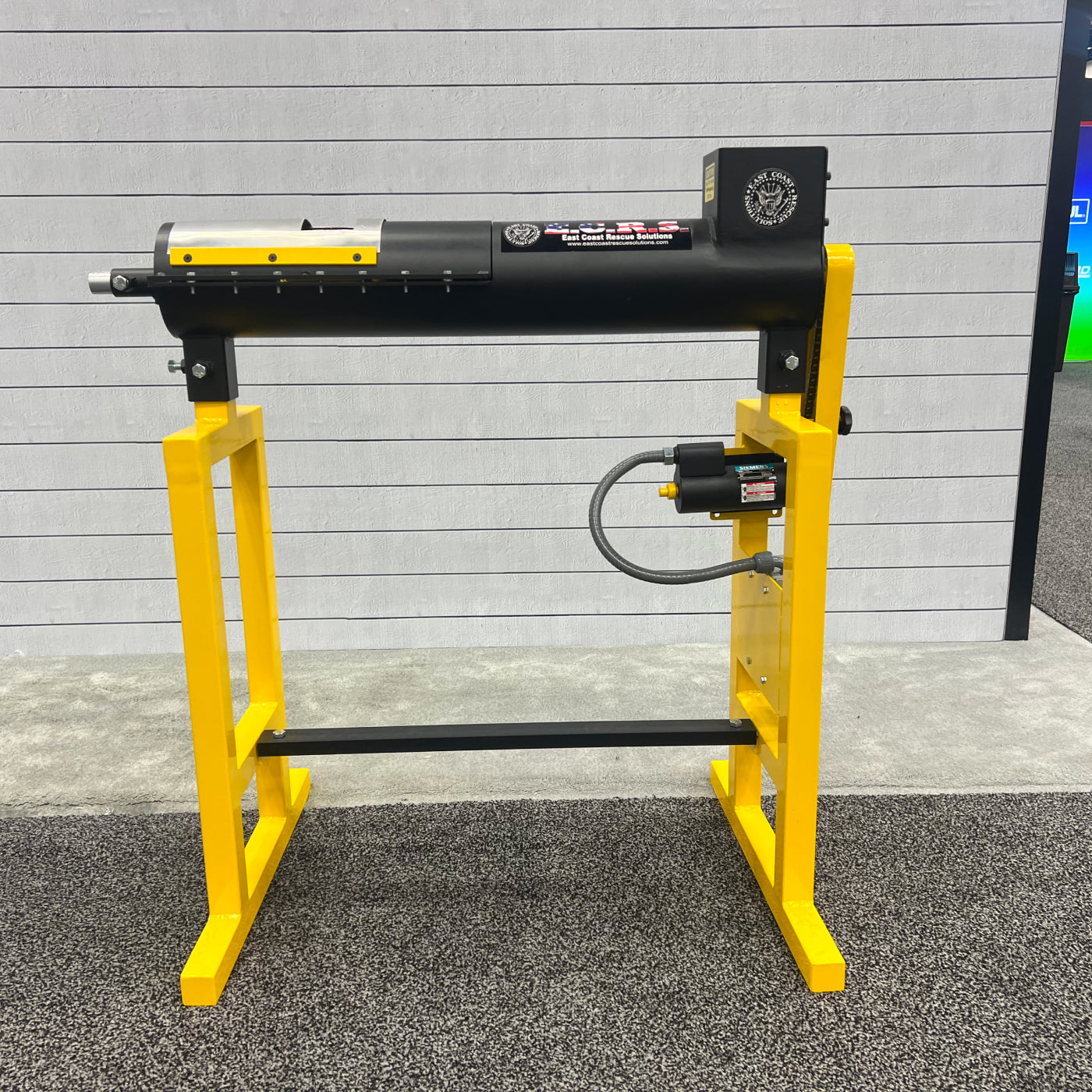
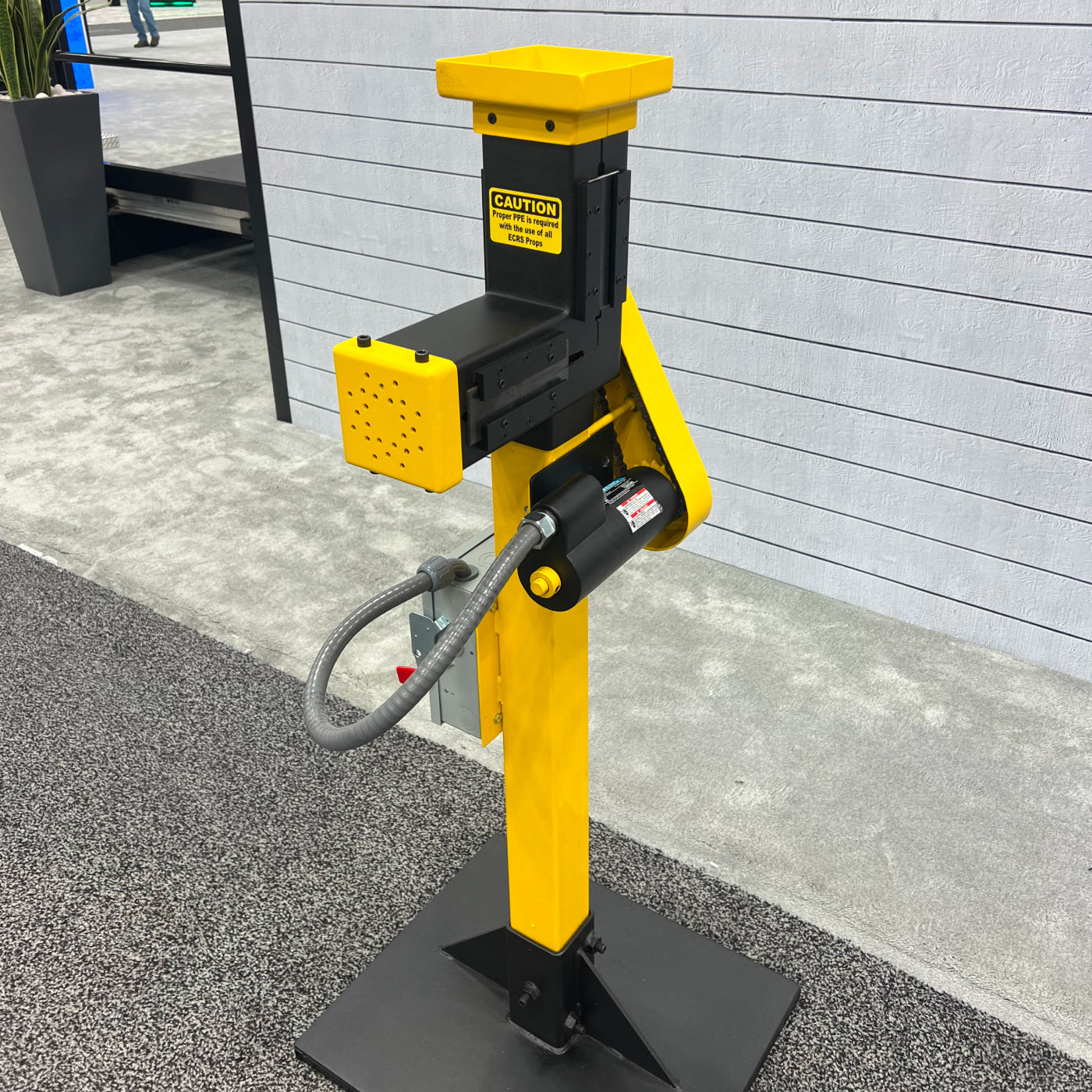







Good forcible entry training shouldn't begin and end with firefighters taking turns forcing the same door.
That's practice, but eventually it becomes predictable practice.
Firefighters need clean repetitions to develop basic mechanics. After that, instructors should start changing the problem. Move the lock. Change the swing. Increase resistance. Restrict the working area. Reduce visibility. Give the crew a failed first attempt and see whether they recognize that it's time to change tactics.
The goal isn't to make every drill difficult.
It's to develop firefighters who can look at an unfamiliar door, understand what they're dealing with, select an appropriate technique and adjust when the door doesn't behave the way they expected.
Here are the forcible entry drills we would build into a department's training program.
Drill 1: Door Size-Up Without Forcing Anything
Before firefighters start swinging tools, spend some time looking at doors.
This is one of the easiest forcible entry drills to run, and it requires almost no setup.
Walk firefighters around the station, training facility or response area and ask them to size up different doors.
For each one, ask:
-
Which direction does it swing?
-
How do you know?
-
Where are the hinges?
-
What type of frame are you looking at?
-
Where does the door appear to be locked?
-
Is there more than one locking point?
-
Has additional security been added?
-
What would be your first forcible entry approach?
-
What would make you change that approach?
Don't let the answer simply be, "I'd force it."
Make firefighters explain what they see.
An experienced firefighter often gathers a surprising amount of information before touching the door. Newer firefighters need to develop that same habit.
What this drill teaches
Recognition before action.
A firefighter shouldn't arrive at every door with the Halligan already committed to one technique.
Drill 2: Slow Gap, Set and Force
Now move to the training door.
Don't time the evolution.
Don't make it a competition.
Don't load the prop with maximum resistance.
Have firefighters perform a deliberate inward-door force while the instructor watches every part of the movement.
Pay attention to:
-
Halligan orientation
-
Hand position
-
Body position
-
Where the adze is placed
-
How the firefighter creates the initial gap
-
How progress is maintained
-
Depth of the set
-
Striking accuracy
-
Communication
-
Use of leverage
Stop the evolution when necessary.
Correct the problem.
Reset.
Do it again.
This isn't the exciting drill you'll post on social media, but it may be the most important one in the program.
You don't fix bad mechanics by adding smoke and turning the lights off.
You fix them while you can see them.
Drill 3: Two-Firefighter Irons Communication
A Halligan firefighter and striking firefighter need to operate as a team.
That sounds basic until you watch an inexperienced pair work.
One firefighter is trying to reposition the Halligan while the other is already winding up for another strike. Commands aren't clear. Strikes miss the target. Nobody is sure who is controlling the pace of the evolution.
Run drills where communication is the primary objective.
The firefighter on the Halligan controls the evolution.
The striking firefighter listens.
If the tool needs to be repositioned, striking stops.
If another strike is required, the command is clear.
Once the crew becomes comfortable, put them in full PPE and SCBA.
Communication that seems easy while standing in station uniforms becomes very different through facepieces, around running equipment and under stress.
What this drill teaches
Tool coordination and trust between partners.
A good irons team should begin to feel like one operation rather than two firefighters performing separate tasks.
Drill 4: Inward vs. Outward Recognition
Configure the training door for an inward force.
Run the evolution.
Then configure it for an outward force.
Run it again.
At first, explain the differences and allow firefighters to concentrate on mechanics.
After several repetitions, stop telling them which configuration they're getting.
Bring the firefighter to the door and say:
"Gain entry."
Now watch what happens.
Do they inspect the door?
Do they identify the hinges?
Do they recognize the stop?
Do they select the appropriate tool position?
Or do they immediately begin performing the technique from the previous evolution?
This is where you find out whether firefighters understand doors or simply remember drills.
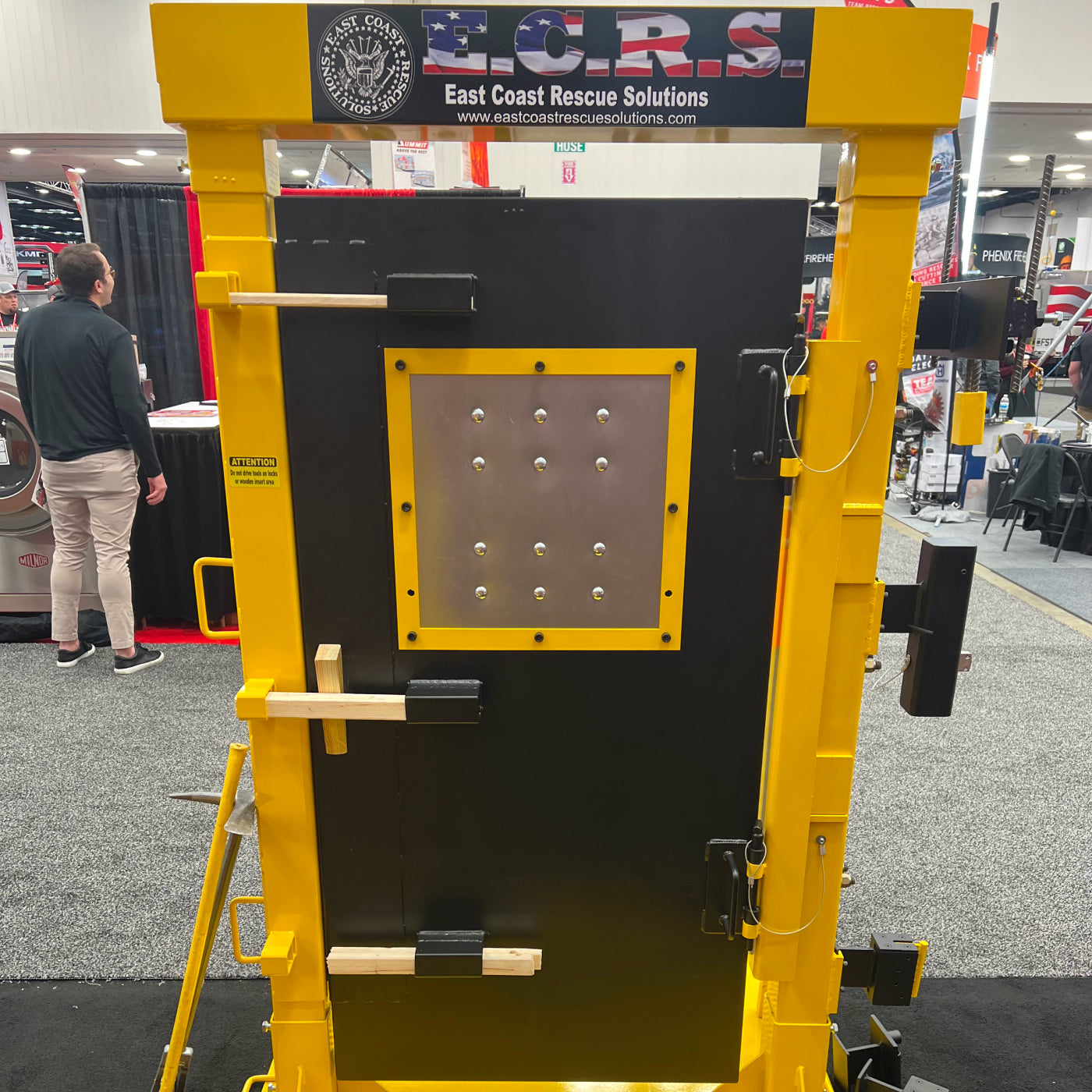
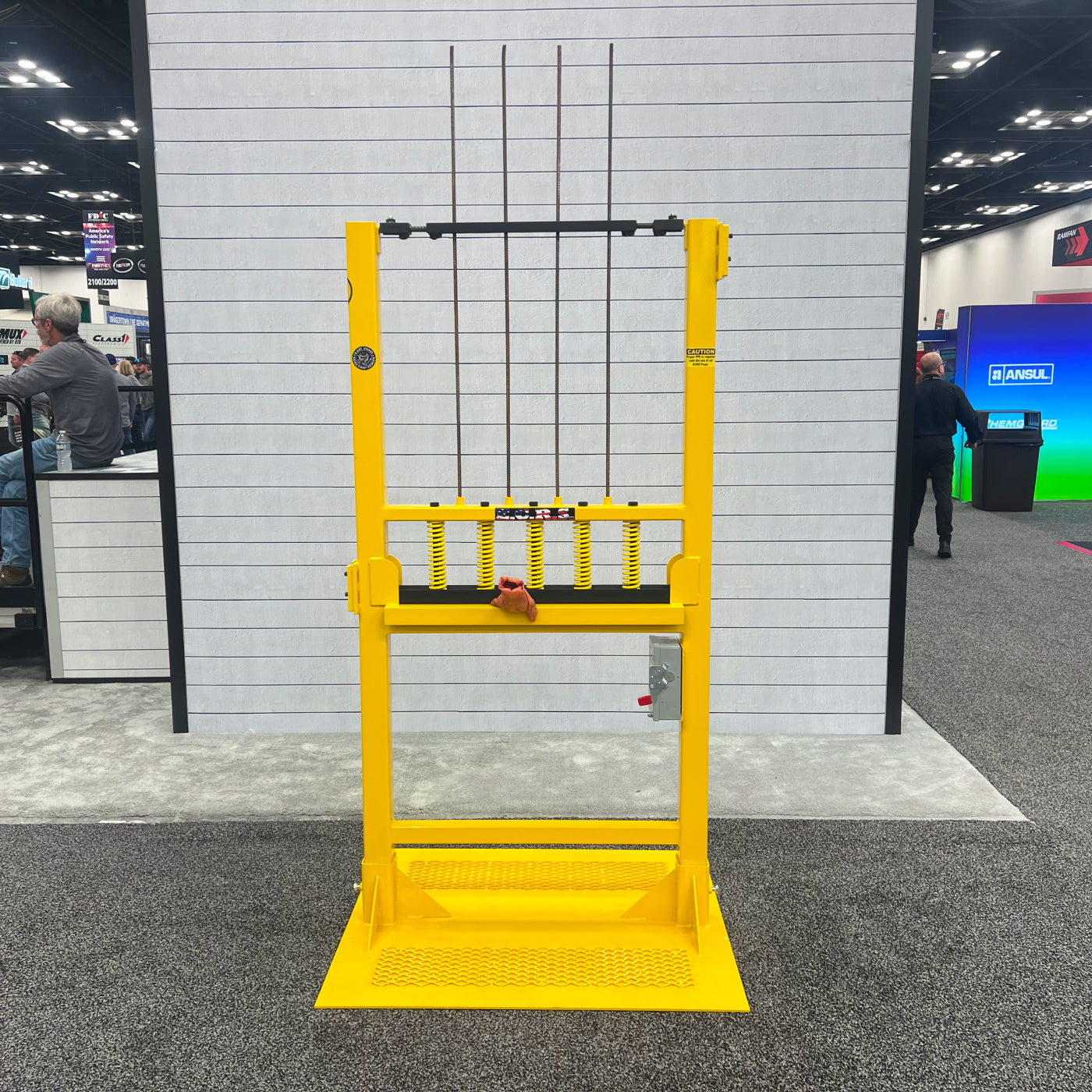
A training system such as the East Coast Rescue Solutions forcible entry prop allows instructors to work both inward- and outward-swinging door configurations on the same platform, which makes this type of progression much easier to run.
Drill 5: Move the Lock
This is a simple change that can dramatically improve a drill.
Stop putting the resistance in the same place.
If firefighters always force a lock positioned at approximately waist height, they'll eventually walk up to the prop and automatically put the Halligan there.
They aren't finding the lock anymore.
They're finding the prop's lock.
Instead, change the resistance point.
Put it high.
Put it low.
Don't tell the crew where you put it.
The ECRS GEN3 and GEN4 training doors provide three lock positions—top, middle and bottom—as well as more than 65 inches of usable vertical door stop for forcing evolutions.
Take advantage of that.
Have the firefighter inspect the door and identify where they believe resistance is coming from.
What this drill teaches
Attack the actual locking point, not the spot where you're accustomed to forcing.
Drill 6: Vary the Resistance
Not every locked door fights the same way.
Your training prop shouldn't either.
Start firefighters with enough resistance that proper technique matters but success is achievable.
Once the mechanics are good, increase it.
Now watch.
Does technique stay clean?
Or does the firefighter immediately abandon leverage and begin swinging harder?
Higher resistance exposes bad habits quickly.
It also teaches an important lesson:
A harder door doesn't automatically require a harder swing.
Sometimes it requires a better set.
Sometimes it requires better leverage.
Sometimes it requires moving the tool.
Sometimes it requires recognizing that something else is keeping the door closed.
Resistance should force firefighters to think, not simply exhaust them.
Drill 7: The Failed First Attempt
This is one of our favorite ways to move beyond repetitive prop training.
Set up an evolution where the firefighter's initial approach isn't enough.
Maybe there is another resistance point.
Maybe the first tool placement isn't ideal.
Maybe the instructor deliberately configures the door differently than the crew expects.
Then let them work.
Don't immediately tell them what's wrong.
See whether they recognize that their approach isn't producing progress.
There's a tendency during forcible entry training to treat persistence as success.
Firefighters keep hitting.
And hitting.
And hitting.
Eventually the prop opens.
Everybody considers the evolution successful.
But what did we actually reinforce?
On the fireground, time matters.
A firefighter needs to recognize when an approach isn't working and make an intelligent adjustment.
What this drill teaches
Don't confuse effort with progress.
Drill 8: Full PPE and SCBA
Once firefighters have demonstrated good mechanics, add the equipment they'll actually be wearing.
Full turnout gear.
Structural gloves.
SCBA.
Facepiece.
Now repeat drills they already know.
Watch how things change.
Structural gloves reduce dexterity.
The air pack changes body position.
The facepiece limits vision.
Communication becomes more difficult.
The objective isn't to make firefighters uncomfortable for the sake of realism.
It's to prevent them from discovering these differences for the first time when they need the skill.
Drill 9: Reduced-Visibility Forcible Entry
Once firefighters are proficient in full PPE, reduce their visual information.
Don't immediately make the drill completely blind.
Progress toward it.
Dim the training area.
Obscure portions of the door.
Use whatever safe training method your department employs to simulate reduced visibility.
Then make firefighters work through the same size-up and forcible entry principles.
This is where tactile information becomes more important.
Can the firefighter locate the door frame?
Can they identify hardware by touch?
Can they maintain control of their tools?
Can the team communicate?
Can they recognize whether they're actually making progress?
The fundamentals haven't changed.
The amount of information available has.
Drill 10: Restricted-Space Forcible Entry
A wide-open training pad is convenient.
A real doorway may not be.
Look at your response area.
You may have doors located in:
-
Narrow apartment hallways
-
Stairwell landings
-
Basement stairs
-
Alleys
-
Small vestibules
-
Utility spaces
-
Between parked vehicles
-
Behind exterior obstructions
Build controlled restrictions around the prop.
Don't create artificial difficulty just to make firefighters struggle.
Reproduce a real problem.
Maybe the striking firefighter can't stand in the ideal location.
Maybe there isn't enough room for a full swing.
Maybe the Halligan firefighter has to work from a less comfortable body position.
The technique may need to adapt without abandoning the underlying principles.
What this drill teaches
Perfect conditions are a training-ground luxury.
Drill 11: Weak-Side and Awkward-Position Forcing
Firefighters naturally want to work from their strongest position.
Doors don't care.
Create evolutions where firefighters can't assume their preferred stance.
Change which side they approach from.
Limit where the striking firefighter can stand.
Force firefighters to reposition their bodies while maintaining tool control.
Again, don't turn it into circus training.
There should be a realistic reason for the restriction.
The purpose is to build options.
A firefighter who has only practiced one stance, from one side, against one door configuration has learned a very narrow skill.
Drill 12: Multiple Locking Points
Once crews are proficient with a single locking point, give them more than one.
This changes the evolution in an important way.
The first lock fails.
But the door doesn't open.
What happens next?
An inexperienced firefighter may assume the force failed and start attacking the same location again.
A more experienced firefighter asks:
What else is holding this door?
That's exactly the thought process we want.
Multiple resistance points teach firefighters to interpret what happens after the first force.
Did the door move?
Where is it still secured?
What does that movement tell us?
Then attack the remaining problem.
Drill 13: Through-the-Lock Decision-Making
Not every locked door needs to be heavily damaged.
There are situations where through-the-lock techniques may provide a more appropriate means of gaining entry.
The important word is decision-making.
Don't simply set up a through-the-lock station and tell firefighters, "Today we're doing through-the-lock."
Give them a scenario.
Ask:
Would conventional forcible entry be appropriate?
Do conditions justify destructive entry?
Is there an opportunity for a less destructive technique?
What tools are available?
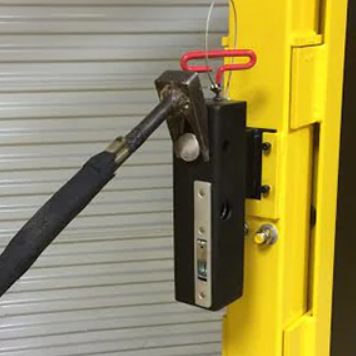
ECRS offers a reusable through-the-lock training module as part of its broader training system, allowing instructors to incorporate this type of work without making it a completely separate training program.
The lesson isn't just how to perform the technique.
It's knowing when the technique belongs in the toolbox.
Drill 14: Battering Ram Operations
If your department carries and uses a battering ram, train with it.
And don't treat it as simply a bigger hammer.
Body position matters.
Target selection matters.
Communication matters.
Control matters.
Run both single-firefighter and team evolutions if those methods are appropriate for your equipment and SOPs.
Pay particular attention to what happens when the first strike doesn't achieve entry.
Does the firefighter maintain control?
Can the team quickly reset?
Are they striking the appropriate portion of the door?
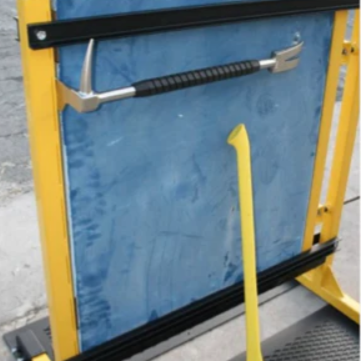
The ECRS system offers a removable battering ram plate, with additional reinforcement built into the frame to handle the repeated forces involved in ram training.
If you're going to train with this type of equipment, use a platform designed to absorb it.
Drill 15: The Unknown Door
This is where the previous drills come together.
Don't tell the crew anything.
Configure the door before they arrive.
Choose:
-
Inward or outward swing
-
Lock position
-
Resistance level
-
One or multiple locking points
-
Available working space
-
Visibility
-
Additional hardware, if your training system allows it
Give firefighters a short scenario.
Then:
"Gain entry."
Watch their process.
Do they size up the door?
Do they communicate?
Do they choose the right starting point?
Do they use the tools properly?
Do they recognize progress?
Do they recognize failure?
Do they adjust?
At this stage, the instructor should be evaluating much more than whether the door eventually opens.
The decision-making is the drill.
Drill 16: Force, Control and Continue
One last bad training habit is ending every evolution the instant the door opens.
On the fireground, forcing the lock isn't the end of the operation.
The crew still needs to manage the opening.
So don't yell "done" the moment the door gives.
Require firefighters to:
Force the door.
Control the door.
Clear the opening.
Communicate.
Prepare to continue the operation.
Depending on the scenario, that might mean coordinating with the hose line, controlling the flow path, maintaining the door position or preparing to enter.
Make the last five seconds of the drill matter too.
How Should a Department Structure These Drills?
Don't try to run all 16 during one training night.
Build a progression.
For newer firefighters, start with:
Size-up → basic mechanics → communication → inward/outward forces.
Then introduce:
Different lock positions → resistance → PPE → multiple locking points.
Once the fundamentals remain consistent, progress toward:
Reduced visibility → restricted space → failed attempts → unknown-door scenarios.
That's an important sequence.
Complexity shouldn't be used to hide poor technique.
If a firefighter can't consistently perform the mechanics in good conditions, turning off the lights isn't going to improve the situation.
Master the skill.
Then make the environment harder.
Don't Let the Prop Become the Drill
This is probably the most important takeaway.
A forcible entry door is equipment.
It isn't the training program.
If firefighters know exactly where the resistance is, exactly how the door swings, exactly how many hits it normally takes and exactly what the instructor expects them to do, they've begun learning the simulator.
Change something.
The best forcible entry drills force firefighters to keep applying the same fundamentals to slightly different problems.
Size up.
Communicate.
Place the tool correctly.
Use leverage.
Read the door.
Recognize progress.
Adjust when necessary.
Control the opening.
Those principles transfer from the training ground to an unfamiliar door.
And ultimately, that's the entire reason for putting the prop in the station in the first place.