







One of the first things a firefighter should determine before forcing a door is also one of the easiest things to overlook during training:
Which way does the door swing?
That decision changes the forcible entry problem.
An inward-swinging door and an outward-swinging door may use the same set of irons, but the mechanics aren't identical. The relationship between the door, frame, stop, hinges and locking hardware changes. So does the way the Halligan is positioned and the direction in which leverage needs to be applied.
This is why firefighters shouldn't just practice "forcing a door."
They need repetitions on both inward- and outward-opening doors, and they need to understand why they're approaching each one differently.
More importantly, they should learn to recognize the difference before somebody tells them which technique to use.
Start by Reading the Door
Before the Halligan comes off the firefighter's shoulder, look at the door.
That's the habit instructors should reinforce from the beginning.
Firefighters should be looking for clues such as:
-
Visible hinges
-
Door stops
-
The relationship between the door and frame
-
Lock cylinders
-
Deadbolts
-
Multiple locking points
-
Panic hardware
-
Carriage bolts
-
Added security hardware
-
Gaps around the door
-
Signs that the door has been modified
Visible hinges on your side generally indicate an outward-swinging door. If the hinges aren't visible and a stop prevents the door from moving toward you, you're likely looking at an inward-swinging door.
But don't stop at identifying the swing.
Ask what else the door is telling you.
A firefighter should be developing a mental picture of what is holding the door closed before beginning the force.
That becomes especially important on commercial occupancies where the locking system may be more complicated than the single residential lock firefighters are accustomed to seeing during basic training.
Training an Inward-Swinging Door
On an inward-swinging door, conventional forcible entry commonly revolves around creating enough space between the door and frame to get the Halligan into a useful position, setting the tool properly, and then using leverage to defeat the locking mechanism.
The familiar sequence is:
Gap. Set. Force.
Those three words are useful for teaching, but they can also become too mechanical if instructors aren't careful.
A firefighter can memorize the sequence without understanding what each step is accomplishing.
The Gap Has a Purpose
The objective isn't simply to stick the adze into the door somewhere.
You're creating working space.
That space allows the tool to advance farther into the door assembly and eventually reach a position where meaningful leverage can be applied.
Watch what newer firefighters do during this portion of the evolution.
Are they controlling the Halligan?
Are they working the tool or simply waiting for their partner to hit it?
Are they reading the movement of the door and frame?
Are they maintaining the progress they've already made?
Those details matter.
The Set Needs to Be Deep Enough
A shallow set creates a poor mechanical position.
The firefighter operating the Halligan needs to recognize when the tool is actually where it needs to be rather than automatically moving to the next step because the sequence says it's time to force.
This is where communication between the firefighter on the Halligan and the striking firefighter becomes critical.
The striking firefighter should not be swinging independently.
The Halligan firefighter controls the evolution.
If the tool needs to be repositioned, the striking stops.
If another hit is needed, the Halligan firefighter communicates it.
This isn't just drill-ground etiquette.
It prevents injuries and creates a two-person team that can work efficiently when conditions are considerably worse.
Force With Leverage, Not Frustration
Once the Halligan is properly set, leverage does the work.
Or at least it should.
If the firefighter's solution to every difficult door is "hit it harder," something is missing from the training.
Good forcible entry depends on mechanical advantage.
Tool position, fulcrum placement, body position and the length of the Halligan are all working together.
A firefighter should learn to recognize when leverage is increasing the opening and when nothing productive is happening.
If the door isn't moving, don't just repeat the same unsuccessful action indefinitely.
Stop.
Reassess.
What is preventing progress?
That's a far more valuable training lesson than eventually overpowering the prop.
Training an Outward-Swinging Door
Now reverse the door.
The problem changes immediately.
On an outward-swinging door, the stop and frame configuration are different, and the hinges are typically visible from the approach side.
Instead of approaching the evolution as though it were an inward-opening door, firefighters need to understand how to establish a useful purchase and apply leverage in the correct direction against the locking mechanism.
This is where firefighters who have trained almost exclusively on inward-swinging props can struggle.
They recognize the tools.
They recognize the door.
But the geometry feels wrong.
That's exactly why outward-door repetitions matter.
Don't Ignore the Hinges
An outward-swinging door exposes something an inward-swinging door usually doesn't:
The hinge side.
That doesn't mean the hinges should automatically become the first target.
The lock side may still provide the quickest and most efficient entry.
But visible hinges give firefighters additional information and another potential option if conventional lock-side entry isn't succeeding.
During training, instructors should ask firefighters to identify the hinges and explain what they tell them about the door before beginning the evolution.
You're building recognition.
Eventually, the firefighter shouldn't have to consciously think:
"Visible hinges equal outward swing."
They should see the door and immediately understand the basic configuration.
Outward Doors Often Deserve More Attention in Training
Residential inward-swinging doors tend to receive a lot of attention during basic forcible entry training.
That's understandable.
But depending on your district, outward-swinging doors may be extremely important.
Think about:
-
Commercial rear doors
-
Utility rooms
-
Mechanical spaces
-
Institutional occupancies
-
Public assembly occupancies
-
Security doors
-
Some multifamily and mixed-use buildings
These doors may also be paired with heavier construction or additional security hardware.
A firefighter who has performed 100 inward forces and five outward forces doesn't have balanced experience.
Look at your first-due and adjust your training accordingly.
The Tool Doesn't Know Which Way the Door Swings
The firefighter needs to.
That sounds obvious, but it gets at a larger training issue.
If every evolution begins with the instructor saying:
"Okay, this is an inward-swinging door. Perform an inward force."
the firefighter isn't practicing recognition.
They're practicing a technique on command.
There's a place for that when teaching a skill for the first time.
Once the mechanics are understood, remove the answer from the question.
Set up the prop.
Bring the crew to the door.
Tell them to gain entry.
Then watch.
Did they identify the swing?
Did they inspect the lock side?
Did they notice additional hardware?
Did they select an appropriate technique?
That's a much better measure of whether the lesson is transferring.
Use One Prop to Teach Two Different Problems
A training system that can be configured for both inward and outward forces gives instructors an important advantage.
They can change the problem without changing the entire training environment.
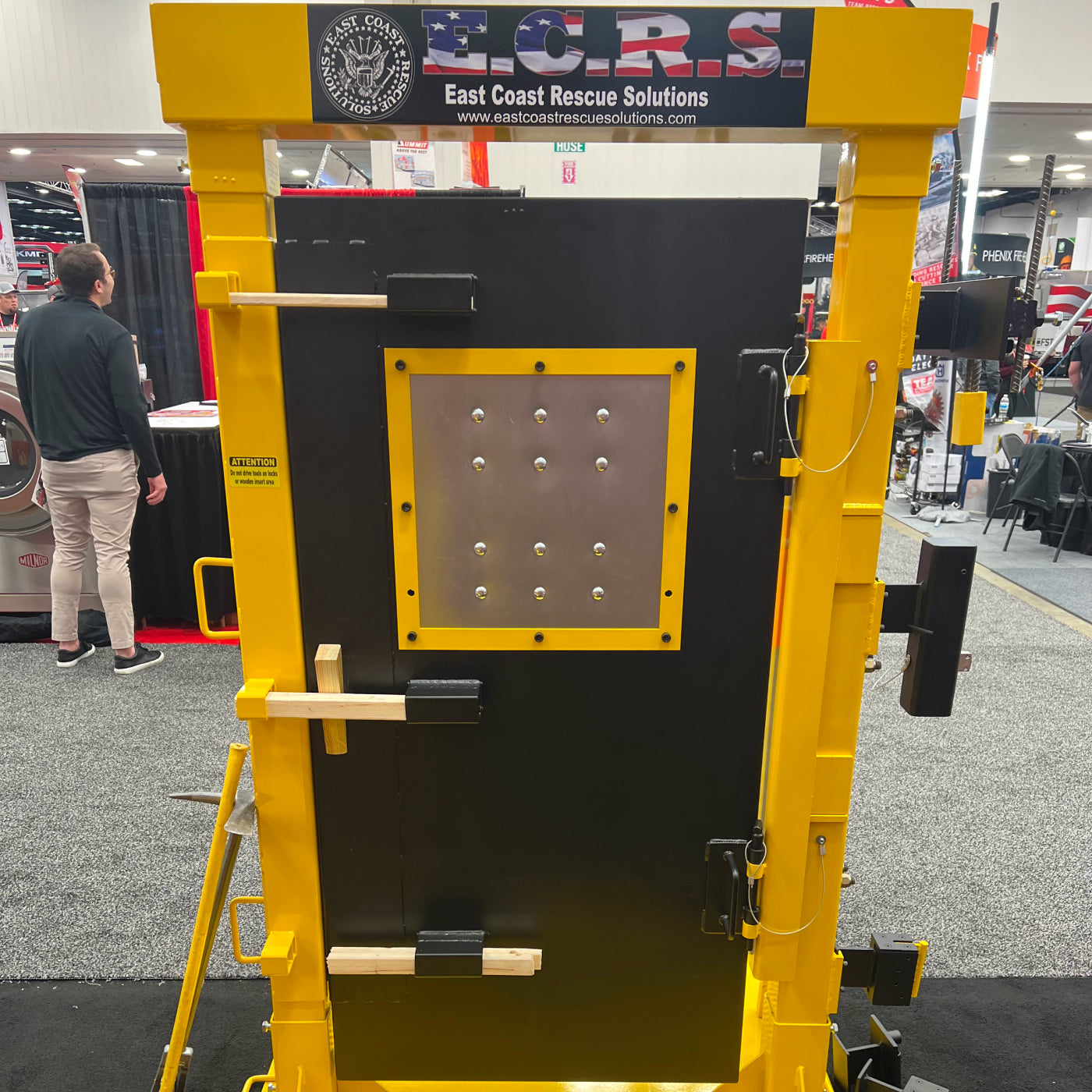
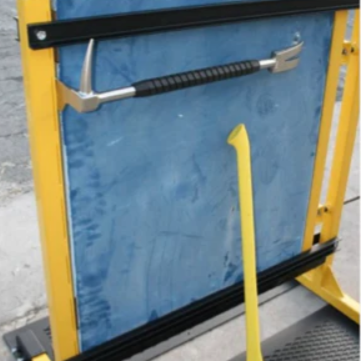
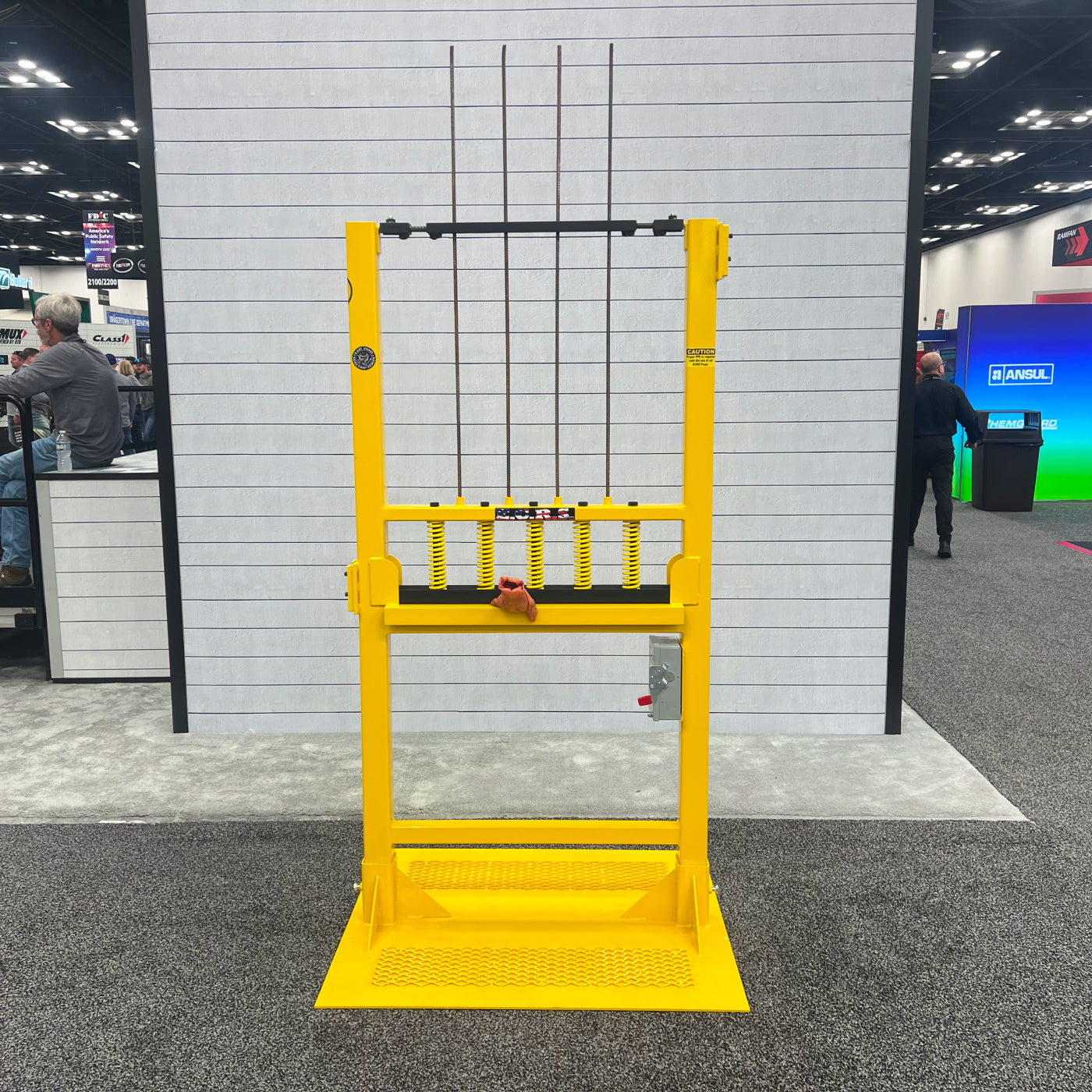
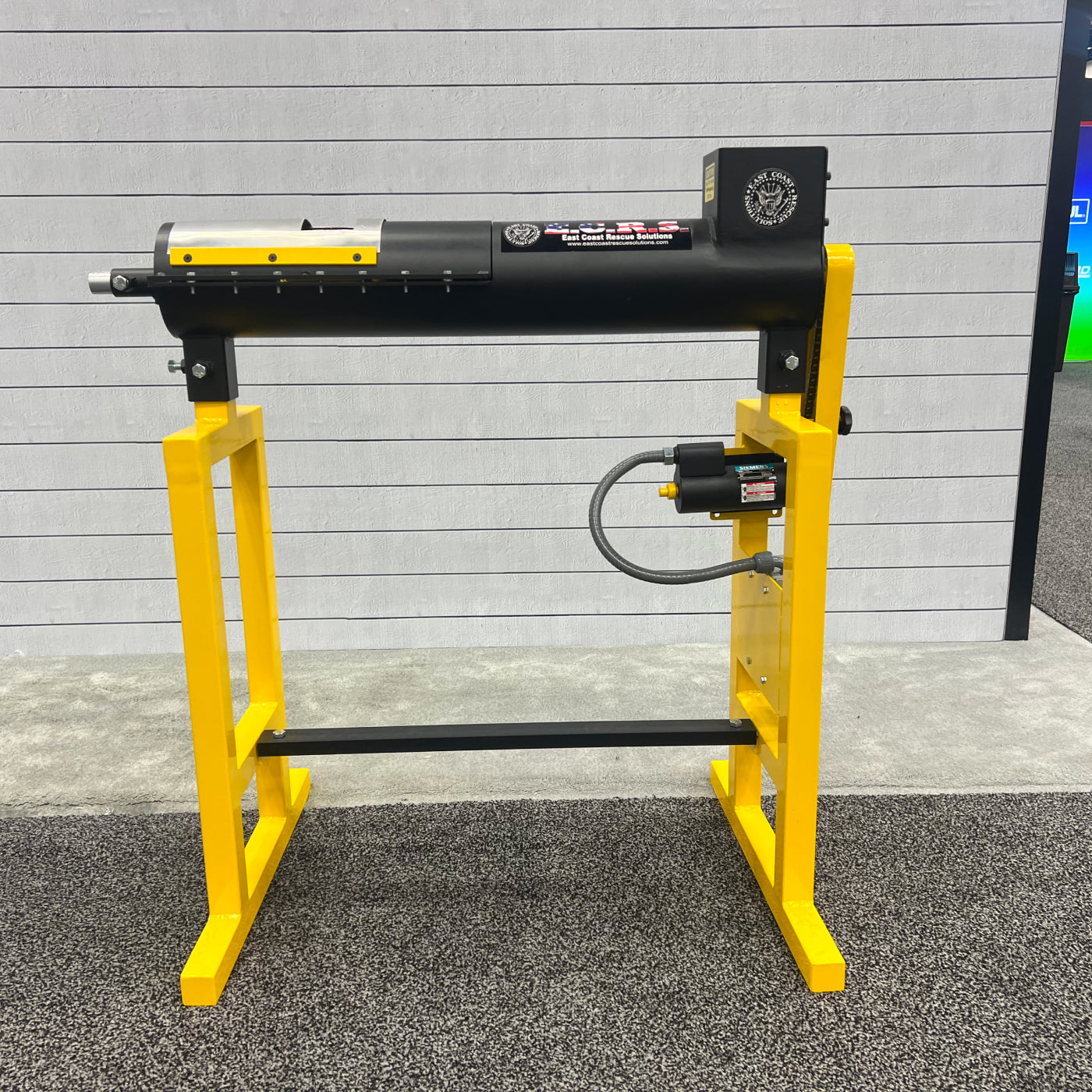
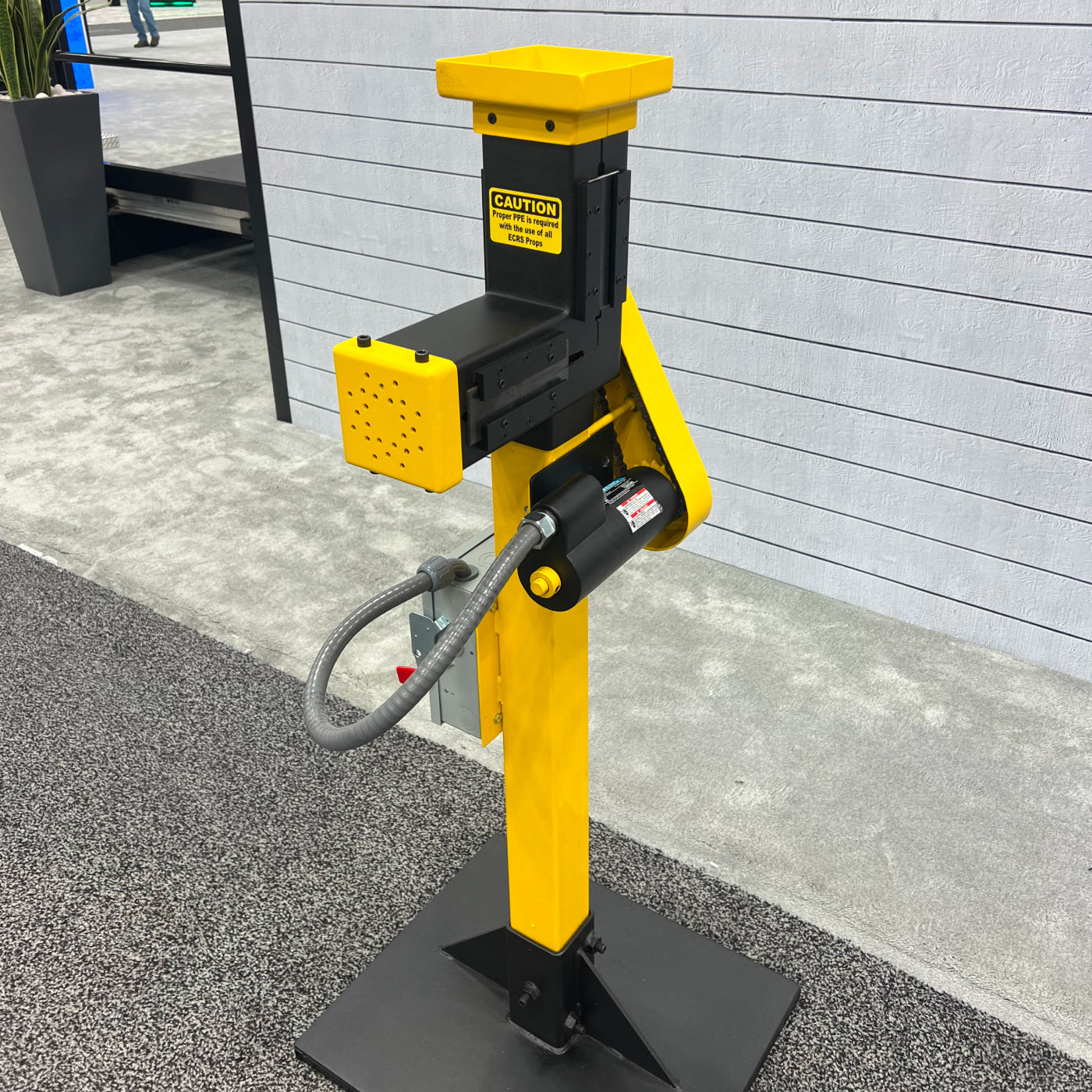
The East Coast Rescue Solutions forcible entry prop is designed to allow both inward- and outward-swinging door evolutions.
That's useful not simply because it gives firefighters "two types of training."
It lets an instructor build progression.
For example:
Evolution 1: Basic inward force with moderate resistance.
Evolution 2: Repeat the inward force and correct technique.
Evolution 3: Move the lock position.
Evolution 4: Configure the door outward.
Evolution 5: Don't tell the firefighter the configuration.
Now you're moving from instruction to recognition and decision-making.
Change the Lock Position Too
Changing the swing is only one variable.
Lock location matters as well.
If every inward and outward evolution places resistance at the exact same height, firefighters eventually develop a shortcut.
They don't look for the lock anymore.
Their hands just go to the familiar spot.
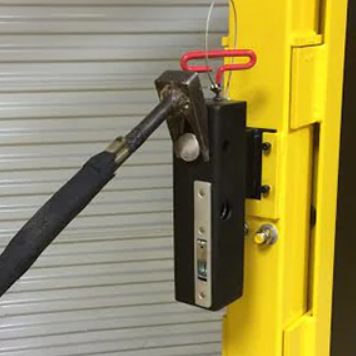
ECRS GEN3 and GEN4 training doors provide three separate lock positions—top, middle and bottom—and more than 65 inches of vertical door stop for forcing evolutions.
Use that capability.
Don't always make the middle position the default.
Place resistance high.
Place it low.
Once firefighters are proficient, consider how multiple resistance points change what they're seeing and feeling.
The lesson is simple:
Find what is actually keeping the door closed.
Don't attack where you expect the problem to be.
Let Firefighters Feel the Difference
Some of the most valuable forcible entry knowledge is difficult to teach verbally.
It's feel.
A firefighter who has completed enough quality repetitions begins recognizing when a tool is set well.
They know what useful movement looks like.
They recognize the difference between gaining ground and simply flexing equipment.
They know when resistance changes.
That knowledge is developed through hands-on repetitions.
Instructors shouldn't rush through every evolution.
Sometimes it's worth stopping with the Halligan partially set and asking:
"What are you feeling?"
"Do you have a good bite?"
"Is the gap improving?"
"Where do you think the resistance is?"
"What's your next move?"
Make firefighters articulate what the tool and door are telling them.
Over time, that process becomes much faster.
Add Resistance After Technique
Don't begin by making the door as difficult as possible.
That's especially important when introducing the difference between inward and outward forces.
If a firefighter is trying to learn new tool geometry while simultaneously fighting extreme resistance, it's difficult to tell whether the problem is understanding or strength.
Start clean.
Let firefighters learn the mechanics.
Then increase the challenge.
A useful progression might look like this:
-
Identify door swing.
-
Demonstrate correct tool placement.
-
Perform the force with manageable resistance.
-
Repeat until the movement is clean.
-
Increase resistance.
-
Change the lock location.
-
Add full PPE and SCBA.
-
Reduce visibility.
-
Add a second locking point or complication.
-
Stop identifying the problem for the firefighter.
By the later evolutions, you're no longer teaching inward versus outward entry.
You're teaching firefighters to solve doors.
Train in Full PPE
A firefighter who can perform beautiful forcible entry in station pants and work gloves hasn't completed the training progression.
Structural gloves reduce dexterity.
SCBA changes body positioning.
A facepiece affects vision and communication.
Turnout gear limits movement.
The firefighter may also be operating in smoke, darkness, heat or an awkward physical position.
After the mechanics are established, put the gear on.
Have firefighters identify the swing while masked up.
Make them communicate through facepieces.
Make them control the Halligan with structural gloves.
If the department uses radios or specific company-level commands during forcible entry, incorporate those too.
The closer the evolution gets to operating conditions, the more useful the repetitions become.
Introduce Restricted Space
A wide-open concrete apron is a great place to teach.
It's not where every door will be found.
An outward-swinging commercial door might be at the end of a narrow alley.
An apartment door may sit in a tight hallway.
A basement door might be located on a landing with limited room to work.
Once firefighters understand the mechanics, take away some of their space.
Restrict the striking position.
Force them to adjust body position.
Make the striking firefighter figure out how to deliver accurate blows without a perfect stance.
Don't make the scenario difficult simply for the sake of making it difficult.
Make it difficult in ways that resemble your buildings.
Don't Forget Door Control
The evolution isn't necessarily finished when the lock fails.
That is particularly important when training inward versus outward doors because the firefighter needs to understand how the door will behave once it has been forced.
Maintain control.
Consider what could be happening on the opposite side.
Coordinate entry with the crew.
Don't allow every training repetition to end with the firefighter ripping the door wide open and walking away because the instructor yelled, "Good."
Force the door.
Control the door.
Complete the operation.
What Should Firefighters Be Able to Do?
After enough inward- and outward-swinging door training, firefighters shouldn't simply be able to demonstrate two techniques.
They should be able to walk up to an unfamiliar door and answer:
Which way does it swing?
What appears to be holding it closed?
Where should I begin?
What is my tool doing?
Am I making progress?
If this approach fails, what changes?
That's the standard.
The purpose of training inward and outward forcible entry separately is eventually to stop thinking of them as separate drills.
The firefighter sees a door.
They size it up.
They understand the geometry.
They choose an approach.
Then they go to work.
That's when forcible entry starts moving from a practiced technique to a usable fireground skill.