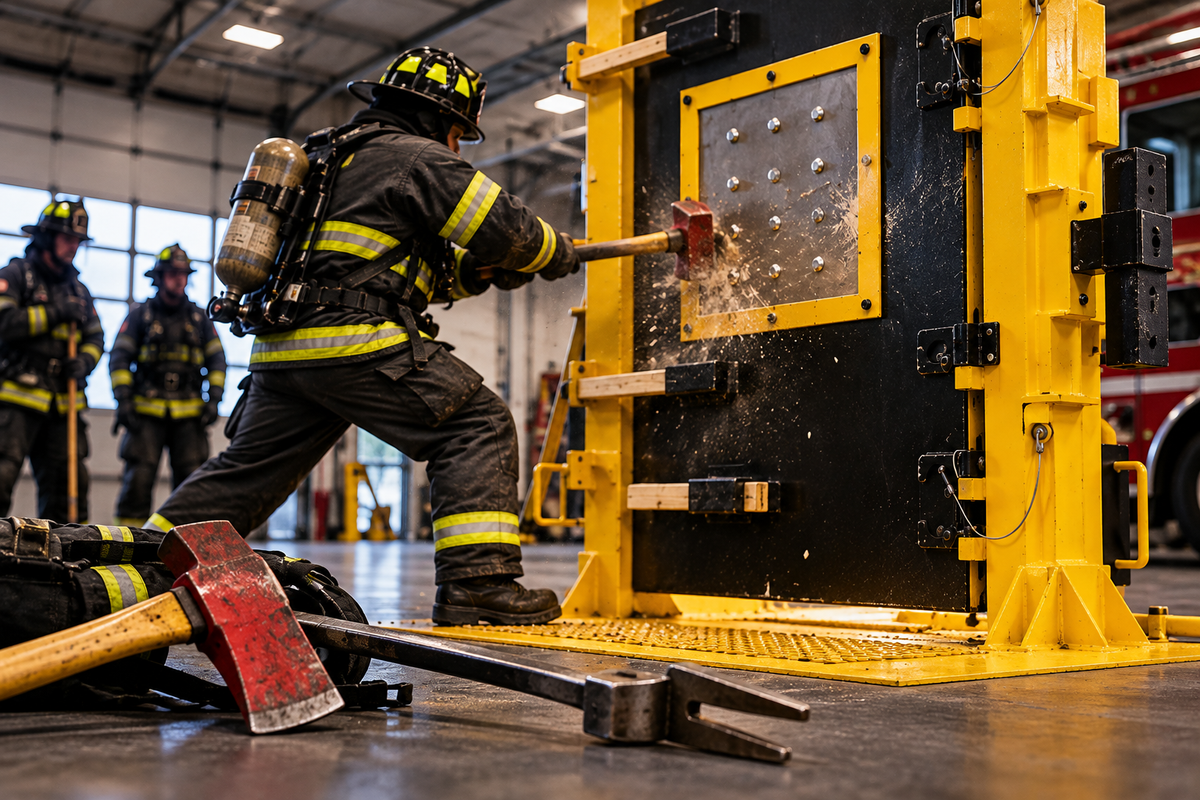
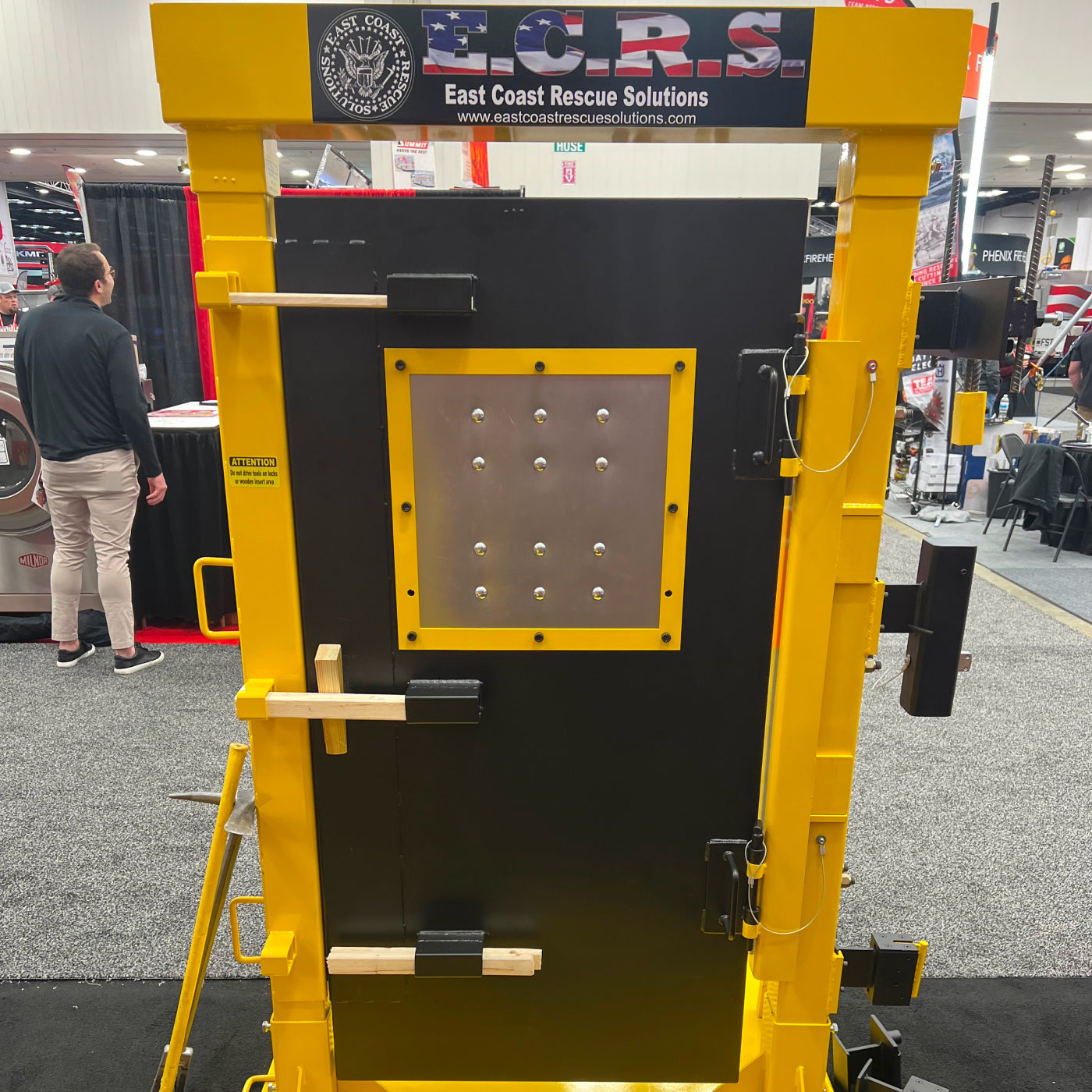
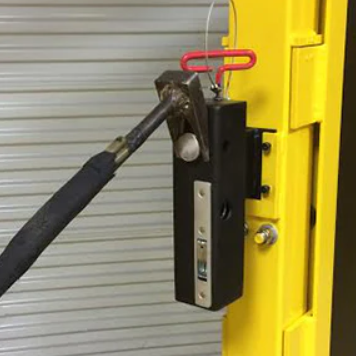
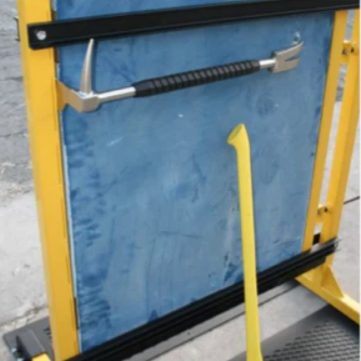
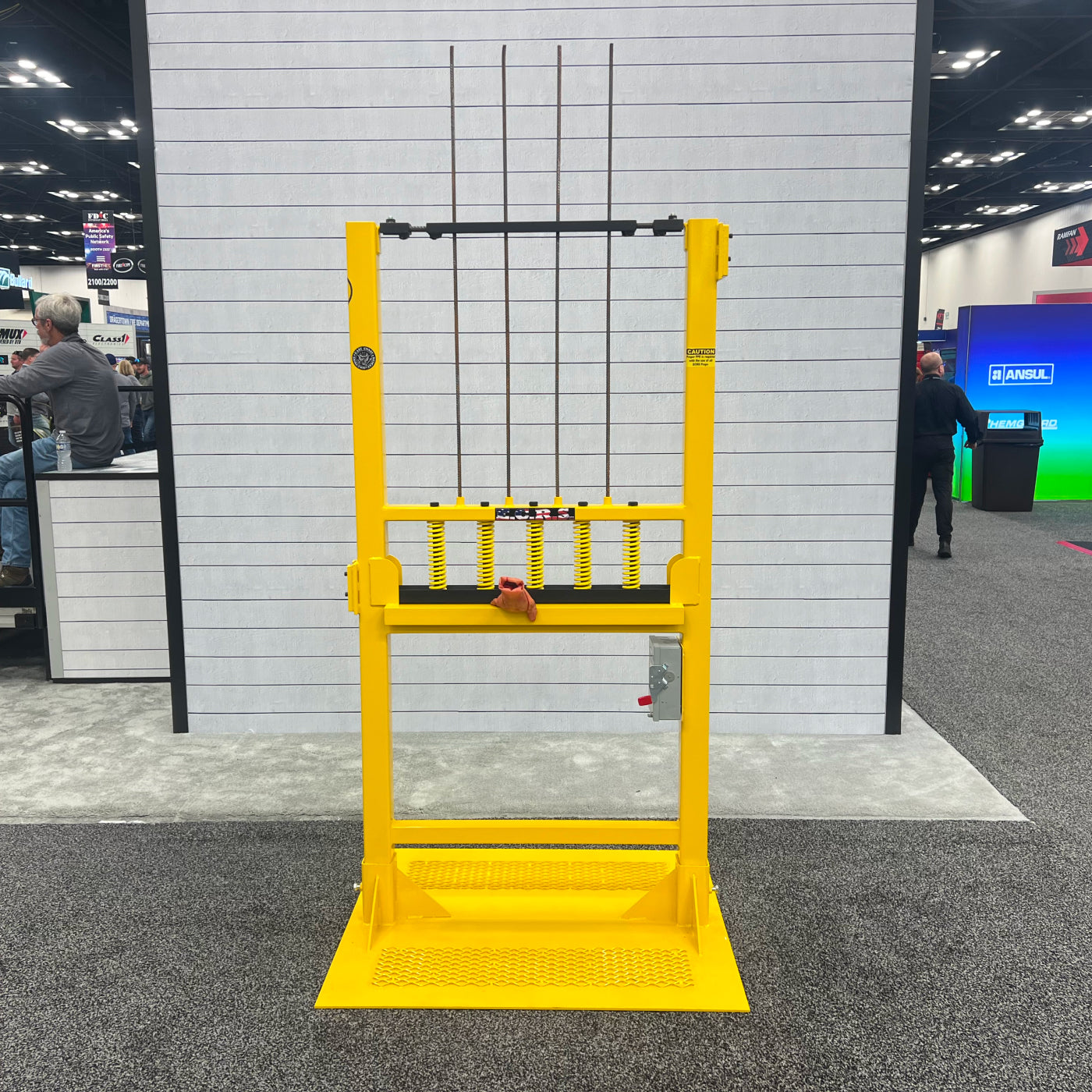
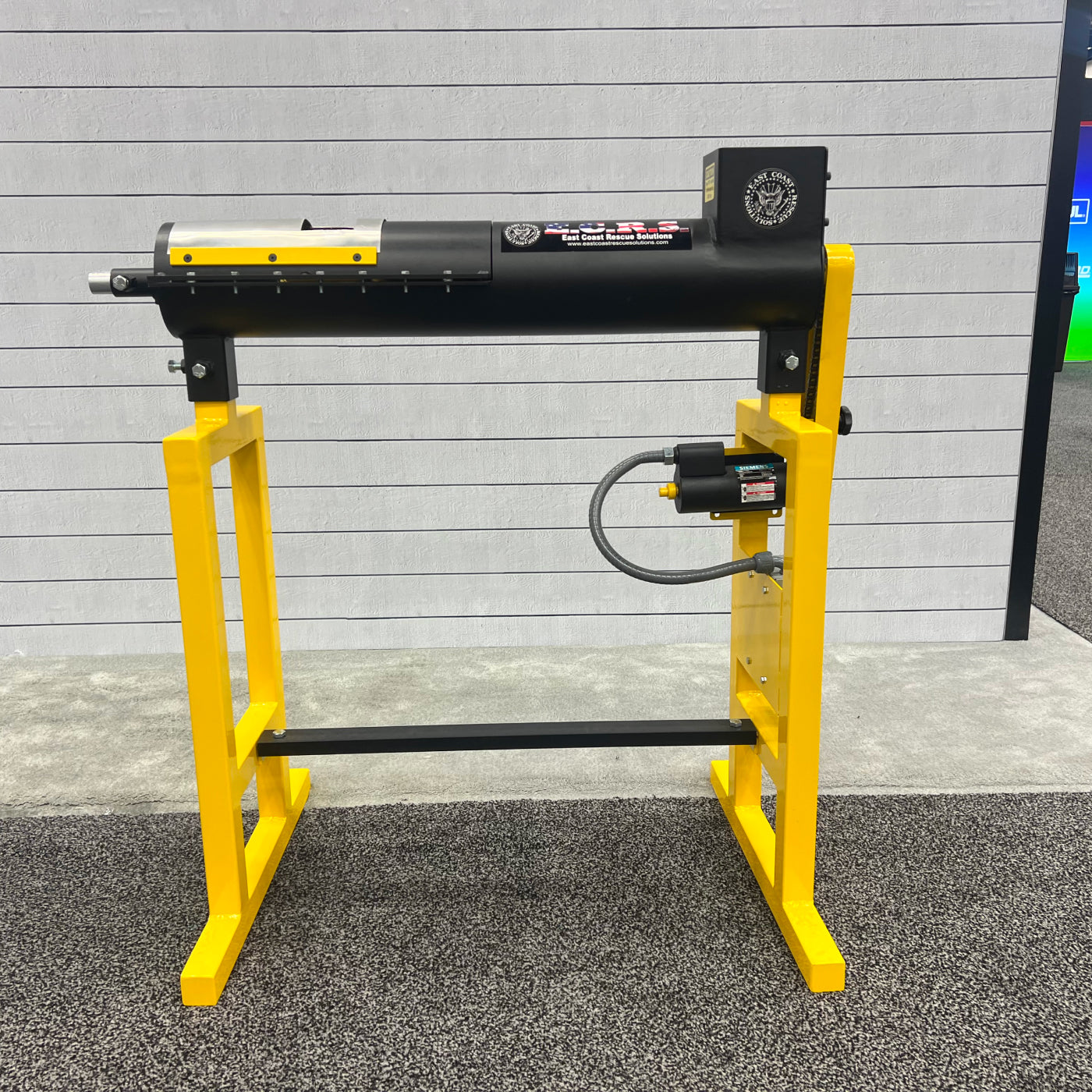
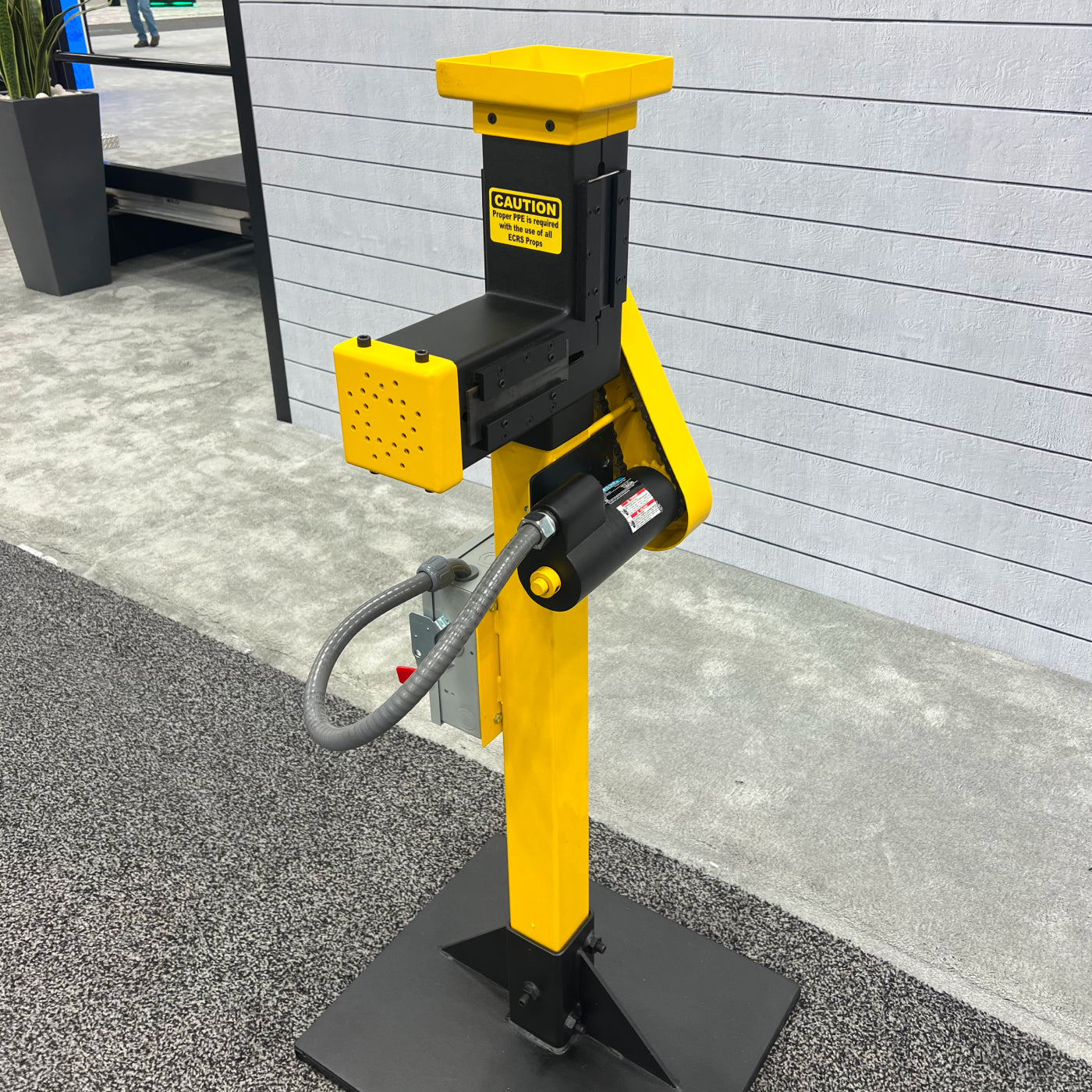







Forcible entry training doors have become a standard piece of equipment in many fire departments. They allow firefighters to practice using Halligan bars, flathead axes, and other entry tools without destroying actual doors every time they train. They also make it possible to perform dozens of repetitions during a single training session, something that would be difficult or expensive to accomplish with real doors and frames.
But there is a legitimate concern that instructors need to consider: Can repeated training on a forcible entry door prop actually teach firefighters bad habits?
The answer is yes. When a training prop is used incorrectly, firefighters can develop techniques that work perfectly on the simulator but fail when they encounter a real door. The problem isn't necessarily the equipment. It's how the equipment is incorporated into training, what instructors emphasize, and whether firefighters understand the differences between a simulated entry and an actual forced entry.
The goal of forcible entry training should never be simply to defeat the prop. It should be to develop the judgment, tool proficiency, and mechanical understanding needed to force unfamiliar doors under unpredictable conditions.
Why Forcible Entry Training Props Can Create Bad Habits
A common problem with repetitive training is that firefighters become familiar with the behavior of a particular door simulator.
After enough repetitions, they know exactly where to place their Halligan, how much pressure to apply, and what movement will cause the simulated locking mechanism to release. They may even anticipate the precise moment when the door will give way.
This familiarity can make firefighters faster and more confident during training. Unfortunately, it doesn't always translate into better performance on an actual emergency scene.
In a September 2025 article published by Firehouse, fire service instructor Robert "RJ" James raised this concern, explaining that firefighters can become so accustomed to their training props that they lose sight of how real doors and locking systems behave.
Consider the difference between a steel training prop and a residential wood-frame door.
A steel simulator may tolerate aggressive prying without significant deformation. A residential doorframe, however, may split, the stop may separate, or the jamb may fail before the firefighter achieves the intended leverage.
A firefighter who consistently trains against rigid steel surfaces may develop expectations about tool placement and resistance that do not apply to the construction encountered in their response district.
Similarly, commercial steel doors installed in masonry walls respond differently from residential doors installed in wood-frame construction.
The firefighter must recognize those differences rather than assume every door will behave like the one back at the station.
Bad Habit #1: Skipping the Initial Door Assessment
One of the most important principles of conventional forcible entry is evaluating the door before committing to a particular technique.
Many instructors teach the sequence:
Try, Shock, Gap, Force, Clear, and Control.
Each step serves a purpose. Trying the door establishes whether it is actually secured. Shocking the door can provide information about its construction and locking points. Gapping and forcing should follow an informed assessment rather than automatically becoming the first actions taken.
Unfortunately, firefighters who repeatedly train on the same prop may begin skipping these preliminary steps.
They already know the door is secured. They know where the simulated lock is located. They know which side the door swings toward.
Instead of evaluating the door, they immediately move into their preferred forcing technique.
That habit becomes problematic when the same firefighter encounters an unfamiliar door during an emergency.
A door that appears heavily secured may already be unlocked. Another may have multiple locking points that are not immediately visible. A third may have a construction weakness that changes the best approach.
How instructors can prevent this habit
Instructors should require firefighters to demonstrate an appropriate initial assessment during training evolutions, even when everyone already knows how the prop operates.
They can also vary the scenario by changing simulated locking conditions, assigning different entry objectives, or asking firefighters to explain what they observe before selecting a technique.
The objective is to train the decision-making process alongside the physical skill.
Bad Habit #2: Using Excessive Force Instead of Proper Tool Mechanics
There is a tendency in some forcible entry training environments to equate difficulty with realism.
If a training door is relatively easy to force, instructors may increase resistance until firefighters are swinging harder, applying more pressure, or struggling to complete the evolution.
But making a door harder to force does not automatically make the exercise more valuable.
In fact, excessive resistance can sometimes encourage poor technique.
Rather than concentrating on proper Halligan placement, maintaining purchase, and using mechanical advantage, firefighters may resort to brute force.
They may repeatedly strike a tool that is improperly positioned or attempt to overpower the resistance instead of recognizing why their technique is not producing the desired result.
The problem becomes particularly significant when firefighters begin treating every difficult door as a test of physical strength rather than a mechanical problem.
Harder training isn't always better training
A properly designed training evolution should challenge firefighters without abandoning the principles being taught.
For a newer firefighter, the priority might be learning to identify the correct working end of a tool, maintain appropriate body positioning, and understand how leverage develops.
An experienced firefighter might benefit from more complicated scenarios involving restricted working space, unfamiliar locking arrangements, or coordinated team operations.
Resistance should support those learning objectives rather than become the objective itself.
Fire Engineering has also discussed how different resistance materials can change the feedback firefighters receive from a training prop and why instructors need to distinguish actual door behavior from prop-specific techniques.
Bad Habit #3: Learning Tricks That Only Work on the Training Door
One of the clearest warning signs of ineffective training is when firefighters develop shortcuts that depend on the particular construction of a simulator.
For example, a firefighter might discover that placing a tool at a certain angle causes the prop's simulated locking mechanism to release quickly.
After enough repetitions, that shortcut becomes the preferred technique.
The firefighter may complete the evolution faster than others, creating the impression that the technique is effective.
However, the same movement might not work against a different doorframe, locking arrangement, or construction material.
In some cases, the shortcut could even cause a tool to slip or damage part of the doorframe needed for effective leverage.
Fire Engineering's article Stop Defeating the Prop: Force That Door! specifically addresses this issue, warning against teaching shortcuts that work on a simulator but don't translate reliably to real doors.
The difference between adapting and exploiting
Good firefighters adapt their techniques to the circumstances in front of them.
That adaptability is essential when a planned approach doesn't work or the door behaves differently than expected.
However, adapting to a real mechanical problem is different from exploiting a predictable weakness in training equipment.
Instructors should understand why a particular technique works and be able to explain whether it would remain effective against comparable real-world construction.
If a firefighter discovers a shortcut during an evolution, the instructor should examine the technique rather than automatically reward it.
The important question is not whether the firefighter opened the training door.
It's whether the firefighter used a mechanically sound approach that can be applied beyond that specific prop.
Bad Habit #4: Failing to Maintain Progress During Forcible Entry
Forcible entry often requires firefighters to make incremental progress against a secured door.
A firefighter may establish an initial gap, reposition a tool, capture the opening, and continue applying leverage.
One of the mistakes that can develop during training is failing to preserve that progress.
On certain props, firefighters may be able to remove and reposition a Halligan without the simulated door returning fully to its original position.
This can create unrealistic expectations about how a real door will behave.
With actual doors, the frame, lock, and door assembly may remain under considerable tension.
Releasing pressure without securing the progress already made can allow the opening to close, forcing the crew to repeat previous work.
It can also introduce additional tool-placement challenges.
Training should reinforce the importance of recognizing when progress must be captured and when a tool can safely be repositioned.
Rather than simply watching whether the simulated door opens, instructors should evaluate how firefighters manage the entire process.
Bad Habit #5: Practicing the Same Door Configuration Every Time
A department can conduct forcible entry training every month and still leave important skill gaps if every session follows the same pattern.
Imagine a training program where firefighters repeatedly work against an outward-swinging commercial-style door using the same tool combination and the same entry position.
Over time, firefighters may become highly proficient at that specific evolution.
But what happens when they encounter an inward-swinging residential door? What about a door with limited space for tool movement? Or a door with multiple locking points?
The challenge isn't necessarily that firefighters lack strength or tool familiarity. They may simply have limited experience adapting their techniques.
Training variety matters more than simply increasing repetitions
A more effective training program introduces variations after firefighters demonstrate proficiency in the fundamentals.
These may include:
-
Different door-swing configurations and simulated securing conditions.
-
Restrictions on working space that resemble narrow hallways or stairwells.
-
Different firefighter positions and tool assignments.
-
Scenarios requiring coordination between the firefighter operating the Halligan and the firefighter providing striking force.
-
Evolutions incorporating door control and communication with the entry team.
Not every training simulator can reproduce every condition. That's why instructors should understand the limitations of their equipment and supplement prop training with other approved training environments when appropriate.
The goal is to prevent firefighters from becoming experts at one specific training setup while remaining unprepared for other entry conditions.
Bad Habit #6: Focusing on Speed Instead of Proper Execution
Speed is important during emergency operations. Delays in gaining access can affect search operations, fire attack, and rescue efforts.
However, speed alone is a poor measure of forcible entry proficiency.
A firefighter who opens a training door in ten seconds by skipping the assessment, using a questionable technique, or losing control of the door may not be performing the skill as effectively as someone who completes the evolution more deliberately.
This becomes especially concerning when instructors turn every training evolution into an informal competition.
Firefighters naturally want to improve their times. Without clear performance standards, they may begin sacrificing technique to complete the evolution faster.
What should instructors evaluate instead?
A more useful assessment considers the complete entry process.
|
Evaluation area |
What the instructor should observe |
|---|---|
|
Door assessment |
Did the firefighter evaluate the door before forcing it? |
|
Tool selection |
Were the selected tools appropriate for the simulated conditions? |
|
Tool mechanics |
Was the firefighter using effective positioning and mechanical advantage? |
|
Progress management |
Did the firefighter recognize and preserve progress during the force? |
|
Team coordination |
Were communication and tool movements coordinated? |
|
Door control |
Was the door controlled appropriately after entry was achieved? |
|
Adaptability |
Did the firefighter recognize when the original approach needed adjustment? |
Time can still be recorded, but it should be evaluated alongside these fundamentals.
A faster evolution only represents meaningful improvement when the firefighter maintains sound technique and safe execution.
How to Use a Forcible Entry Door Prop Without Reinforcing Bad Habits
The answer isn't to stop using forcible entry training props.
Quite the opposite.
A quality training prop can help departments provide consistent opportunities for firefighters to develop and maintain essential entry skills. It allows instructors to observe technique repeatedly, identify problems, and make corrections without constantly replacing actual doors.
The key is structuring training around skill development rather than simply accumulating repetitions.
Start with fundamentals before adding resistance
New firefighters should develop an understanding of how their tools work before they're expected to overcome significant resistance.
Early evolutions should emphasize tool familiarization, positioning, body mechanics, communication, and the sequence of an effective forced entry.
Instructors can then introduce additional resistance and complexity as proficiency improves.
Explain what the prop does and doesn't simulate
Every training prop has limitations.
A simulator may accurately reproduce certain aspects of forcing a secured door while responding differently from real residential or commercial construction in other respects.
Instructors should identify those differences rather than ignore them.
For example, a rigid steel training frame may be excellent for practicing tool positioning repeatedly, but students should understand that a wood-frame assembly may fail or deform differently.
Knowing the limitations of a prop helps firefighters avoid interpreting its behavior as a universal representation of real doors.
Correct technique during the evolution
Instructors should not wait until a firefighter completes an entire session before addressing a recurring mechanical error.
When a firefighter repeatedly uses an ineffective position or relies on a prop-specific shortcut, the instructor should explain what is happening and help the firefighter recognize a more effective approach.
A repetition performed incorrectly is not automatically valuable simply because it adds to the total number completed.
Incorporate realistic decision-making
After firefighters become proficient with fundamental tool movements, instructors can introduce scenarios that require more thought.
Rather than announcing exactly how an evolution will proceed, provide an operational objective and allow the firefighter to assess the conditions presented.
This helps connect mechanical skills with judgment, communication, and operational awareness.
Rotate training objectives
Instead of focusing every drill on opening the door as quickly as possible, assign specific objectives.
One training session might emphasize maintaining purchase and capturing progress. Another might concentrate on coordinating a two-person entry team. A third might examine how limited working space affects tool positioning.
Changing the learning objective helps instructors prevent training from becoming a predictable routine.
Choosing a Forcible Entry Training Door That Supports Better Training
Training quality depends heavily on instruction, but equipment design also matters.
A useful forcible entry simulator should provide a repeatable training environment where instructors can observe technique, evaluate performance, and correct mistakes.
When evaluating a forcible entry prop, departments should consider more than how difficult the equipment is to force.
The following questions are particularly important:
Does the simulator support the skills the department needs to develop?
Different departments encounter different building types and door configurations. Training equipment should be selected with those operational realities in mind.
Can instructors conduct repeated evolutions without excessive downtime?
Repeated practice allows firefighters to improve their mechanics and gives instructors opportunities to identify recurring mistakes.
Does the equipment allow instructors to observe technique clearly?
A training door should help instructors identify tool placement, body positioning, and how firefighters respond to resistance.
Can the prop be incorporated into a broader training program?
The most useful training equipment supports skill development over time rather than serving as a one-time demonstration.
East Coast Rescue Solutions offers forcible entry door simulators for departments looking to incorporate hands-on entry training into their programs. As with any training equipment, the greatest value comes from pairing the simulator with experienced instruction and clearly defined learning objectives.
The Real Goal: Train Firefighters to Force Doors, Not Defeat Props
Forcible entry training doors are valuable because they make consistent, hands-on practice possible.
But repetition without critical instruction can reinforce the wrong behaviors just as easily as the right ones.
Firefighters who become comfortable with a specific simulator may begin anticipating its behavior, relying on shortcuts, or confusing excessive force with effective technique.
The solution is to make every evolution purposeful.
Instructors should emphasize door assessment, proper tool mechanics, preserving progress, adaptability, and coordination. They should also explain how the simulator differs from the actual doors firefighters will encounter.
A successful forcible entry training evolution isn't simply one where the door opens. It's one where the firefighter demonstrates skills that will still work when the door, frame, and locking conditions are unfamiliar.
That is what separates practicing on a prop from becoming proficient at forcible entry.