






When firefighters practice forcible entry, they need to experience resistance. A training door that opens with almost no effort does little to prepare a firefighter for a commercial steel door secured with multiple locking points. At the same time, a training prop that requires excessive force can create problems of its own.
The purpose of a forcible entry training door is not to challenge firefighters to apply as much strength as possible. It is to help them understand how doors respond to mechanical force, develop effective tool techniques, and recognize when they need to change their approach.
That raises an important question for fire department training officers: How much resistance should a forcible entry training door actually provide?
There is no single resistance setting that accurately represents every door firefighters encounter. The appropriate amount depends on the type of door being simulated, the experience of the firefighters, and the specific skills being developed.
Understanding those differences is essential when selecting training equipment and developing realistic forcible entry drills.
What Does Resistance Mean in Forcible Entry Training?
In forcible entry, resistance is the mechanical opposition firefighters encounter when attempting to create an opening, establish leverage, or defeat a locking mechanism.
That resistance comes from several components of a door assembly, including the door itself, the frame, the locking hardware, and the surrounding construction.
Consider two common examples.
A residential wood-frame door secured by a standard deadbolt might initially resist a Halligan until the doorstop, jamb, or locking hardware begins to deform. As pressure increases, the wood may split or the strike plate may pull away from the frame.
A commercial steel door installed in a reinforced frame may respond very differently. The door and frame could remain relatively rigid while the firefighter works against the locking hardware. Instead of wood splitting, the firefighter may experience resistance from steel components deforming or the secured door shifting within its frame.
Both doors may be difficult to force, but the mechanical behavior is different.
That distinction matters because realistic forcible entry training requires more than making a door difficult to open. It requires firefighters to understand how that resistance develops and changes.
In Breaking the Barrier: Overcoming Residential Forcible Entry Training Scars, published by Fire Engineering in March 2025, Lieutenant Clay Magee discusses how forgiving steel training props can be compared with actual residential door assemblies. A technique that works against a durable steel frame may damage a wooden frame or cause an unexpected failure during an actual entry.
A training simulator can provide useful resistance while still requiring instructors to explain these differences.
Why More Resistance Doesn't Automatically Mean Better Training
Some training programs approach forcible entry resistance with the assumption that harder is always better.
If firefighters can open a prop quickly, the instructor increases the difficulty. If they continue to succeed, the resistance is increased again.
Eventually, the exercise becomes a contest to see how much force firefighters can overcome.
Although challenging evolutions have a place in training, this approach can shift the focus away from proper tool mechanics.
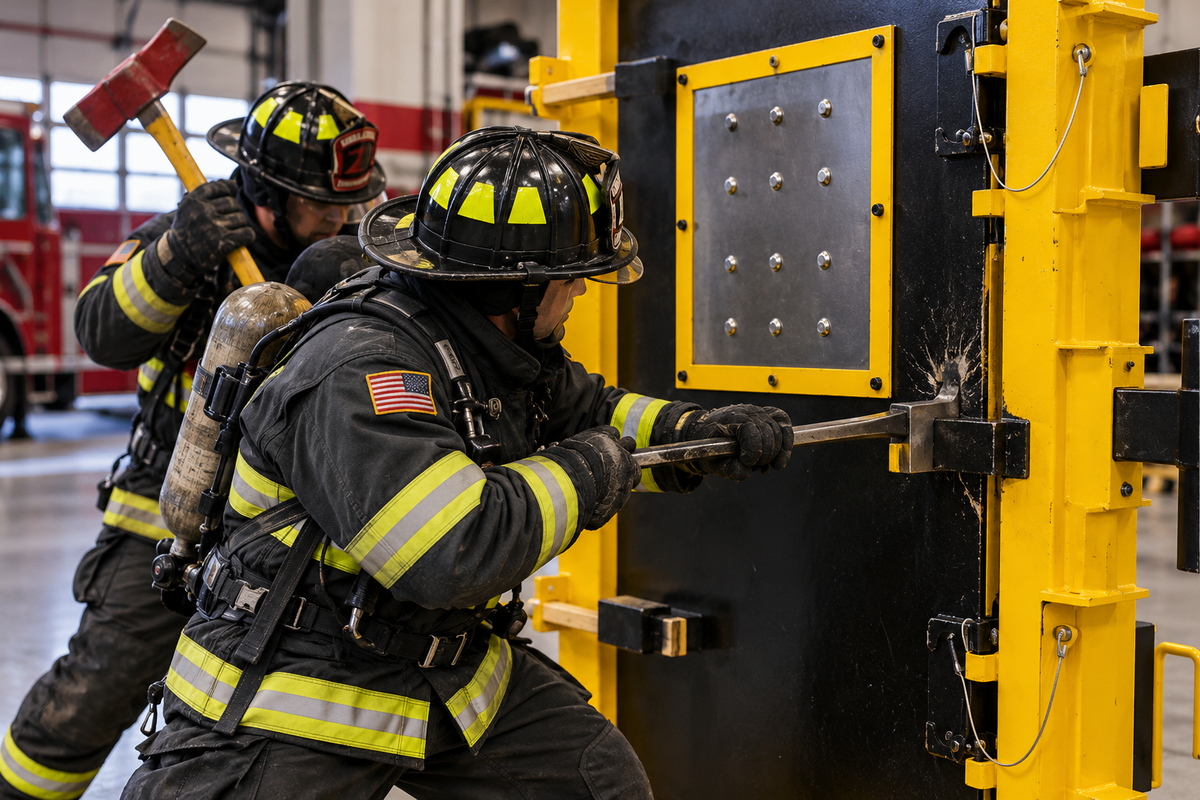
A firefighter who cannot force a heavily secured training door may begin swinging harder rather than evaluating whether the Halligan is positioned correctly.
Another firefighter might repeatedly attempt to force the same opening without recognizing that the tool has lost purchase.
These actions can reinforce poor habits, particularly when instructors judge performance primarily by whether the door opens.
Resistance should expose problems with technique, not encourage brute force
A useful training exercise makes firefighters pay attention to what their tools are doing.
When a firefighter establishes a gap, the prop should provide enough feedback to demonstrate how the door responds to leverage.
When the Halligan is positioned for the forcing operation, the firefighter should be able to recognize whether the tool is maintaining purchase and transferring force effectively.
If the simulated resistance is so high that firefighters abandon these fundamentals, the instructor should reconsider whether the difficulty is supporting the learning objective.
Instructors should distinguish between a firefighter struggling because of incorrect technique and one encountering a deliberately challenging scenario.
Those are different training problems, and they require different responses.
How Resistance Differs Between Residential and Commercial Doors
One of the biggest limitations of using a single training door is that actual building construction varies considerably.
Training officers should understand the differences between door assemblies before deciding how resistance should be represented.
Residential wood-frame doors
Residential doors frequently rely on wooden jambs, doorstops, and framing components that behave differently under force than steel.
Depending on the construction, a firefighter may encounter movement or deformation in the frame before the locking hardware itself fails.
This can create an initial gap, but it can also cause the doorstop to split or the jamb to break.
A firefighter accustomed to training against rigid steel may not anticipate that change.
The training objective should include recognizing how the frame responds and adapting to the condition of the door assembly.
Commercial steel doors and frames
Commercial steel doors can present a different mechanical challenge.
Steel frames, reinforced doors, and various locking arrangements may limit movement and require sustained, controlled application of force.
However, not every commercial steel door presents the same resistance.
A relatively light steel door with standard hardware may behave differently from a reinforced exterior door with additional securing devices.
A training program that treats all commercial doors as equally difficult can create unrealistic expectations.
Doors with multiple locking points
A door may have more than one point of resistance.
Firefighters who practice only on a simulator with a single predictable locking point may begin expecting every door to release after overcoming one obstruction.
In reality, the force required and the behavior of the door can change as individual securing points are defeated or as the assembly deforms.
For these scenarios, instructors should emphasize assessing the door, identifying possible securing points, and recognizing when additional resistance remains.
|
Door construction |
Typical resistance behavior |
Training consideration |
|---|---|---|
|
Residential wood-frame door |
Doorstop or jamb may split, deform, or separate |
Understand how wood responds to leverage |
|
Commercial steel door |
Door and frame may remain relatively rigid |
Maintain effective tool placement and mechanical advantage |
|
Reinforced door assembly |
Resistance may involve stronger hardware and framing |
Recognize when an approach needs reassessment |
|
Door with multiple locking points |
Resistance may remain after one point is overcome |
Avoid assuming initial movement means the door is fully released |
These are general construction differences, not fixed measures of difficulty. Actual performance depends on the entire door assembly.
How Much Resistance Should Rookie Firefighters Train With?
New firefighters should not begin their forcible entry training with the most difficult door configuration available.
Their first objective should be understanding tool mechanics.
Before working against substantial resistance, they need to develop familiarity with Halligan positioning, striking-tool coordination, body mechanics, and the sequence of conventional forcible entry.
If the initial resistance is too high, recruits may concentrate entirely on overcoming the door rather than learning why a particular technique works.
A better approach is to increase difficulty as their skills develop.
Stage 1: Learn the fundamentals
At this stage, the training prop should provide manageable resistance that allows instructors to observe and correct basic technique.
Training should concentrate on understanding the door, selecting appropriate tools, establishing effective positioning, and maintaining control throughout the evolution.
The instructor should be able to stop an evolution, explain a mechanical error, and allow the firefighter to repeat the movement correctly.
There is little value in increasing difficulty before firefighters can consistently demonstrate these fundamentals.
Stage 2: Introduce meaningful resistance
Once recruits demonstrate competence with basic techniques, instructors can introduce more challenging conditions.
The objective is to make firefighters use proper mechanical advantage rather than depend on an easy release.
This is where resistance becomes particularly valuable.
A firefighter may discover that improper Halligan placement results in poor leverage. Another may learn that releasing tension at the wrong moment causes progress to be lost.
Instead of simply opening the door, firefighters begin to understand the relationship between their movements and the resistance they encounter.
Stage 3: Introduce more complex scenarios
After firefighters demonstrate consistent proficiency, instructors can incorporate challenges that go beyond mechanical resistance.
These might include restricted working space, changing door conditions, unfamiliar securing arrangements, or coordinated two-person operations.
The objective is not necessarily to make the simulator harder to force. It is to make the firefighter solve a more complex entry problem.
An experienced firefighter who can defeat a highly resistant prop but struggles to coordinate with a partner still has a training deficiency worth addressing.
Should Experienced Firefighters Always Train With Maximum Resistance?
Experienced firefighters benefit from challenging training, but maximum resistance should not become the default.
A firefighter with years of experience may need to practice a particular movement that has become inconsistent. Another may need additional work on maintaining tool purchase or preserving progress.
Those skills can often be evaluated more effectively under controlled resistance than during an unnecessarily difficult evolution.
Training officers should consider what they are attempting to measure.
If the objective is proper tool placement, overwhelming resistance may distract from the skill being evaluated.
If the objective is maintaining mechanical advantage against a difficult door, a more challenging setting may be appropriate.
If the objective is team coordination, changing the available space or assigning specific roles may offer greater training value than simply increasing resistance.
The difficulty of the evolution should follow the training objective, not the firefighter's years of service alone.
This also prevents training from becoming predictable. Experienced firefighters should be challenged to adapt to unfamiliar conditions rather than repeatedly overcome the same high-resistance setup.
Why the Type of Resistance Matters as Much as the Amount
Two training doors can require considerable effort to force while providing completely different feedback to firefighters.
For example, a simulator using a wooden resistance component may initially resist the tool and then yield relatively suddenly as the material breaks.
A simulator using a deformable metal component may provide more progressive resistance as the material bends.
Neither response represents every real-world door.
In a December 2023 Fire Engineering article titled Stop Defeating the Prop: Force That Door!, Lou Comenale discusses using different resistance materials in forcible entry props. His truck company found that wood provided useful initial resistance, while other materials, including PVC and metal components, produced different feedback and encouraged firefighters to preserve their progress.
That observation highlights an important training principle.
The amount of effort required to defeat a prop is only one part of realistic resistance.
Instructors should also evaluate how the simulator responds before, during, and after force is applied.
What happens when pressure is released?
During an actual forced entry, a partially created opening may begin to close when the firefighter releases pressure.
This makes capturing progress an important skill.
If a training prop allows firefighters to remove a tool without losing any progress, instructors need to recognize that limitation.
Otherwise, firefighters may become accustomed to a response they cannot depend on during an emergency.
Does the prop reward correct tool placement?
A useful simulator should allow instructors to demonstrate why tool positioning matters.
If poor positioning produces the same results as correct positioning, firefighters may not receive meaningful feedback about their technique.
The instructor's role is to identify those differences and ensure students understand the mechanical principles involved.
Is the resistance consistent enough for meaningful repetition?
Repeatability is another important consideration.
If a training exercise is intended to evaluate improvement in a specific skill, substantial changes in resistance between repetitions can make performance difficult to compare.
Instructors need to know whether improvements reflect better technique or simply an easier setup.
That doesn't mean every evolution should be identical. It means resistance should be intentional rather than unpredictable because of worn or improperly installed components.
How Can Instructors Tell When a Forcible Entry Door Is Too Difficult?
A difficult training evolution is not automatically a bad one.
Firefighters need opportunities to encounter resistance, experience unsuccessful attempts, and adjust their techniques.
However, instructors should recognize when difficulty begins interfering with the intended lesson.
Several behaviors may indicate that the resistance is inappropriate for the current exercise.
Firefighters abandon proper tool mechanics. Instead of concentrating on positioning and leverage, they begin applying force without a clear understanding of why the door is not moving.
The same error continues without correction. A recruit repeatedly attempts an ineffective movement because the instructor is focused on getting the door open rather than correcting the underlying problem.
The evolution becomes primarily a strength contest. Physical effort overshadows assessment, tool control, and the ability to recognize changing conditions.
Fatigue begins affecting technique. Repeated high-resistance evolutions can reduce the quality of training, particularly when firefighters are no longer maintaining proper movement and control.
The resistance exceeds the training objective. A drill intended to teach basic tool positioning should not require firefighters to overcome the most challenging simulated locking arrangement available.
When these issues appear, the instructor should reassess the evolution.
The appropriate response may involve reducing the difficulty, returning to a fundamental movement, changing the scenario, or giving the firefighter additional instruction.
What Should Fire Departments Look for in Adjustable-Resistance Training Doors?
When purchasing forcible entry training equipment, departments should examine how the simulator creates resistance and whether it can support different training objectives.
Not all forcible entry door props use the same mechanism.
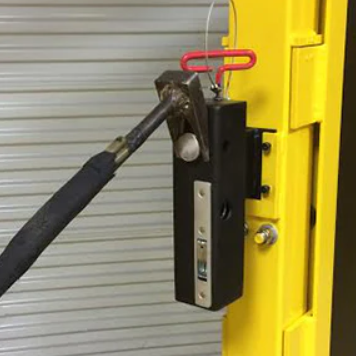
Some use replaceable materials that resist or deform under force. Others use mechanical arrangements designed to simulate resistance without requiring the same type of consumable material.
Certain products allow instructors to vary difficulty, but the method and range of adjustment depend on the specific equipment.
Departments should consider several practical questions before making a purchase.
Can resistance be changed for different skill levels?
Equipment that supports different difficulty levels may allow instructors to work with new recruits and experienced firefighters using the same general training platform.
However, the available adjustments should be evaluated based on the skills being taught rather than simply the maximum resistance the equipment can produce.
What kind of feedback does the prop provide?
A simulator should help firefighters understand what happens when force is applied.
Departments should ask how the resistance behaves, whether the prop allows meaningful practice of maintaining purchase, and how accurately the setup represents the intended training scenario.
Can the training door be reset efficiently?
For departments conducting regular training, resetting the prop is an important operational consideration.
A setup that requires extensive rebuilding between repetitions may reduce the number of meaningful evolutions firefighters can complete.
Departments should ask what components need replacement, how long a typical reset takes, and what ongoing maintenance is required.
Does the equipment support realistic training objectives?
A high-resistance simulator is not automatically the best option for every department.
Training officers should evaluate their response district, the types of doors firefighters encounter, and the specific skills their personnel need to practice.
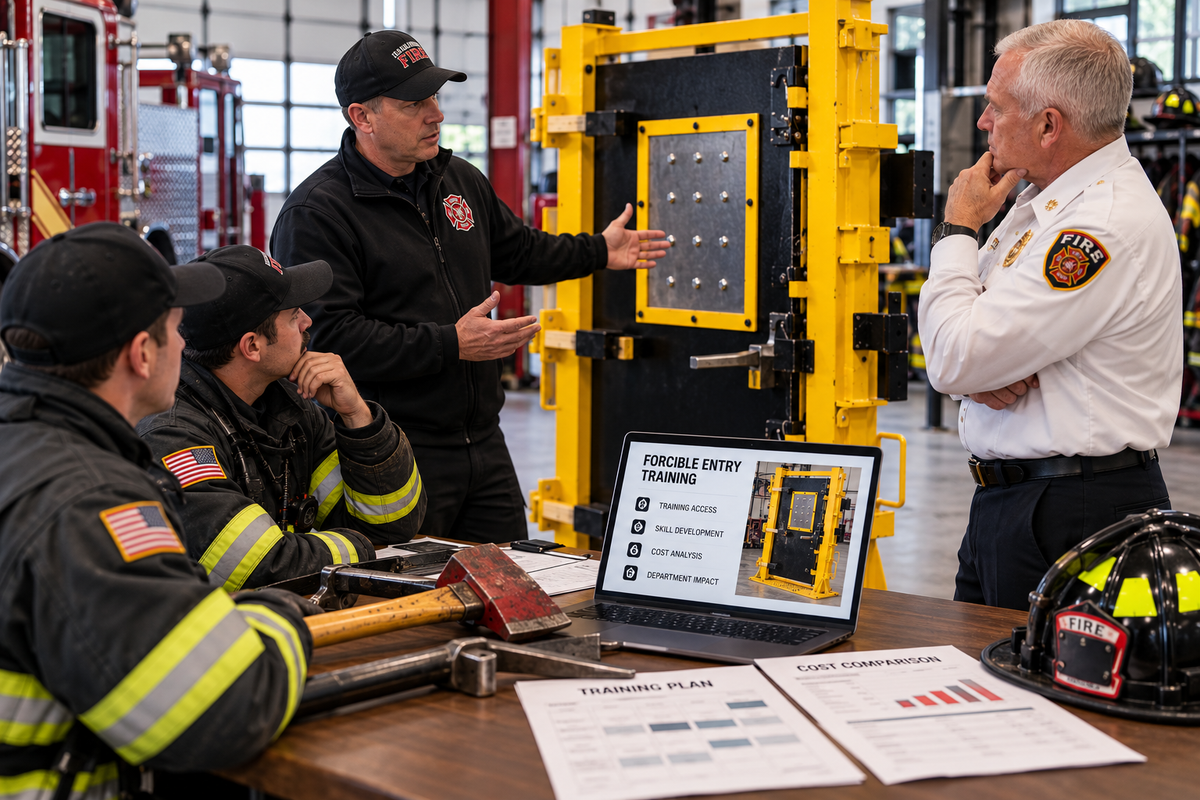
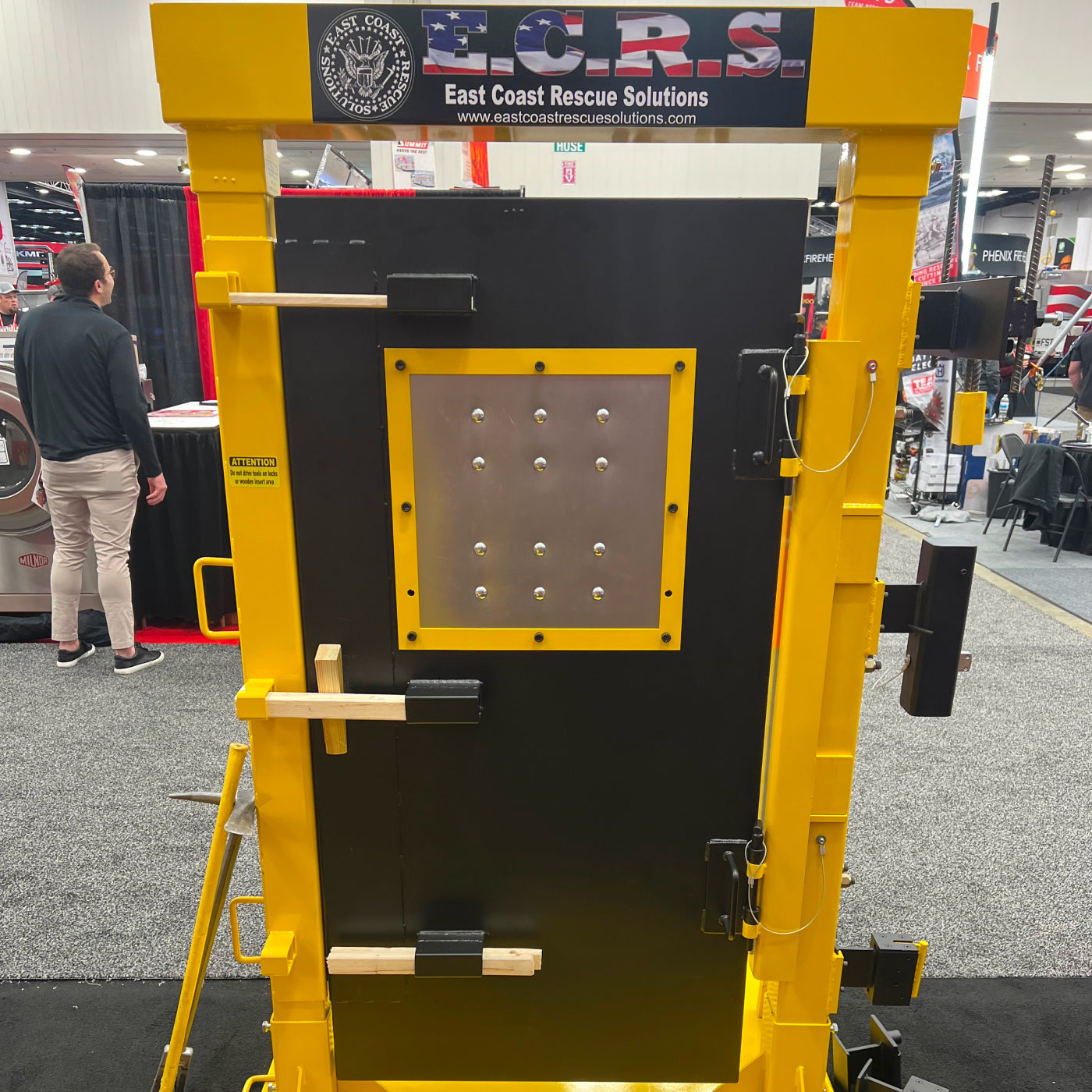
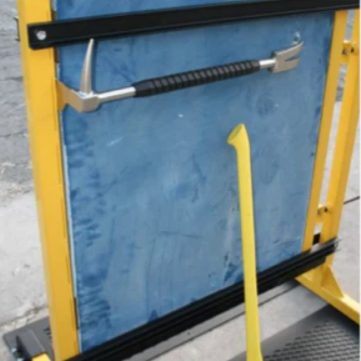
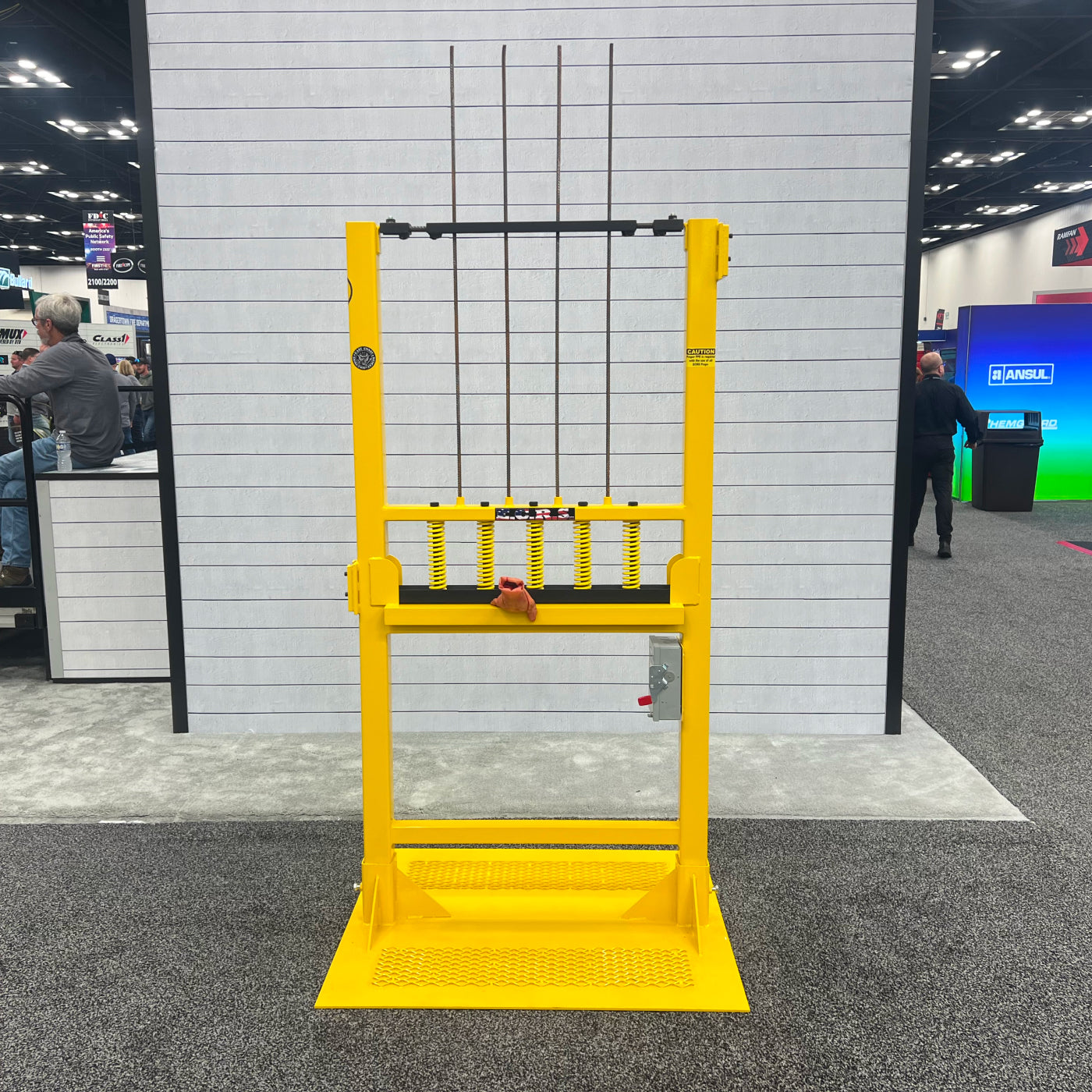
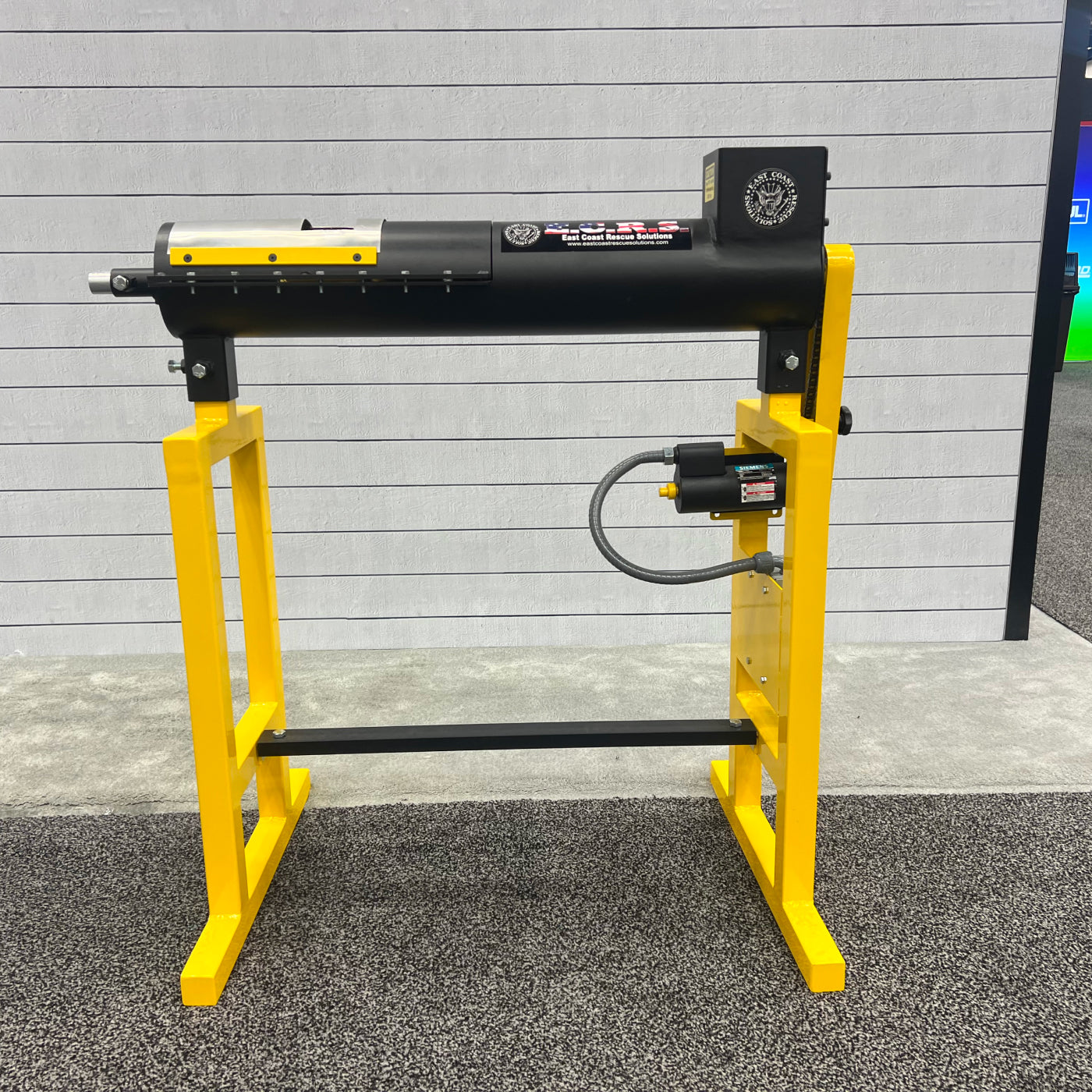
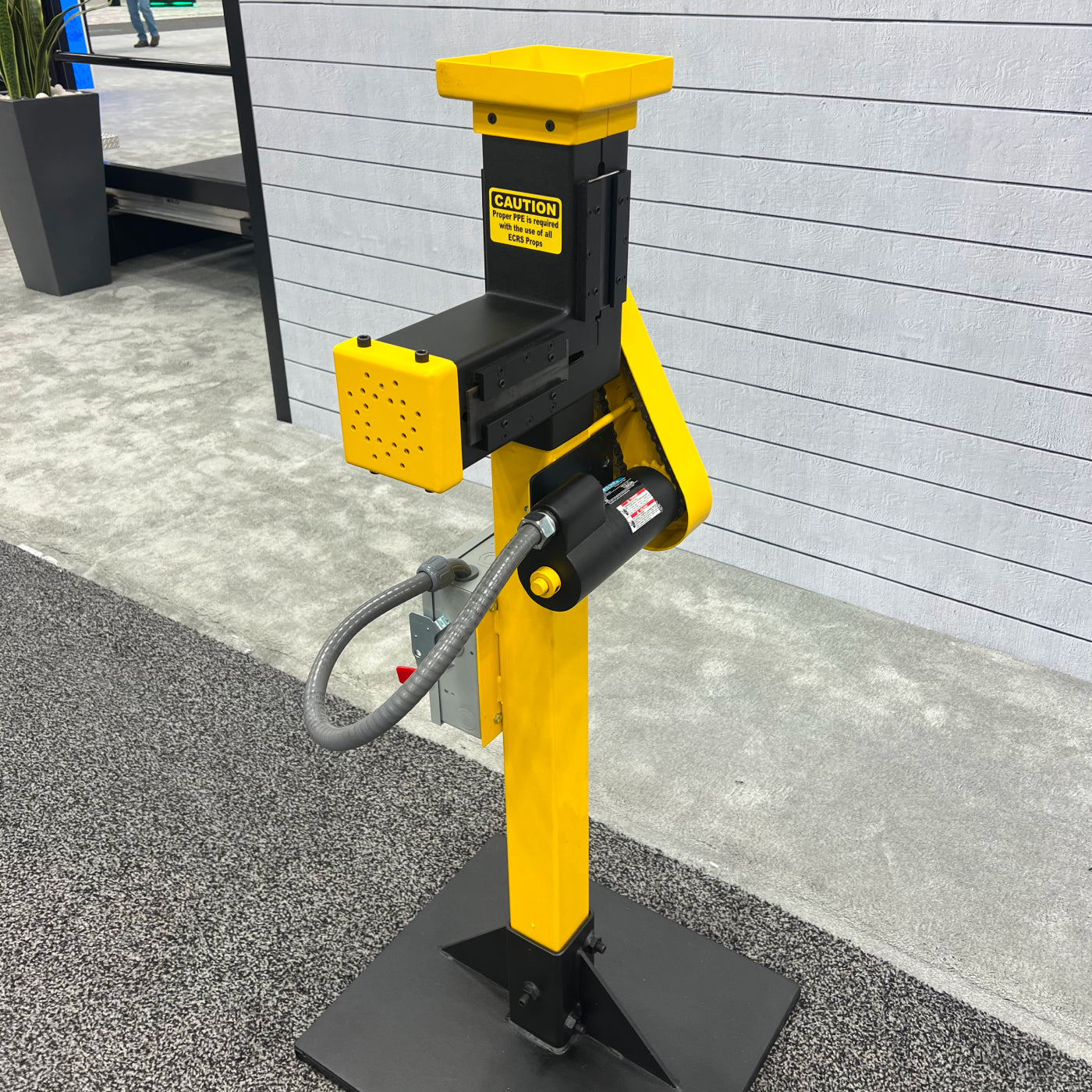
For departments evaluating equipment, East Coast Rescue Solutions offers forcible entry door props designed for hands-on firefighter training.
The most useful purchasing conversation is not simply about which simulator is hardest to force. It should examine how the equipment supports skill development, realistic training, and repeated use over time.
How to Structure a Training Session Around Different Resistance Levels
Training officers can make better use of their equipment by organizing training according to learning objectives rather than selecting one level of difficulty for everyone.
A structured session might look like this:
|
Training phase |
Resistance objective |
Primary skill focus |
|---|---|---|
|
Fundamental technique |
Manageable, repeatable resistance |
Tool positioning and body mechanics |
|
Technique development |
Moderate challenge appropriate to ability |
Maintaining purchase and using mechanical advantage |
|
Applied skills |
Resistance varied to match the scenario |
Preserving progress and adapting technique |
|
Advanced scenarios |
Challenging but purposeful conditions |
Decision-making, coordination, and troubleshooting |
|
Evaluation |
Consistent, documented conditions |
Demonstrating proficiency against defined criteria |
These are instructional categories, not universal equipment settings. There is no established resistance value that every department should assign to each phase.
When possible, instructors should document the configuration used during evaluations.
That helps distinguish actual improvements in skill from differences in training conditions.
For example, if a firefighter completes one evolution quickly and struggles with another, the instructor should know whether resistance changed or whether the firefighter's technique was inconsistent.
This makes training more meaningful than simply recording how many seconds it took to open the door.
Should Fire Departments Measure Resistance in Pounds of Force?
It might seem logical to establish a standard resistance value for forcible entry training.
If a simulator can provide a particular amount of resistance, why not prescribe one value for recruits and another for experienced firefighters?
The problem is that there is no single pounds-of-force measurement that accurately represents the difficulty of forcing every door.
A door's resistance depends on where force is applied, the direction of movement, the locking hardware, the frame construction, and how those components deform.
The force applied at the end of a Halligan bar is also different from the force transmitted to the door because the tool provides mechanical advantage.
A single number does not capture those relationships.
For that reason, departments should be cautious about comparing training simulators solely by advertised resistance ratings.
If a manufacturer supplies a numerical resistance value, purchasers should ask how it was measured, what part of the system it represents, and whether it relates to the training techniques their department intends to practice.
For most training programs, the more important issue is whether the resistance is appropriate, repeatable, and useful for the skill being developed.
Realistic Forcible Entry Training Is About More Than Resistance
Resistance is an important part of developing forcible entry proficiency, but it represents only one aspect of an effective training program.
A training door can provide considerable mechanical resistance while doing little to challenge a firefighter's judgment.
Likewise, a relatively simple prop can support valuable training when instructors emphasize proper assessment, tool mechanics, and decision-making.
An effective program should expose firefighters to differences in door construction, realistic mechanical feedback, and situations where their initial approach does not work as expected.
It should also acknowledge the limitations of any particular simulator.
As Firehouse emphasized in its September 2025 discussion of forcible entry props, training needs to remain reasonable, relevant, and realistic. Becoming exceptionally proficient at manipulating one training prop should not be confused with being prepared for every door encountered on the fireground.
The best training officers understand that distinction.
They use resistance to develop skills, identify deficiencies, and introduce meaningful challenges rather than merely make training harder.
Final Thoughts: The Right Resistance Is the One That Supports the Training Objective
So, how much resistance should a forcible entry training door have?
Enough to require firefighters to use effective techniques, understand mechanical advantage, and recognize how a secured door responds to force.
But not so much that the exercise becomes an uncontrolled strength contest or encourages firefighters to abandon the fundamentals.
There is no universal resistance setting that can prepare firefighters for every door construction or locking arrangement.
Training officers should consider the experience of their personnel, the type of door being represented, and what firefighters are expected to learn from each evolution.
A new recruit practicing Halligan positioning may benefit from manageable resistance that allows repeated instruction and correction. An experienced firefighter working through a challenging scenario may need significantly greater resistance or more complicated conditions.
Both can be valuable training exercises.
The goal isn't to make firefighters better at overcoming a particular resistance setting. It's to make them better at recognizing, managing, and overcoming the mechanical challenges presented by real doors.
When resistance serves that purpose, forcible entry training becomes more than repetitive tool work. It becomes preparation for the unpredictable conditions firefighters encounter during emergency operations.