



Choosing the right tools for forcible entry is not simply a matter of carrying the biggest or most powerful equipment available. The best tool depends on the door, its construction, the locking system, how the door swings, the urgency of the situation, and what firefighters need to accomplish after gaining access.
A conventional Halligan and flathead axe may be exactly what is needed for one door. Another situation may call for a rotary saw, bolt cutters, hydraulic equipment, or specialized lock-entry tools.
The key is understanding what is actually preventing the door from opening before deciding how to attack it.
For firefighters, that makes tool selection part of size-up. Crews that understand door construction and recognize common locking systems can make better decisions about which tools to bring to the entry point and how those tools should be used.
Start With the Door, Not the Tool
One of the easiest mistakes in forcible entry is deciding how to force a door before understanding what kind of door you are dealing with.
Instead, begin with a few basic questions:
-
Is the door wood, metal, glass, or a combination of materials?
-
Does it swing inward or outward?
-
What type of frame surrounds it?
-
Where is it locked?
-
Are multiple locks visible?
-
Are hinges accessible?
-
Is there glass that changes the approach?
-
Are security features present?
-
Is there an easier point of entry nearby?
These observations can quickly narrow the range of appropriate tools.
A firefighter approaching a typical inward-swinging residential door faces a very different problem from one approaching an outward-swinging commercial steel door with multiple locks.
The tools carried to each should reflect that difference.
The Halligan Bar: The Foundation of Conventional Forcible Entry
Few tools are as closely associated with forcible entry as the Halligan bar.
Its combination of an adze, fork, and pick gives firefighters several options for prying, spreading, twisting, striking, and gaining purchase around doors and locking systems.
For conventional door forcing, the Halligan is commonly paired with a striking tool.
The effectiveness of the Halligan comes largely from leverage.
Firefighters are not trying to overpower the entire door. They are attempting to create enough movement between the door and frame to expose or defeat the locking mechanism.
That makes tool placement extremely important.
A Halligan in experienced hands can accomplish far more than the same tool used without an understanding of door construction and leverage.
For departments choosing basic forcible entry equipment, a quality Halligan-style bar remains one of the most versatile tools available.
Why the Flathead Axe Is Commonly Paired With the Halligan
The flathead axe serves several purposes during conventional forcible entry.
Most importantly, it provides the striking force needed to drive the Halligan into position.
This pairing is often referred to as a set of irons.
The two tools complement each other: the Halligan provides leverage and purchase, while the axe provides controlled striking force.
The axe can also perform other fireground functions, which makes the combination particularly useful for companies that need to carry versatile equipment rather than a different specialized tool for every possible problem.
Tool compatibility matters here.
Firefighters should be able to comfortably carry, position, and operate the tools together. Departments should therefore evaluate forcible entry equipment as a system rather than buying individual tools without considering how crews will actually use them.
When a Maul or Sledgehammer May Make More Sense
A flathead axe is not the only striking tool available.
A maul or sledgehammer can provide considerably greater striking force.
That can be useful when firefighters encounter heavy commercial construction or other substantial barriers where additional impact is required.
The tradeoff is weight.
More weight can provide more force, but firefighters also have to carry the tool through the building and potentially perform other tasks while operating in protective equipment.
That leads to an important principle when selecting forcible entry tools:
More powerful does not automatically mean more useful.
Departments should balance striking force against portability, versatility, crew staffing, and the types of buildings in their response area.
Bolt Cutters for Accessible Locks and Chains
Sometimes the simplest solution is the best one.
If a gate or barrier is secured by an accessible chain or padlock, bolt cutters may provide a fast mechanical option depending on the construction of the locking hardware.
They are relatively straightforward tools and do not create the sparks, noise, and other hazards associated with powered cutting equipment.
However, modern high-security locks and hardened chains can exceed the capabilities of conventional bolt cutters.
Firefighters should understand the limitations of the cutters they carry rather than assuming they will defeat every padlock or chain.
When bolt cutters are appropriate, they can save crews from attacking a much larger and stronger barrier unnecessarily.
Rotary Saws for Heavy Metal Barriers
There are situations where conventional prying and striking tools are not enough.
Commercial security features, roll-down gates, heavy metal doors, reinforcing components, and similar barriers may require powered cutting equipment.
A rotary rescue saw can dramatically expand a crew's forcible entry capabilities.
The effectiveness of the saw depends on several factors, including the material being cut and the blade installed on the saw.
Firefighters should understand the capabilities and limitations of the specific saw and blade combination carried by their department.
Powered cutting also introduces additional considerations.
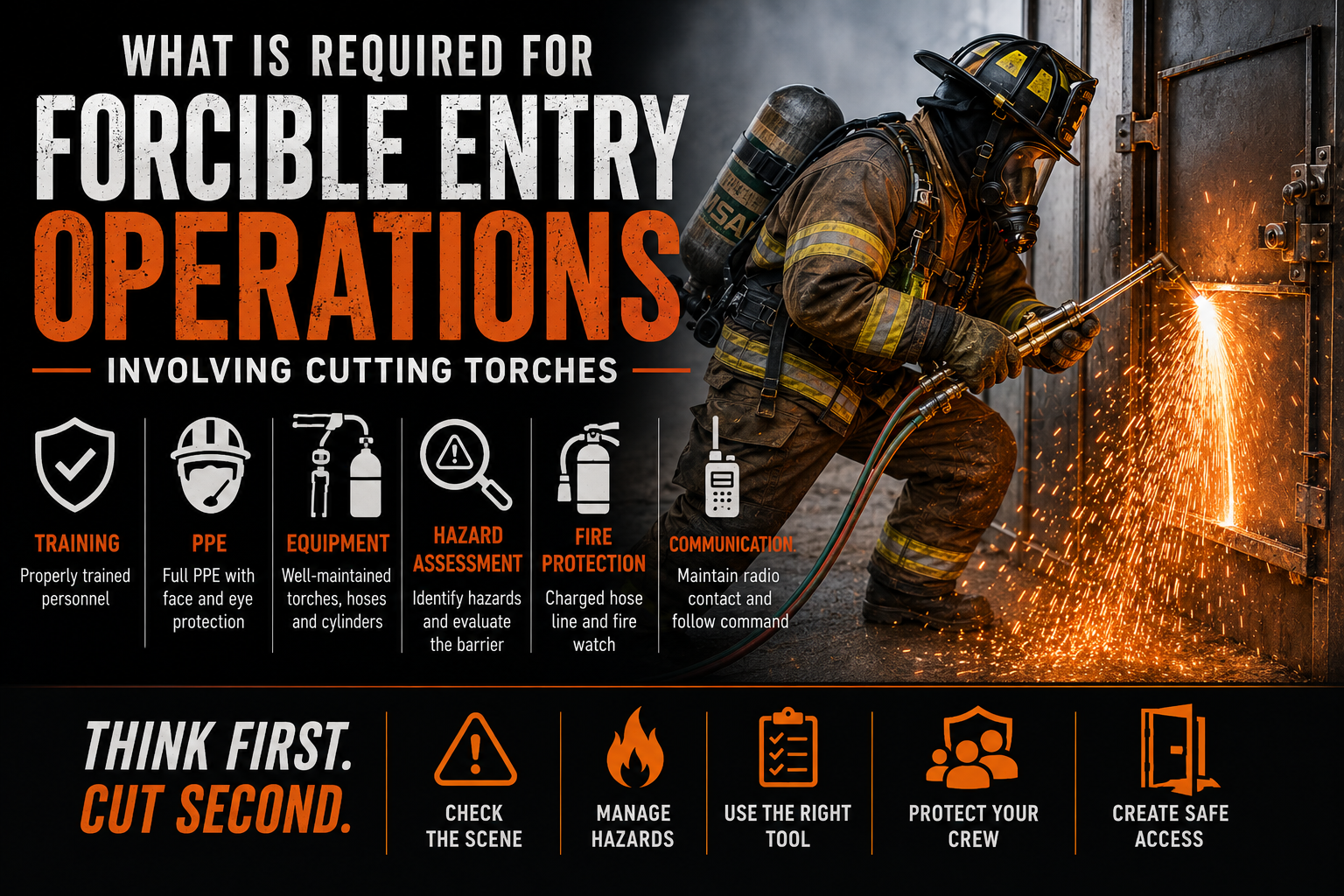
Sparks, noise, visibility, hot material, blade condition, nearby combustibles, and firefighter positioning all become part of the operation.
A saw should therefore be selected because the barrier requires it—not simply because a saw happens to be available.
Hydraulic Forcible Entry Tools
Hydraulic tools provide another option for difficult entry problems.
Depending on the equipment, these tools can generate substantial spreading or prying force while requiring less physical striking than conventional irons.
Hydraulic forcible entry tools may be particularly useful for reinforced doors, difficult frames, and situations where conventional leverage cannot create sufficient movement.
There are tradeoffs.
Hydraulic equipment can be heavier and more cumbersome than hand tools. Some systems require pumps, hoses, batteries, or additional components.
Departments should consider how quickly the equipment can be deployed and whether it fits their normal staffing and response model.
A highly capable tool that rarely makes it from the apparatus to the entry point may provide less practical value than a simpler tool firefighters routinely carry.
Through-the-Lock Tools Can Avoid Destroying the Entire Door
Not every locked door needs to be forced apart.
In some circumstances, firefighters can manipulate or remove part of the locking mechanism and gain entry with substantially less damage.
This is where through-the-lock forcible entry techniques and specialized tools become useful.
The exact equipment varies depending on the locks commonly encountered in the department's response area.
The larger lesson is that firefighters should recognize when the lock itself is the problem rather than the door.
If defeating a lock cylinder provides access, attacking a reinforced steel door and frame may be unnecessary.
Through-the-lock techniques can be particularly valuable during lower-urgency incidents where immediate destructive entry is not required.
Tools for Glass and Window Entry
Windows can provide another potential access point, but they introduce their own hazards.
Firefighters need tools capable of managing glazing while protecting personnel from sharp glass and ensuring the resulting opening is usable.
Modern windows may also include laminated glass, multiple panes, security films, bars, or other features that complicate entry.
The presence of a window therefore does not automatically make it the easiest entry point.
Crews should consider what is behind the glass, whether the window can actually provide sufficient access, and whether breaking it will affect ventilation or fire behavior.
Again, tool selection should follow the tactical objective.
Different Doors Require Different Approaches
One reason fire departments need more than one forcible entry tool is the enormous variation in door construction.
Inward-Swinging Doors
For many conventional inward-swinging doors, firefighters focus on creating space between the door and frame and defeating the locking mechanism.
A Halligan and striking tool are often particularly useful for this type of operation.
Outward-Swinging Doors
Outward-swinging doors present different geometry because the door and stop configuration changes how firefighters can access the gap around the lock.
Exposed hinges may also provide additional information, although attacking hinges is not automatically the best approach.
Commercial Steel Doors
Steel doors and frames can provide substantially greater resistance than many residential assemblies.
Commercial occupancies may also use multiple locks, reinforced frames, drop bars, or other security measures.
Additional striking, cutting, or specialized tools may be necessary.
Overhead and Roll-Up Doors
Overhead doors require their own size-up.
Depending on the design, firefighters may attempt to defeat the operating or locking mechanism, access a chain system, or create an opening through the door.
These operations may require saws and other specialized equipment rather than conventional irons alone.
Match Your Tools to Your Response District
There is no universal forcible entry tool package that is perfect for every department.
A rural department serving mostly single-family homes may face very different entry problems from an urban company protecting high-rise buildings, storefronts, warehouses, and heavily secured commercial properties.
Departments should look at the buildings they actually protect.
Consider:
Residential construction. What types of exterior doors and locks are common?
Commercial occupancies. Are crews frequently encountering steel doors, roll-down gates, or security bars?
Industrial facilities. Are there specialized barriers or heavy metal components?
Multi-family buildings. What doors and locking systems are used in apartment buildings?
New construction. Are door and security systems changing within the district?
Preincident planning can reveal patterns.
If firefighters repeatedly encounter the same difficult barrier, that may indicate a need for different equipment or additional training.
Consider What One Firefighter Can Carry
Tool capability is only one part of the equation.
Firefighters have limited hands.
A firefighter carrying a Halligan, axe, hook, saw, and several specialized tools may technically have an answer for numerous problems—but may not be able to move effectively.
Departments should think in terms of crew tool assignments.
Which tools should the first firefighter carry?
What should the second firefighter bring?
Which specialized equipment stays on the apparatus until requested?
How does that change for residential versus commercial incidents?
A thoughtful tool assignment system allows companies to arrive at the entry point with useful capabilities without overloading individual firefighters.
Durability Matters
Fire service tools are subjected to conditions that would quickly destroy many ordinary hand tools.
Forcible entry equipment may be struck repeatedly, exposed to heat and moisture, dropped, transported loose in compartments, and used to apply significant leverage.
Durability should therefore be a major purchasing consideration.
Departments should evaluate tool materials, construction, grip, balance, maintenance requirements, and how easily the equipment can be inspected for damage.
A forcible entry tool is emergency equipment.
It needs to function when firefighters put it into service.
Ergonomics and Balance Matter More Than They Seem
Two tools with similar dimensions can feel very different in actual use.
Handle shape, grip diameter, overall balance, weight distribution, and surface texture can influence how effectively firefighters control a tool.
These differences become even more noticeable when firefighters are wearing gloves.
Departments evaluating new equipment should therefore give firefighters an opportunity to handle and train with it rather than selecting tools solely from specifications.
A tool that looks excellent on paper may be awkward for firefighters to strike, carry, or manipulate.
Don't Choose Tools Without Considering Training
Buying a new forcible entry tool does not automatically improve forcible entry capability.
Firefighters need enough repetition to understand when and how to use it.
This is especially important with specialized tools that may not be used frequently during actual incidents.
Training should cover more than basic operation.
Firefighters need to understand:
-
When the tool is appropriate
-
When another tool would be faster
-
Where to position it
-
What resistance should feel like
-
How door construction affects performance
-
What to do when the first technique fails
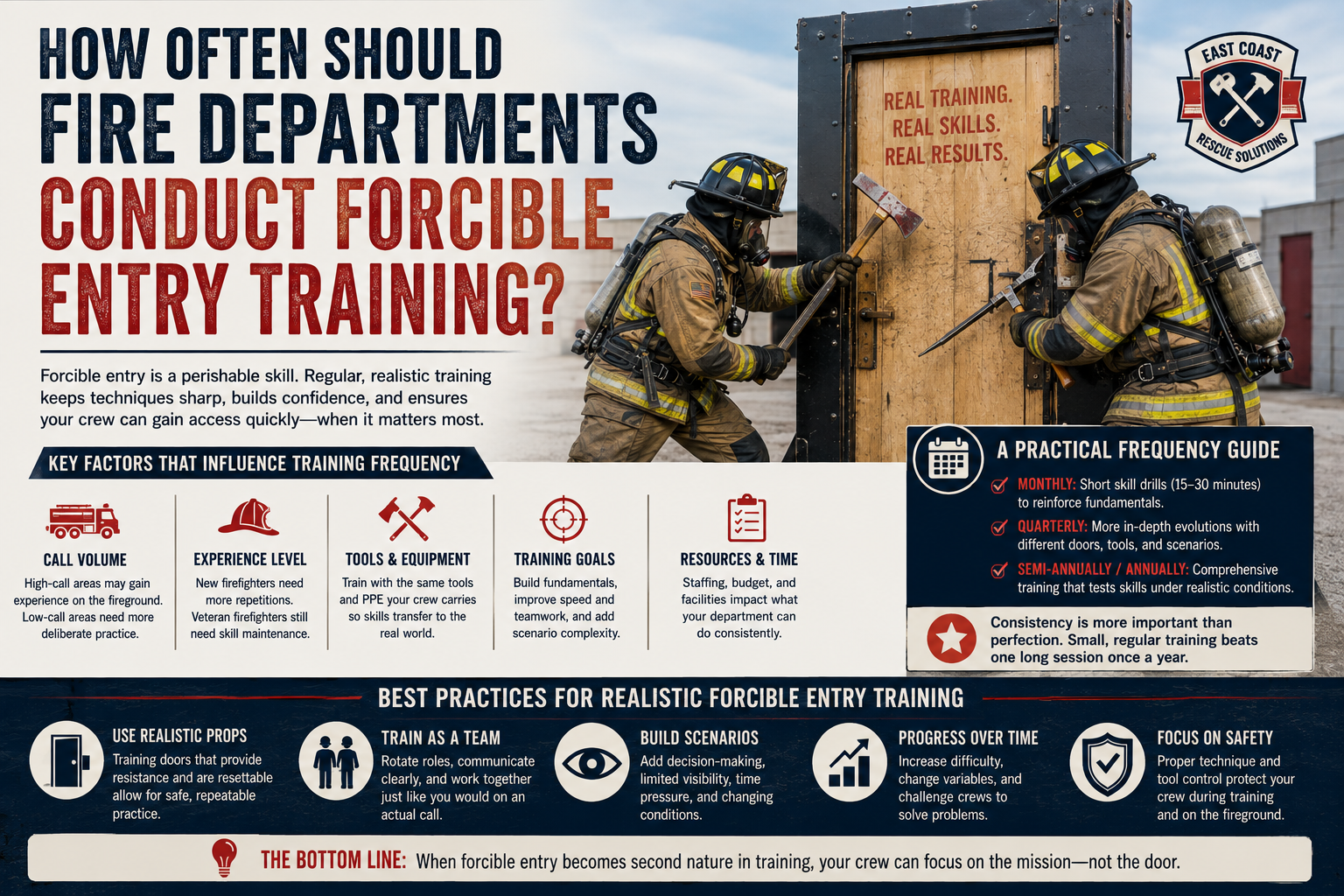
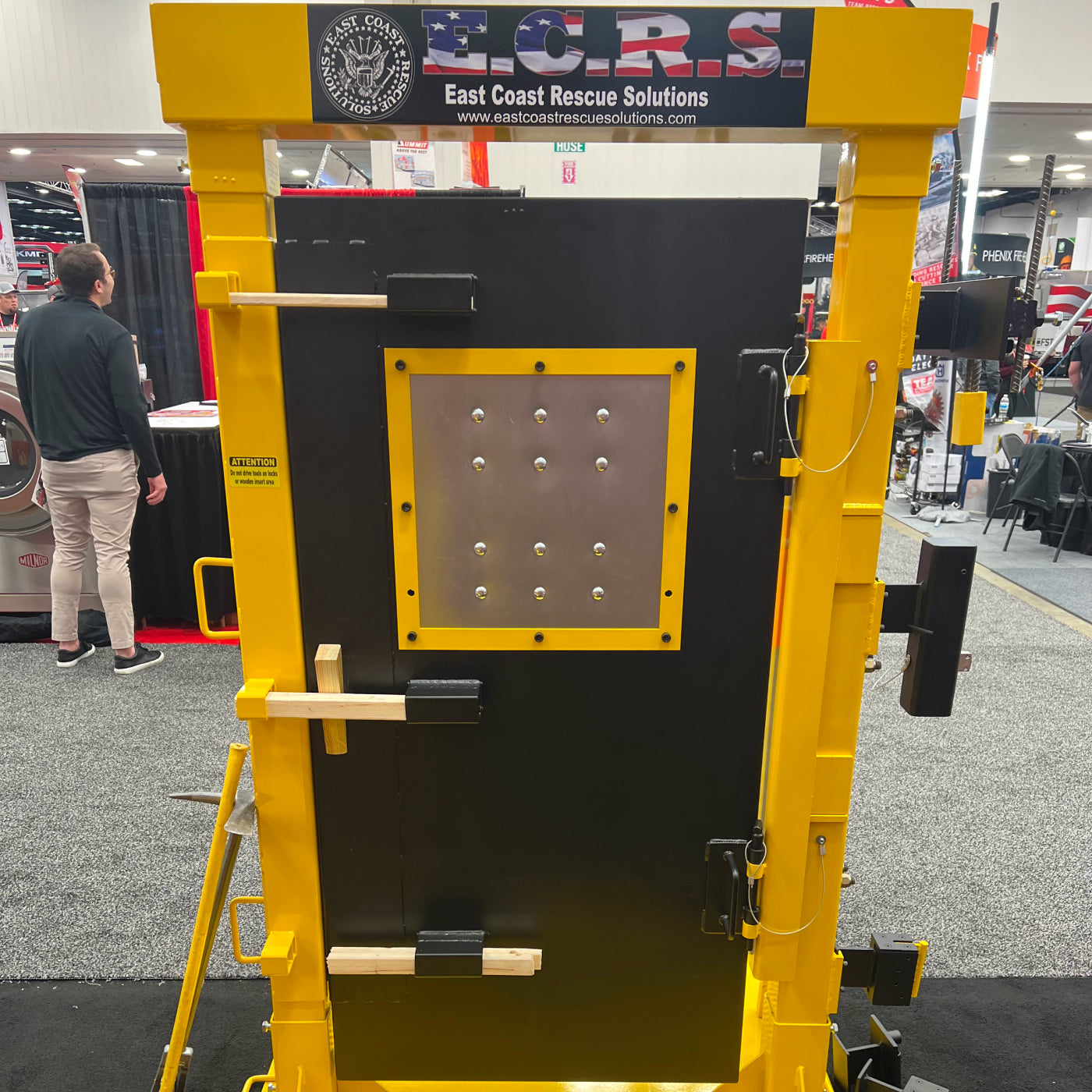
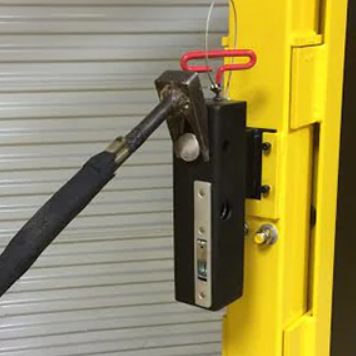
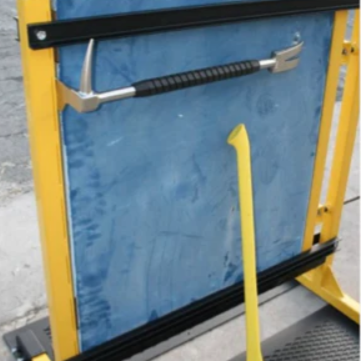
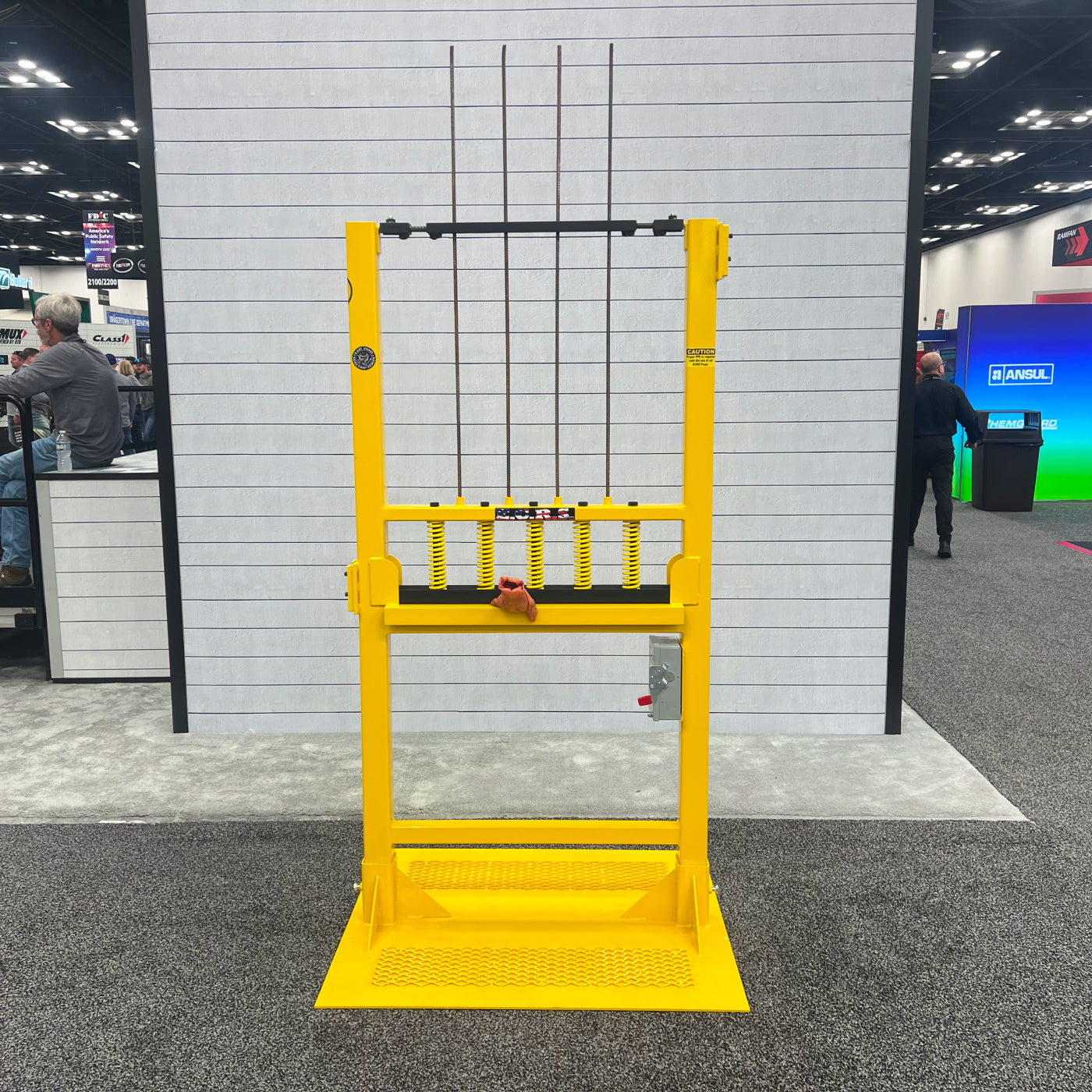
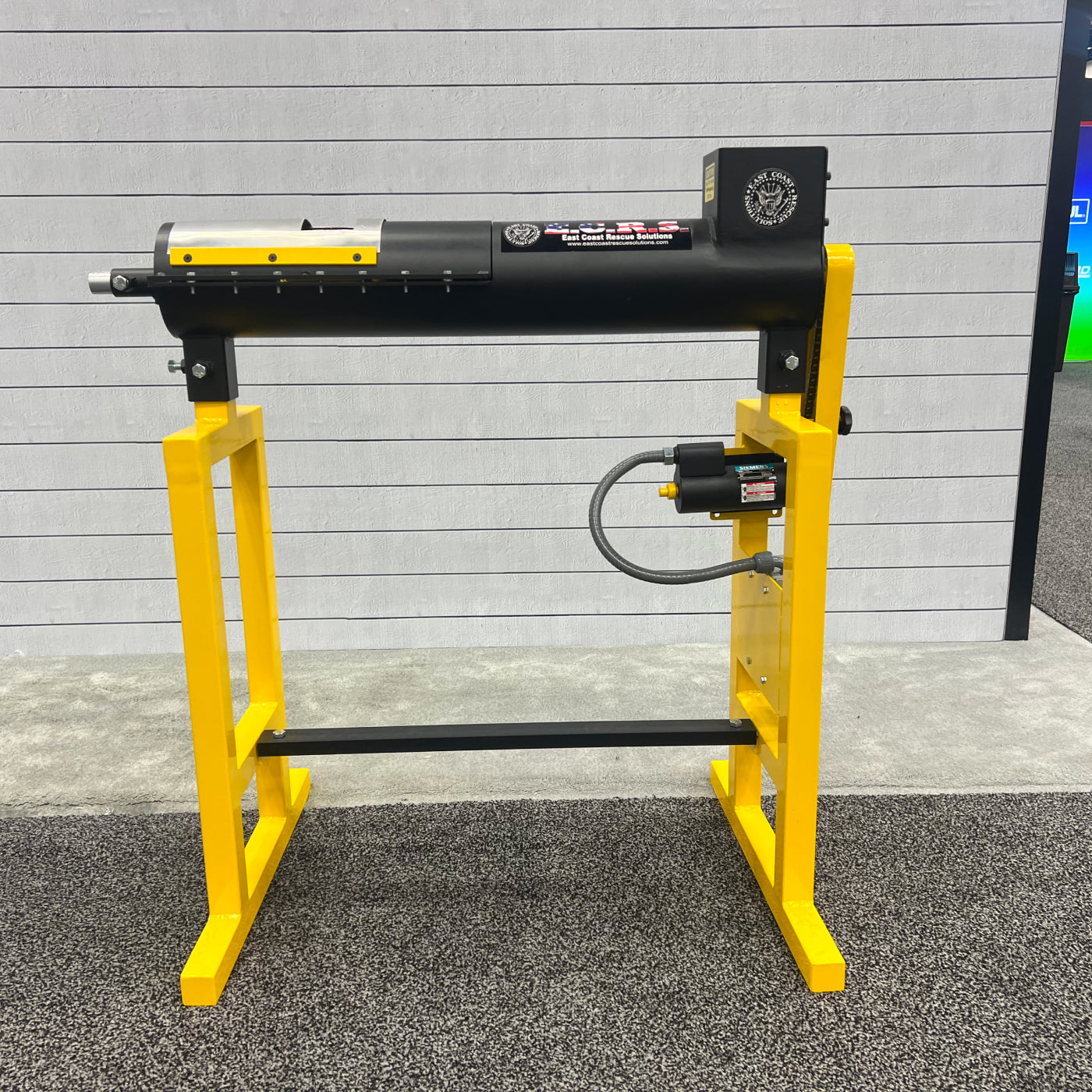
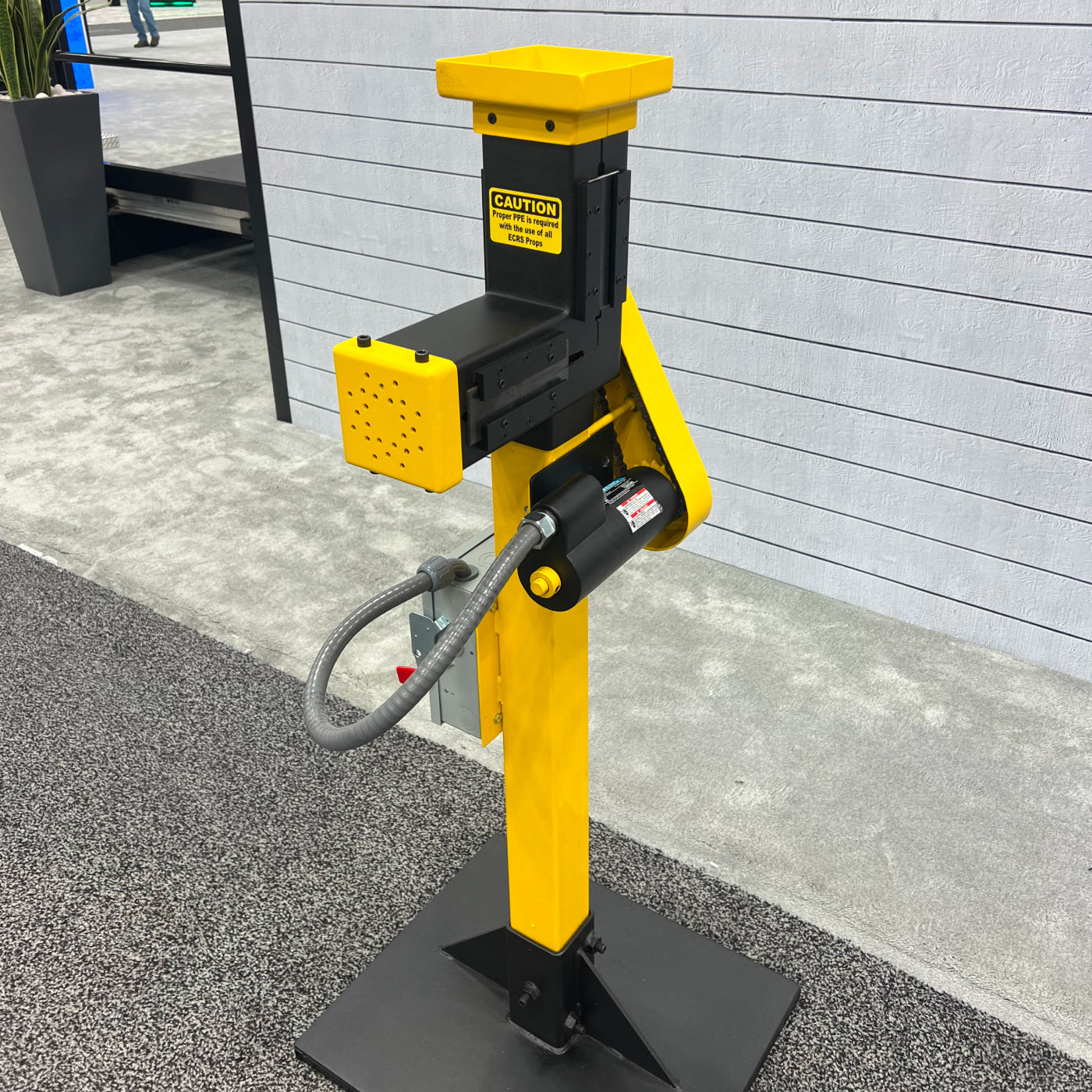
Realistic forcible entry door props give firefighters an opportunity to compare different tools and techniques against repeatable door configurations.
This is particularly useful when departments are introducing new forcible entry equipment.
Instead of simply demonstrating the tool, instructors can allow firefighters to use it repeatedly and compare its performance against conventional methods.
That helps crews develop something more valuable than familiarity with a tool: judgment about when to use it.
Build a Forcible Entry System, Not Just a Tool Collection
A well-equipped fire company does not necessarily need every forcible entry tool on the market.
It needs a complementary set of tools that addresses the barriers crews are most likely to encounter.
A basic system might include conventional prying and striking tools, equipment for chains and locks, and access to powered cutting equipment.
Departments with more challenging commercial or industrial occupancies may supplement those tools with hydraulic equipment and specialized lock-entry tools.
The exact combination will vary.
What matters is that each tool fills a meaningful role.
If two heavy tools accomplish almost exactly the same task, carrying both may provide little benefit. If crews regularly encounter a barrier they cannot efficiently defeat, however, a specialized tool may fill an important capability gap.
The Right Tool Starts With the Right Size-Up
So, how do you choose the right door tools for forcible entry?
Start by looking at the doors firefighters actually encounter.
Consider their construction, locking systems, frames, security features, and how urgently they may need to be defeated. Then select tools that provide complementary mechanical, cutting, and specialized entry capabilities.
For an individual incident, the process is even simpler:
Identify the door. Identify what is keeping it closed. Determine the weakest practical point. Then select the simplest tool capable of defeating it.
Sometimes that will be a Halligan.
Sometimes it will be a saw.
Sometimes it will be bolt cutters, hydraulic equipment, or a specialized lock tool.
And sometimes the best forcible entry decision will be recognizing that another entrance provides a faster solution.
Ultimately, expertise in forcible entry does not come from carrying the most tools.
It comes from understanding which tool solves the problem in front of you.