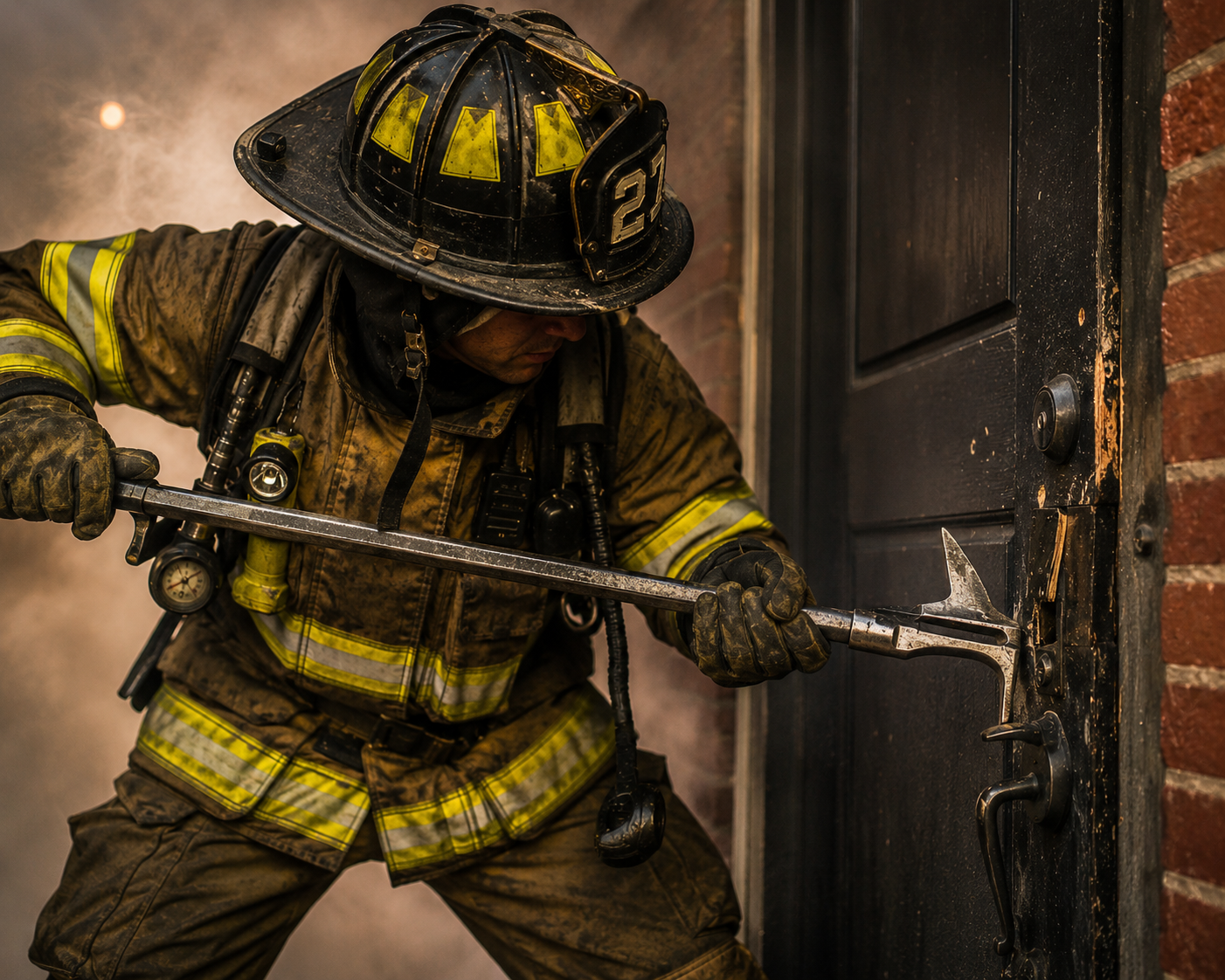
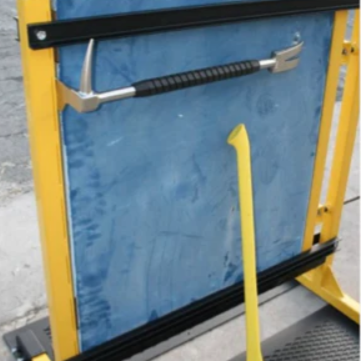
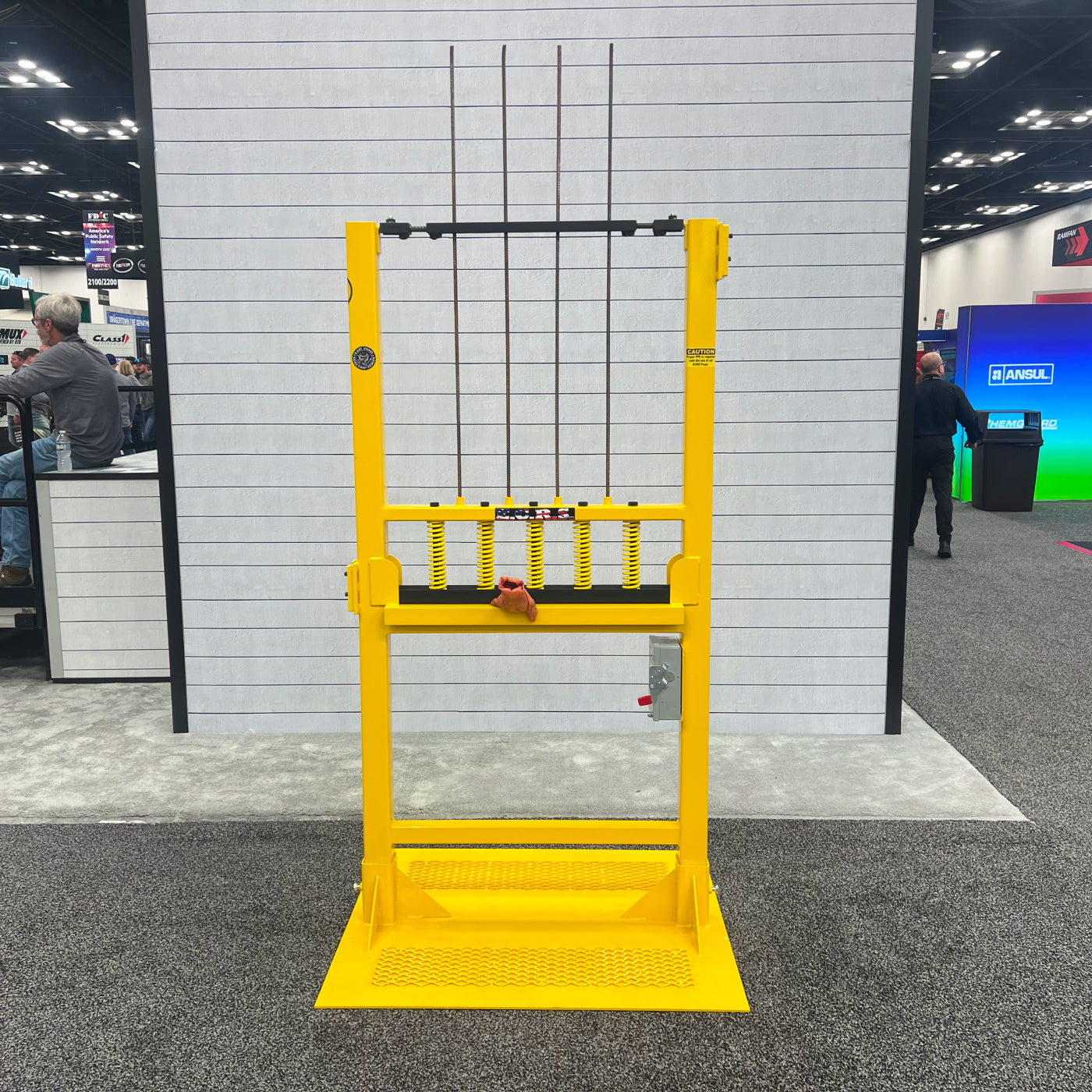
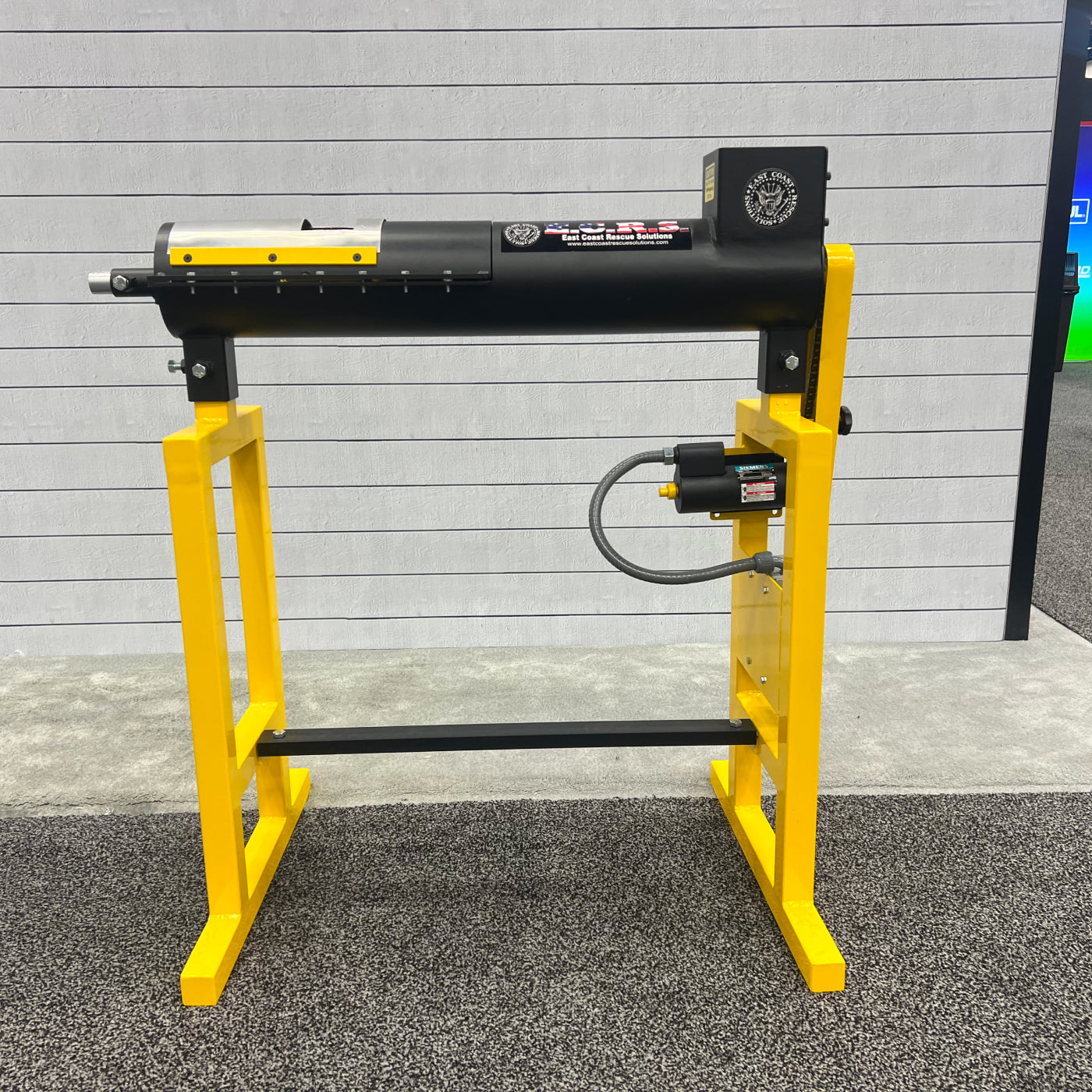
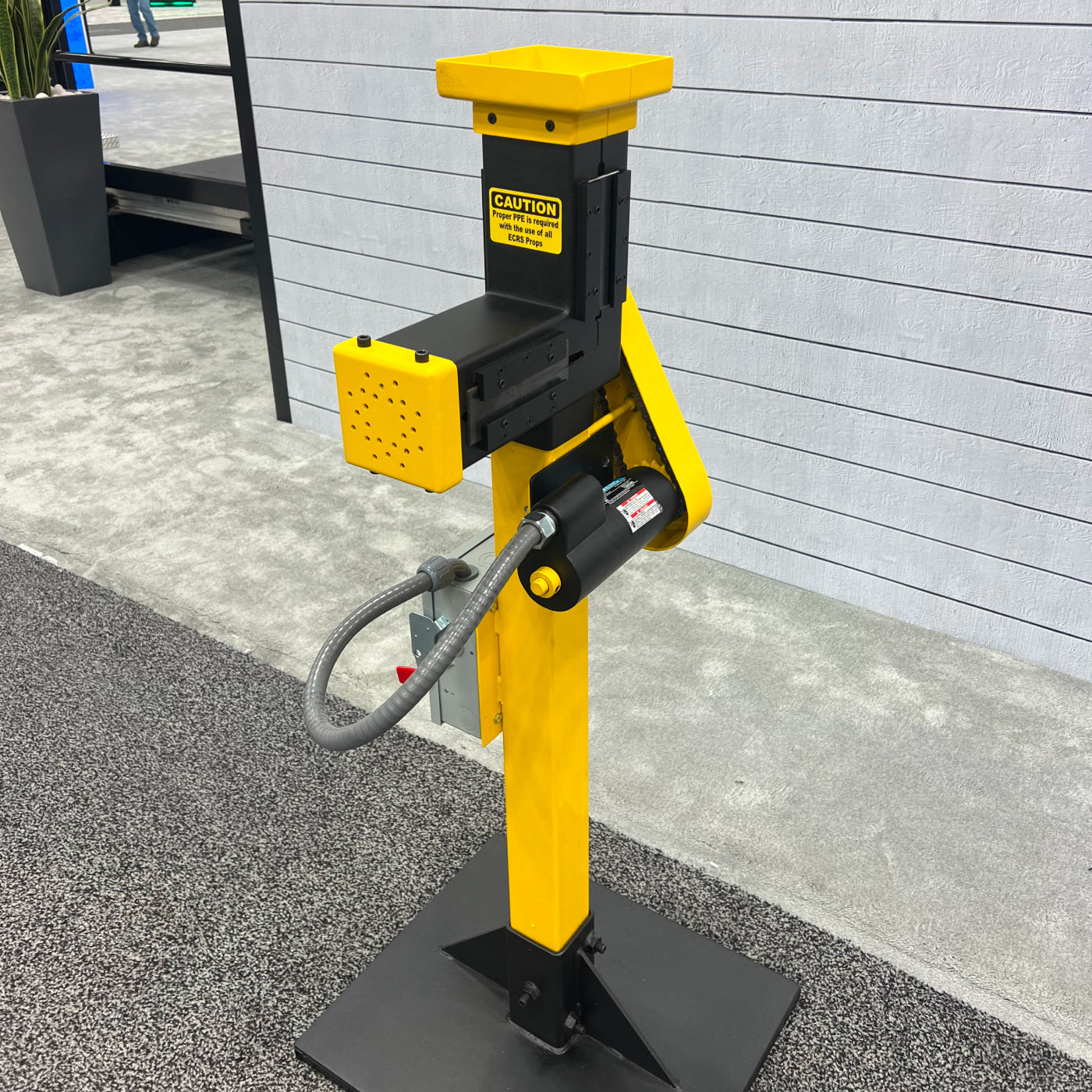







Forcible entry gets you in.
Door control keeps you alive once you are.
Too often, these two critical fireground functions are treated as separate skills. One team forces the door. Another manages the interior. But in real-world operations, forcible entry and door control must work together as one coordinated action.
If they don’t, you can unintentionally make the fire worse, increase risk to your crew, and lose control of the environment before the line is even in place.
Here’s why coordination between these two disciplines is essential—and how it directly impacts firefighter safety and fireground success.
The Moment the Door Opens Changes Everything
When you force a door, you’re not just gaining access.
You’re introducing oxygen.
That single action can rapidly change fire behavior inside the structure. A fire that was ventilation-limited can suddenly intensify the moment air is introduced through an open doorway.
Without proper door control, you can create:
-
Rapid fire growth
-
Increased heat release
-
Faster smoke spread
-
Reduced tenability for victims
-
More dangerous conditions for interior crews
This is why forcing a door without controlling it is one of the most common and most dangerous mistakes on the fireground.
Forcible Entry Without Door Control Is Incomplete
Think about it this way:
If your crew forces a door quickly but leaves it wide open, the job isn’t done.
You’ve completed entry—but you’ve lost control.
Door control is what allows you to manage the flow path. It limits the amount of air entering the structure and helps keep fire conditions from worsening before water is applied.
That means:
-
Slower fire growth
-
Better visibility
-
More survivable conditions inside
-
Increased safety for the nozzle team
Forcible entry creates the opening. Door control manages what happens next.
They are two halves of the same task.
Timing Is Everything on the Fireground
Coordination isn’t just about what you do—it’s about when you do it.
Forcing a door too early, before a charged hoseline is ready, can allow the fire to grow unchecked.
Forcing it too late can delay suppression and rescue.
That’s why communication between crews is critical.
The ideal sequence looks like this:
-
The entry team forces the door
-
The door is immediately controlled (closed or partially controlled)
-
The hoseline is advanced and ready
-
The door is opened in coordination with water application
This controlled approach prevents the fire from gaining strength while still allowing for rapid interior operations.
Door Control Protects the Flow Path
Modern fire behavior has made one thing clear:
Flow path control is everything.
When you open a door, you’re creating a pathway for air to enter and heat and smoke to move.
If that path is uncontrolled, it can:
-
Pull fire toward firefighters
-
Push heat into uninvolved areas
-
Increase the risk of flashover or rapid fire progression
By controlling the door, you limit that pathway.
Even something as simple as keeping the door mostly closed while the line is being stretched can dramatically improve conditions inside.
It Improves Coordination Between Crews
Fireground operations rely on teamwork.
Forcible entry and door control require coordination between:
-
The irons firefighter
-
The officer
-
The nozzle team
-
Ventilation crews
When these roles are aligned, operations become smoother and safer.
When they’re not, you get:
-
Doors forced without water ready
-
Crews entering into rapidly deteriorating conditions
-
Confusion about timing and priorities
Training these functions together—not separately—is what builds that coordination.
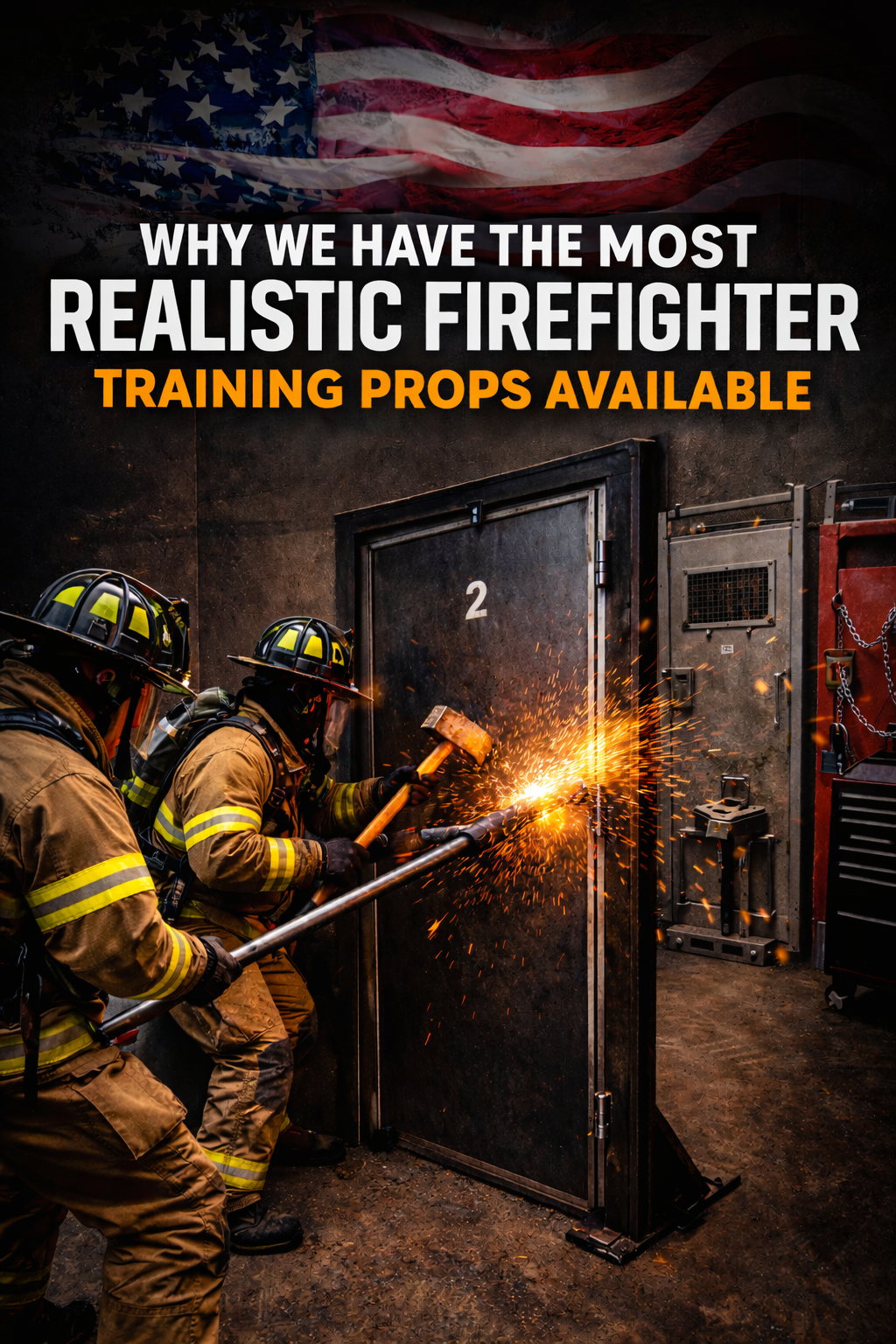
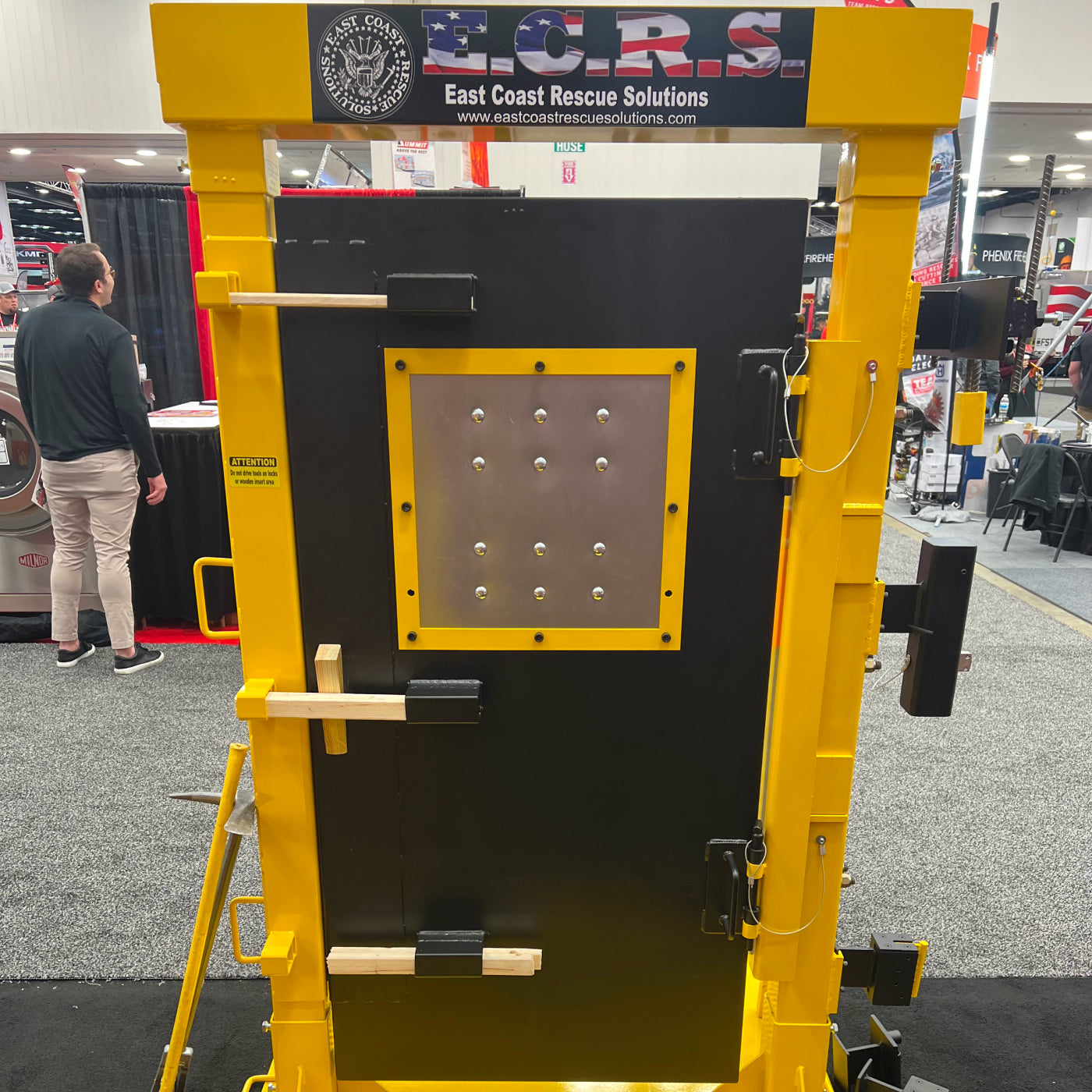
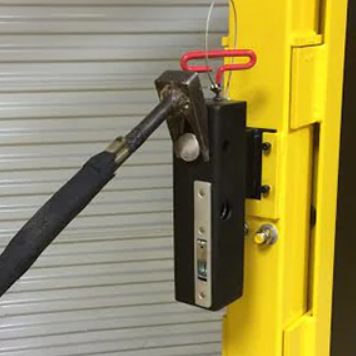
Realistic Training Is the Only Way to Build This Skill
This is where many departments fall short.
They train forcible entry as a standalone skill:
-
Force the door
-
Move on
But in reality, that’s only half the job.
To truly prepare firefighters, training must include:
-
Forcing the door
-
Immediately controlling it
-
Coordinating with a simulated hoseline
-
Practicing timing and communication
When firefighters repeat this process in training, it becomes second nature on the fireground.
Without that repetition, coordination breaks down under pressure.
It Reduces Risk to Firefighters and Victims
At the end of the day, this isn’t just about technique.
It’s about outcomes.
Coordinated forcible entry and door control:
-
Reduces the chance of rapid fire growth
-
Improves interior conditions
-
Increases survivability for victims
-
Protects crews from sudden changes in fire behavior
Uncoordinated entry does the opposite.
It creates chaos at the exact moment when control matters most.
The Bottom Line
Forcible entry and door control are not separate skills.
They are one coordinated operation.
When done correctly, they allow firefighters to:
-
Control the environment
-
Manage fire behavior
-
Enter safely and effectively
When done incorrectly, they can make an already dangerous situation significantly worse.
That’s why departments must train these skills together—under realistic conditions that reflect the pressure and timing of the fireground.
Because when the door gets forced on a real call, what happens next matters just as much as getting it open.