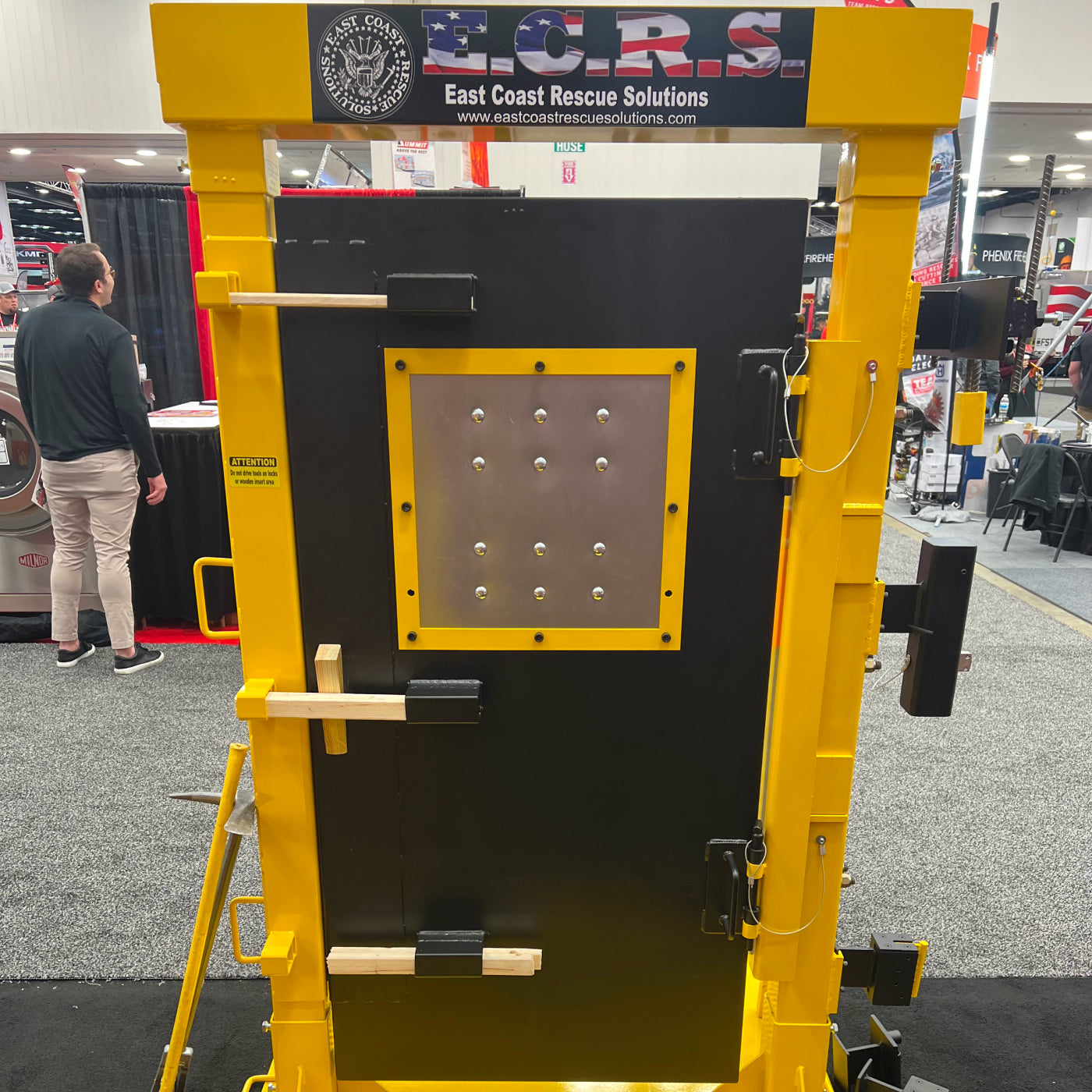







Commercial forcible entry presents a very different challenge than residential entry. The doors, frames, and locking systems are not designed to flex or fail easily. Instead, they are engineered to absorb force, resist leverage, and delay access for as long as possible. When you approach these doors with the same tactics used on residential construction, progress often stalls.
This is where mauls begin to separate themselves from lighter striking tools. Their design and mass align well with the realities of modern commercial construction.
How Commercial Doors Are Built to Resist Entry
Commercial door assemblies typically include multiple layers of resistance working together. Steel frames are anchored into masonry or reinforced wall systems. Strike plates and lock housings are often welded or bolted through the frame. Many doors include internal stiffeners specifically intended to resist prying.
These features do not just slow entry; they actively defeat leverage. When force is applied gradually through prying or spreading, the assembly distributes that force across the frame rather than allowing it to concentrate at a single failure point.
Why Leverage Alone Often Fails on Reinforced Frames
Leverage tools rely on movement. If the door or frame cannot flex, leverage has nowhere to go. In reinforced frames, the resistance you feel is not just the lock—it is the entire door system working together.
Repeated prying attempts can:
-
Deform tools rather than the door
-
Damage hardware without creating access
-
Consume time while conditions worsen
In these scenarios, applying force incrementally is often less effective than disrupting the structure directly.
Why Mass Matters More Than Swing Speed on Commercial Entry
Mauls excel because they rely on mass rather than speed. You do not need exaggerated swings to deliver meaningful force. Instead, controlled strikes allow the tool’s weight to do the work.
This matters operationally because:
-
Control improves accuracy
-
Reduced swing arc lowers injury risk
-
Consistent strikes maintain positioning
On commercial doors, controlled force is often more effective than faster, lighter impacts that dissipate energy across hardened materials.
How Mauls Break the Integrity of the Door System
Rather than attempting to bypass reinforcement, mauls are used to compromise it. Well-placed strikes can bend steel frames, crack welds, and deform mounting points that hold locks and hinges in alignment.
Once the integrity of the system is compromised, the entire door behaves differently. Gaps appear where none existed before, hardware loosens, and resistance drops significantly. At this point, follow-up tools such as Halligans become far more effective.
Where Mauls Provide an Advantage Over Traditional Axes
Axes remain versatile tools, but their effectiveness depends more heavily on swing speed and edge engagement. On thick steel frames or impact-rated assemblies, axes may require repeated strikes to achieve results.
Mauls, by contrast, deliver consistent force with fewer strikes. This makes them particularly effective for:
-
Steel commercial frames
-
Security doors with layered hardware
-
Reinforced exterior entry points
Fewer strikes mean less fatigue and more predictable outcomes.
Why Modern Construction Increases the Value of Mauls
As commercial construction standards continue to evolve, doors are becoming stronger, not weaker. Impact ratings, security upgrades, and reinforced assemblies are increasingly common.
Mauls provide a reliable response to these trends. Their ability to apply controlled force directly to reinforced components makes them a critical tool for modern forcible entry operations.