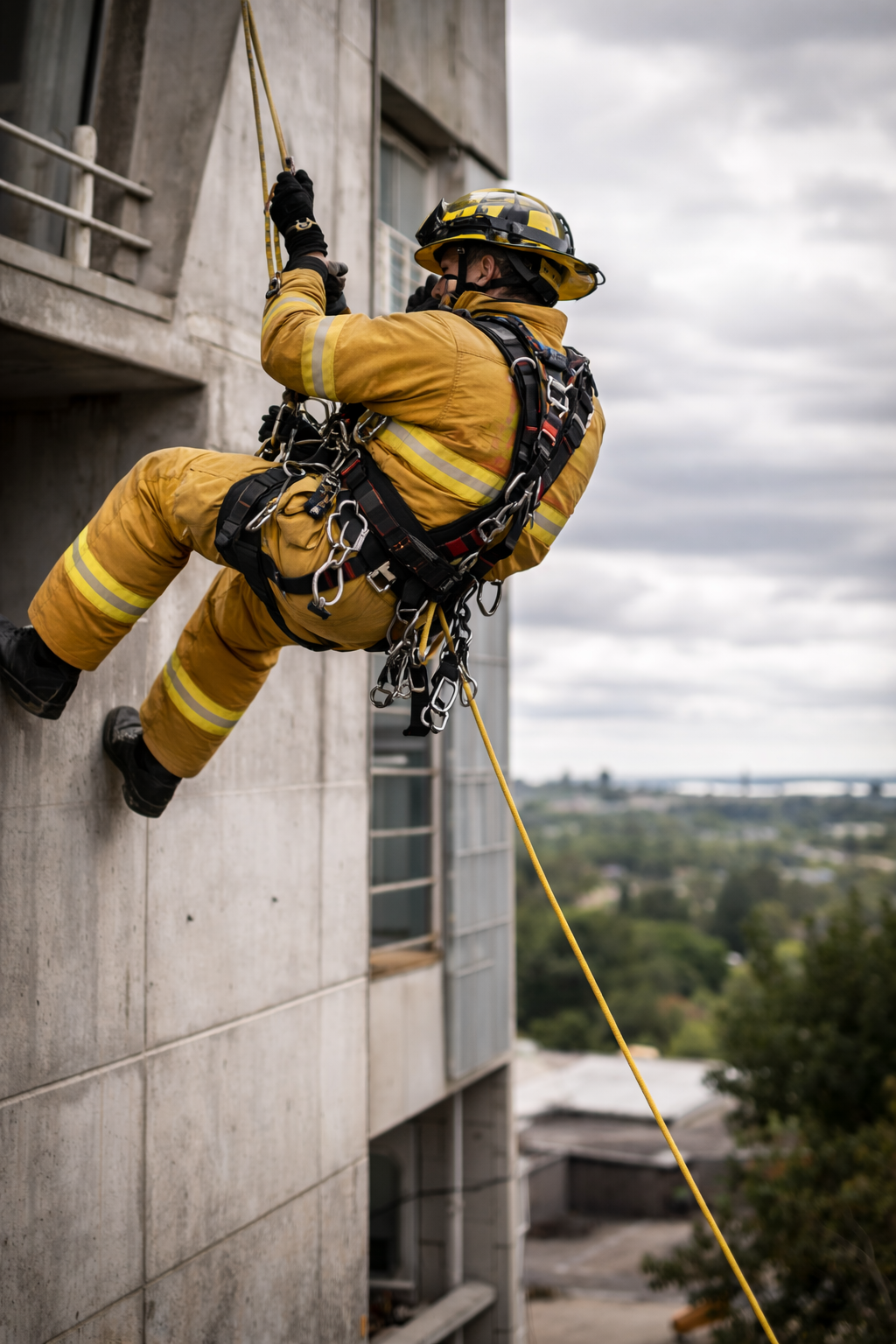







Harness inspections are easy to treat as routine. A quick glance. A mental check. Another piece of gear cleared for use.
But rescue harnesses don’t usually fail suddenly. They degrade quietly. And if you’re not paying attention, you miss the signs.
Pre-Use Inspections Set the Tone for the Operation
Before clipping in, take the time to actually look and feel. Webbing, stitching, hardware, attachment points — all of it deserves attention.
Firefighters are trained to trust their instincts on scene. That applies here too. If something feels off, it probably is.
Post-Use Inspections Catch What Load Reveals
Stress reveals weaknesses. After heavy use or significant loading, inspect again. Damage that wasn’t visible before may show up once the harness has been worked.
Departments that build this habit catch problems early — before equipment becomes unreliable.
Dirt and Contamination Accelerate Wear
Fire-rescue environments are rough on gear. Dirt, chemicals, moisture, and UV exposure all degrade harness materials over time.
Cleaning with mild soap, drying properly, and storing harnesses in clean, dry spaces preserve performance — not just appearance.
Retirement Is Part of Responsible Use
Every harness has a service life. If it’s been involved in a major load event, shows structural damage, or exceeds manufacturer guidelines, it’s done.
Keeping compromised gear in service doesn’t save money. It transfers risk to the firefighter wearing it.
Confidence Comes From Knowing Your Gear
When you clip into a harness you trust, you don’t think about it again. That confidence doesn’t come from labels or standards alone — it comes from inspection, understanding, and experience.
In fire-rescue operations, that confidence matters more than almost anything else.